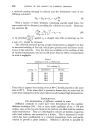
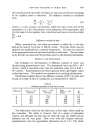
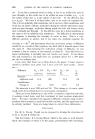
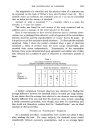
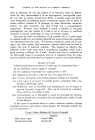
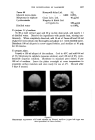
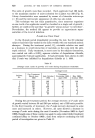
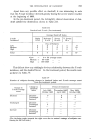
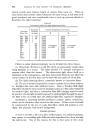
THE INVESTIGATION OF DANDRUFF 611 The magnitude of a sensation and the physical value of a stimulus can be expressed on the basis of Weber's Law and Fechner's Law (1). By a suitable choice of constants, the combined score (x q-y) can be converted into an index for the amount of dandruff: Amount of scale = (constant) x + y q- constant, where x = score for severity, y ---- score for extent. This index was found for each section of the scalp examined and by addition, gave a measure of the total amount on the head. Since it was necessary to have several observers and to continue obser- vations over a prolonged time-interval, a critical appraisal of the concordance between observers and the reproducibility of "scores" had to be made. It is hoped to record this analysis in detail elsewhere. To illustrate the methods employed, Table I shows the pattern obtained when a pair of observers examined a series of sections from the same scalps concurrently, and recorded their scores independently. Examination of the association between these scores demonstrated good agreement and similar sets of data were obtained for a number of pairs of observers in consecutive periods of time. Table I Concordance between observers {Figures represent numbers of scalp sections) Score for Severity: Observer A 0 1 2 3 4 5 Score for 0 8 ..... Severity: 1 1 98 4 -- -- -- Dbserver B 2 -- 8 20 2 -- -- 3 -- -- 3 2 -- -- A further comparison between observers was obtained by finding the average difference between the dandruff indices recorded per scalp section. It was shown that the average bias relative to one observer was not signi- ficantly different frbm zero and that the observers were, in fact, operating a stable assessment procedure, even though such tests for consistency and bias would not themselves confirm that the "dandruff index" was an ideal measure of clinical severity. STUDIES ON "UNTREATED" SUBJECTS As a standard procedure, examinations were carried out about 5 days after washing the hair. For many subjects, the dandruff scores varied considerably between successive examinations, and so an average figure

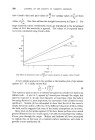
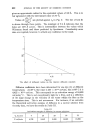
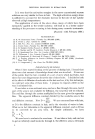
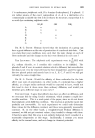
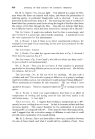
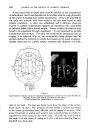
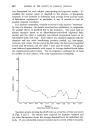
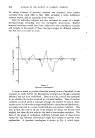
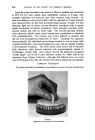
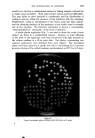
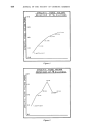
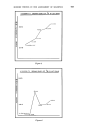
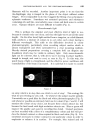
612 JOURNAL OF THE SOCIETY OF COSMETIC CHEMISTS was determined for each subiect participating in long4erm studies. To establish the normal course of dandruff in the absence of therapeutic measures, it was desirable to determine both average levels and the types of fluctuation experienced in particular, it was of interest to look for possible seasonal variations. In a modern community, virtually everyone's scalp receives "treatment" by way of a shampoo two panels were therefore established, to compensate for possible effects on dandruff due to the shampoos. One panel used an anionic shampoo based on an alkanolamine-neutralized sulphated fatty alcohol and the other a reputedly non-irritant preparation based on an ethoxylated fatty acid soap. Each subiect was supplied regularly with the shampoo and any other hairdressing products needed, e.g. hair-sprays, wave-set, hair cream. By the end of the full study, the first panel comprised 3 men and 13 women, and the other 1 man and 10 women. The groups were balanced approximately with respect to average dandruff levels before the experimental period began. The investigation continued for at least 15 months on each subiect, with scalp examinations fortnightly. 4O 3O I¸ i i i i i I i .i i i Jan Feb March April May June July Auqust Sept Oct Nov Dec Figure g Individual dandruff graph. Specimen graphs showing dandruff index as a function of time are shown in oeigs. 2 and $. The records were analysed for seasonal variation and for other fluctuations about the average dandruff level for individual sub- jects. If any substantial seasonal variation had occurred within 12 months,
Purchased for the exclusive use of nofirst nolast (unknown)
From: SCC Media Library & Resource Center (library.scconline.org)