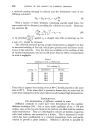
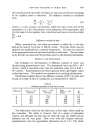
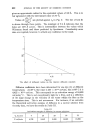
MODERN TRENDS IN THE ASSESSMENT OF SHAMPOOS 639 washed free of grease, etc., before commencing the tests. What are your views on this ? THE LECTURER: We have carried out tests of this type ourselves. The great difficulty on using such tests is that it is possible to modify the structure of the foam depending on the way the hands are rubbed together, and on the amount of air that is squeezed into the lather. I believe that the method of generating the foam is likely to vary over different periods, and it is doubtful whether you could reproduce a standard rubbing technique which is likely to remain standard over the years. This is one of the reasons why we do not use this sort of evaluation method ourselves. I agree that if this test is used, it is essential that the hands should be completely clean before starting, otherwise the first one or two tests will probably give very strange results indeed. DR. A. W. HOLMES: Having been involved in these tests from its initia- tion, I would like to add something to the lecturer's reply. The difference between this test and, for instance, the hand washing test is that quantitative results are obtained. The foam viscosity and the specific volume are known, and this cannot be determined by the hand washing test. If we are going to make any improvement in shampoo quality it will be a gradual improve- ment which will ultimately result in overall benefit. You cannot achieve this gradual improvement by a crude technique such as hand washing. Have you ever tried a shampoo which is a poor emulsifier ? The essence of the test which you are operating at the moment is that the grease is emulsified to some extent during his heating up process, and if this does not occur you may find spurious results. THE LECTURER: We have looked at products which are poor emulsifiers, and it is quite true that one may get results which are misleading by this technique of evaluation. This is one of the reasons why I mentioned that the test is really valuable for screening formulations, and the value of the product as a detergent is assessed in the salon tests. Screening new products or new chemical entities, we would not consider a particular chemical entity to be acceptable as a shampoo on the basis of these tests. We would screen out a lot which we would consider to be unacceptable in a salon, and we would pick up the ones that were poor emulsifiers or detergents in our salon tests.

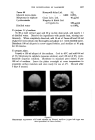
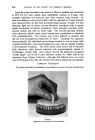
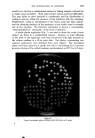
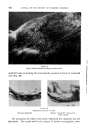
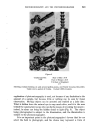
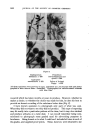
J. Soc. Cosmetic Chemists 15 641-656 (1964) ¸ 1964 Society of Cosmetic Ckemists of Great Britain PHOTOMICROGRAPHY AND THE PHOTO MI CR OG RAPH E R D. F. LAWSON, F.I.B.P., F.R.M.S. A lecture delivered before the Society on 23rd March 1964. Emphasis is placed on the problems of the industrial photomicrographer in establishing and maintaining the proper relationship to the organization. The responsibility of the man behind the camera microscope and the justifica- tion for a photonficrographic laboratory. The photomicrographer must learn to process his own materials, understand and apply the use of colour filters in black and white and colour photonficrography. His strategic position allows him to help solve many problems, if only given the material to work on. The usefulness of photomicrography and the photomicrographer depends upon the ability of the man behind the recording instrument, and the micro- scope is no better than the brain that interprets what the eye sees. INTRODUCTION The role photomicrography plays in the laboratory, in translating information otherwise difficult to observe and interpret, has witnessed a great step forward in recent years. Furthermore, I detect a healthy desire today to explore the technique of photomicrography. In this respect the pro- fessional chemist is concerned with the use of the microscope during his academic training, and his findings in a research programme. It is no doubt true to say that most, if not all of us, learned our chemistry through glass, and it is difficult to imagine just how handicapped we should be without direct visual observation. A close-up look through glass (objec- tive) is the natural way for a microscopist to study a substance and its behaviour. Photomicrography, however, takes us very much further, and is the means of our producing a permanent record of visual aids. The sooner photomicrographic records are made during a particular investigation the sooner it is realised how great is their value. One of the advantages of photomicrography, as compared with micro- scopy, is that its results are permanent, i.e. the evidence is always available for continued study, either by the individual or in groups (Fig. 1). When a quantity of a new synthetic product is limited, or say, an impurity in a soft drink, the appearance of crystal formation in a liquid or perhaps a breakdown in a tablet, to mention a few problems, the application is obvious. The study 641
Purchased for the exclusive use of nofirst nolast (unknown)
From: SCC Media Library & Resource Center (library.scconline.org)