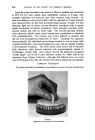
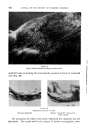
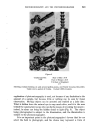
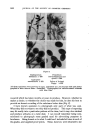
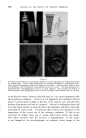
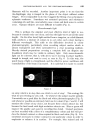
PHOTOMICROGRAPHY AND THE PHOTOMICROGRAPHER 655 I have learned to read the image intensity on the ground glass of my camera. Opaque subjects are a little more difficult to estimate, due perhaps to the lack of reflection of light from the subject. I do, however, occasionally use an exposure meter for colour photomicrography. I made my own exposure meter which has a photocell attached to the base of the instru- ment. The photocell is placed over the top lens of the eyepiece in use. However, this method is not so accurate as those which make a reading just below the ground glass screen. The choice of the method used depends mainly upon how frequently objectives, eyepieces and bellows extensions are changed. I feel that one cannot change from meter to meter but it is better to use just one and get to know what it is trying to express. Ernst Leitz Wetzlar have produced a new model of the Microsix-L which has a light-sensing probe replacing the eyepiece, and it is joined electrically to the body of the meter. The makers claim that it covers the whole range of lighting met with in photomicrography, including low to high power and in particular readings from low-level fluorescence. MR. S. J. BUSH: Could you please give us further details of the technique described as "grazed illumination" ? THE LECTURF. R: I showed you photomicrographs of opaque subjects which I said were illuminated by grazed illumination. I use the term "grazed" because the pencil beam of light illuminating the subject is almost parallel with the microscope slide (Fig. 5) grazing the subject and creating a three dimensional effect. Top oblique lighting creates a flat uninteresting image due to the lack of shadows. Grazed illumination often needs a reflector to bounce back some light into the dark shadows. Grazed illum- ination is a means of creating modelling, a method of painting with light and shadow. If you do use this method it is advisable to place the shadows on the lower side of the photomicrograph. If wrongly mounted, the subject is viewed under complete reversal conditions, known as pseudo-stereoscopic shadows become "embankments" and vice versa. MR. N.J. VAN ABBE: Would you like to offer any suggestions for dealing with the problem of vibration in photomicrographic work ? THE LECTURER: A major problem in photomicrography is the elimination of vibration in the apparatus, or in the building housing the apparatus. This problem becomes acute whenever exposures of a 1/10th of a second or longer are given, or high magnifications are made. Photomicrography in many laboratories has become relatively difficult because the framework structure contains vacuum pumps, compressors and shakers, which may be operated throughout the day. In addition to this, heavy traffic and trains cause the very foundations to vibrate. The course open is a limited one.

656 JOURNAL OF THE SOCIETY OF COSMETIC CHEMISTS I can suggest that the whole of the microscope and camera unit is carried on a spring-suspension arrangement to avoid vibration being transmitted to it, through the floor of the laboratory. The introduction of flash lighting will eliminate the effects of vibration, but who wants to work with electronic flash all the time! The basement is, of course, the very best place to operate from. In my own case I am on the first floor which has been concreted and heavily tiled this I am happy to say, answers my purpose. BOOK REVIEWS ADVANCES IN PHARMACEUTICAL SCIENCES 1. Editors: H. S. Bean, A. H. Beckerr and J. E. Carless. Pp. xi + 334 + Ill. (1964). Academic Press, London and New York. 75s. There can be few more chastening experiences for the scientist who graduated 20 or more years ago than to pursue a new volume dealing with recent advances in his field. Research has progressed at such a rate in the post-war era that he will be likely to congratulate himself if he can make reasonable sense of contemporary subject-matter. It is this rapid progress which creates the need for "Advances" publications and this one (the first of its kind) is exceedingly well written and produced, so that it does indeed provide a valuable refresher course. The editors have chosen to deal with topics which fall within the scope of pharma- ceutics, such as physical pharmacy, formulation and microbiology. Individual mono- graphs, written by specialists, present not only comprehensive literature reviews but they also give a coherent outline of each subject including some original matter not yet published elsewhere. This first volume tackles Rheology, Solubilization, Preservation of Emulsions and Heat SterPization. The monograph on rheology is a typical example of the complexities that arise when a subject is tackled in depth but, in fact, the authors have presented this in a concise and intelligible way and have helpfully included a guide to the wide range of viscometers now on the market. The article on solubility in systems containing surface-active agents deals at con- siderable length with the problems associated with micellar behaviour such an extended treatment is no doubt justified by the absence of a similar appraisal elsewhere. It is rather surprising to find a lack of information on the effect of solubilization on skin pene- tration (which is mentioned only in connection with carcinogens). It may well be that little work has been reported, though F. R. Bettley, at least, has published relevant investigations. Mrs. Wedderburn's account of the preservation of emulsions against microbial attack is a powerful dissertation, which will be much appreciated by workers in the pharmaceutical and cosmetic fields, and probably by others too. She laudably avoids a rigid distinction between antimicrobial "static" and "cidal" activity. Minor points are that there seems to be no mention of the need to check the chemical stability of a preservative except in terms of gross interaction with other ingredients and that, in evaluation studies, the possibility of changing preservative-susceptibility of the organ- isms on repeated sub-culture is apparently ignored the desirability of using strains freeze-dried soon after isolation might have been commented upon. However, the emphasis on a quantitative approach to preservation, both in terms of theory and practical testing, is commendable. Wilkinson and Baker, in their discourse on contemporary trends in heat sterilization, demonstrate with exemplary clarity that there is a lot more in autoclave design than the uninitiated would imagine. But just as one might anticipate, the direction of modern science is cheerfully summarized in a sentence reading "An electronic unit has now been evolved •vhich overcomes these difficulties" ! There is a wealth of useful information in the article for example, it was interesting to learn about a new type of air-sterilizing filter previously unknown to the reviewer. It is a rare experience to welcome a new book which warrants nothing but praise, but Vol. I of "Advances in Pharmaceutical Sciences" can most assuredly be recommended in this happy fashion. N.J. Van Abbd.
Purchased for the exclusive use of nofirst nolast (unknown)
From: SCC Media Library & Resource Center (library.scconline.org)