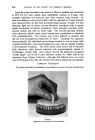
MODERN TRENDS IN THE ASSESSMENT OF SHAMPOOS 633 A considerable amount of investigation was carried out on the method of generating the foam, and it was suggested (rightly in my opinion) that a Sunbeam Mixmaster set to give a constant speed of 720 rpm was a satisfac- tory method. Bearing in mind that the original paper dealt with the foam characteris- tics of different groups of surfactants, and also that our work on developing this method has been largely aimed at the assessment of shampoo formula- tions with fairly similar performance characteristics, we decided to attempt to improve the reproducibility of the results, at the same time keeping the number of tests down to an absolute minimum. We commenced our investigations by concentrating solely on foam viscosity determinations. There is no doubt that the more tests that are carried out on the foam produced by the Mixmaster, the more information is obtained. Neverthe- less, it is time-consuming to carry out all the various tests suggested in the original paper, the only advantage being that by so doing one may get a better assessment of a shampoo characteristic than could be obtained by washing a few heads in the hairdressing salon. In the original paper on this technique of foam assessment, the method of determining specific foam volume was described and we adopted this method and find it an extremely useful and simple process. We also have measured the viscosity of the foams produced, and carried out a considerable amount of work to investigate the possible use of a Ferranti VM Type Viscometer in this connection. The use of this instrument for measuring foam viscosities at different shear rates tends to over-complicate matters, due to the non-Newtonian properties of foams. We have decided, therefore, to use the recommended standard Techne Viscometer. Our experiments showed that although it was useful to examine samples of foam from the Mixmaster after various periods of beating, in general the results obtained after a three-minute beating period at 720 rpm were the most generally useful, and we therefore standardized our tests on this basis. One further variable which appeared to be of considerable importance was the temperature of the foam produced in the Mixmaster, and variations in temperature were found to be one of the main causes of poor reproducibility of results. At present, therefore, our normal procedure for producing foam is to take a shampoo diluted to 25%, 12.50% and 6.25% with water, subsequently heating a 50 ml aliquot of these solutions in a beaker to 45 ø C with 0.5 g of standard soil. This mixture is then placed in a previously warmed Mix- master bowl, and agitation is continued for three minutes at 720 rpm when the temperature is again checked. We find that reasonable reproducibility can be obtained so long as the

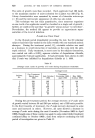
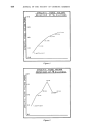
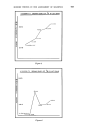
634 JOURNAL OF THE SOCIETY OF COSMETIC CHEMISTS temperature of the foam does not fall to below 23 ø C during this operation. After this three-minute beating, the foam is sampled and its viscosity deter- mined using the Techne Viscometer. At the same time, a further sample is withdrawn and placed in a pre-weighed cup of known volume so that this can be weighed subsequently, and the specific foam volume figure calculated. The standard soil is obtained by exhaustively extracting hair clippings with dichloromethane in a Soxhlet extractor. The solvent is removed from the residue by distillation. Several other solvents have been tried and can be used diethyl ether appears to be satisfactory although, as will be obvious, soil obtained from the hair varies in its characteristics depending on the type of solvent used. It is one disadvantage of obtaining a natural soil in this manner that there appears to be some variation in its properties from batch to batch. Consequently it is necessary to produce as big a blend as possible in an attempt to limit these batch to batch variations. Each batch of soil is checked against a 'standard' soil using a solution of triethanolamine lauryl sulphate as the shampoo. Soil obtained by the above procedure is a soft black solid with a setting point of approx. 23 ø C. We have tried to make synthetic soils but, unfortunately, we have not, as yet, managed to find a synthetic mixture which behaves in a similar manner to that obtained from natural hair. Throughout our work we used, as a control shampoo, a solution of triethanolamine lauryl sulphate with a Cetavlon value of 200 ml M/S00 cetavlon/g of product (17.3% AI) as this level of active ingredient is typical of the level used in retail liquid shampoos. Viscosity and specific foam volume determinations were carried out using a 25%, 12.5% and 6'25•o solution of the above control, or the shampoo formulation under test. As can be seen the tests carried out under these conditions give varying ratios of shampoo to soil, and also take into account the dilution of the shampoo. As can be expected the greater the dilution, the worse the reproducibility of the figures becomes, but I nevertheless believe that such dilutions are useful, as they indicate those shampoos which are unlikely to give satis- factory performance under normal use conditions where heavy soil loads are encountered. Additional tests were carried out in soft and hard water. The whole of the above testing procedure requires great attention to be paid to the timing, temperature and agitation conditions as well as to the accuracy of weighings if reproducible figures are to be obtained. Slight variations in timing or temperature of the solution have a marked effect on the results which are obtained. The other major difference between the methods we are now using, and the original suggestions, is that instead of taking viscosity and specific foam
Purchased for the exclusive use of nofirst nolast (unknown)
From: SCC Media Library & Resource Center (library.scconline.org)