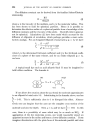
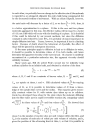
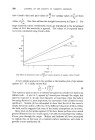
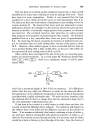
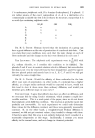
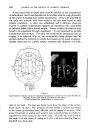
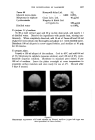
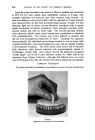
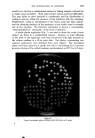
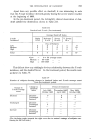
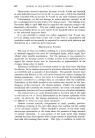
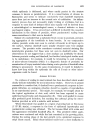
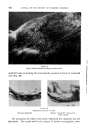
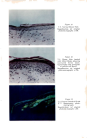
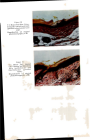
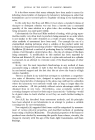
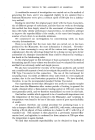
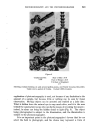
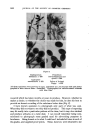
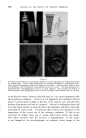
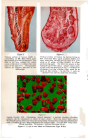
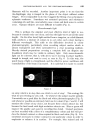
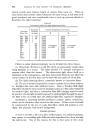
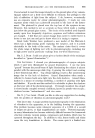
THE INVESTIGATION OF DANDRUFF 623 whole epidermis is thickened, and where nuclei persist in the stratum corneum, is known as parakeratosis. It is a usual feature of chronic in- flammation and seems to indicate conclusively that dandruff represents more than just an increase in the normal rate of exfoliation. An inflam- matory process does not necessarily imply itching or erythema, but is a response to some kind of irritant which may equally well be derived from a microbiological or immunological source, a chemical initiator or from psychogenic origins. It has proved just as difficult to identify the causative mechanism in the disease of psoriasis, where parakeratotic scaling bears sonhe resemblance to that seen in dandruff. Tickner (7) concluded that a metabolic block occurs in psoriasis, prevent- ing aggregation of the tonofibrils to form keratin. In our comparative studies, psoriatic scales were seen to contain cell-nuclei in all layers up to the surface, whereas dandruff scales usually retained some true stratum corneum. The psoriatic scales sometimes contained material staining like keratohyalin granules, but these were not seen in dandruff scales. Our observations do not suggest that a close analogy can justifiably be drawn between psoriatic scaling and dandruff, but further histological studies need to be undertaken for example, it would be interesting to seek evidence of micro-abscess formation {which is a diagnostic feature of psoriasis) by examination of biopsy material taken during acute episodes of dandruff when itching is pronounced. In the same circumstances, it would be helpful to know how deep within the epidermis the cells of P.ovale or other micro- organisms could be found. ANIMAL STUDIES No evidence of scaling in small animals has been described which would deafly indicate suitability for use in laboratory studies. However, it seemed reasonable to consider that, if dandruff was a parakeratotic response to low- grade irritation, an analogous situation should be capable of reproduction in an experimental species. This might, for example, be brought about by the topical application of oleic acid, which has been reported to cause epidermal hypertrophy and desquamation (8). Oleic acid applied to mouse skin produced gross irritation, but masking the carboxyl group by esteri- fication provided us with a suitable mild irritant. When ethyl oleate was applied to a region of growing hair on the mouse (C 57 BL strain), a response in the form of epidermal hypertrophy and parakeratotic scaling was obtained. The fur became filled with scales and the appearance resembled dandruff (Fig. 9). This persisted whilst appli- cations were continued and while the hair remained in the growing phase. During the resting phase of the hair growth cycle, epidermal response to ethyl oleate ceased. Ethyl oleate-induced scales bore a close similarity to

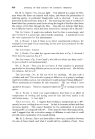
624 JOURNAL OF THE SOCIETY OF COSMETIC CHEMISTS • , • .. ::%,•"•?.•.- i "' ""•" '-:"?-•-• -%'-,-*. :•'•--: '.'-,•. .. • . - • ..• , ..... l: .:- '• • '.'•*' ' • ' • .. . • . . .. ,,. •.•-..- ß ** ß •' . , .- -., .½,.-f- ..- , / •'..•"-[/g."? :½'-'"''-' '.Z-z, . '[ •'u-- '• . '• %:•c :..-',, •.-. •i..:(::-•.•. •?•:.•,..':•...-•..-..:•:• ..•' ' '"'• ." •-" "?:'•-"•":""'" '::•' •:':• .............. •z• z: / . .' ' - -:'-' -7Z , ,' Figure 9 Ethyl oleate-induced scSirig on mouse skin. dandruff scales in showing the characteristic presence of layers of nucleated cells (Fig. 10). Figure 10 Human dandruff. Transverse sections of scale. Mouse "dandruff" induced by ethyl oleate. The mechanism by which ethyl oleate influenced the epidermis was not elucidated. This could well be the subject of further investigation, since
Purchased for the exclusive use of nofirst nolast (unknown)
From: SCC Media Library & Resource Center (library.scconline.org)