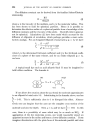
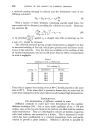
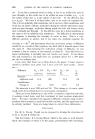
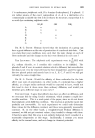
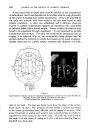
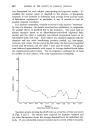
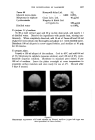
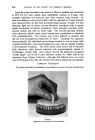
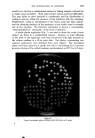
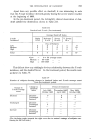
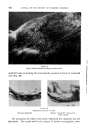
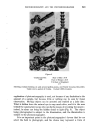
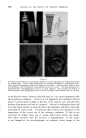
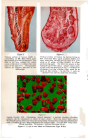
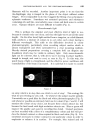
610 JOURNAL OF THE SOCIETY OF COSMETIC CHEMISTS It was impractical to spend more than 30 minutes on the examination of each subject, and it was desirable not to interfere with the scalp physically in the course of making each routine examination. Only scale attached to the scalp was assessed, since loose scales in the hair were found to defy reliable evaluation. A clinic was established and 5 full-time obse•wers trained to conduct examinations regularly on volunteers, who constituted an informal rather than a formal sample. Panels of about 20 subjects were found to be convenient for each experiment. It was important to provide standardized illumination. The scalp was examined by parting the hair at roughly • in intervals (Fig. 1), the examination being divided into 25 sections (defined by reference to certain fixed points on the head) of approx- imately equal area for a given subject, symmetrically disposed over both FIXED POINTS C: CROWN T: TEMPLES E: EARS Figure Approximate sectional areas for dandruff examination (Areas 10, 13, and 16 refer to the nape of the neck and do not show in this view). Head prepared for examination of crown areas. sides of the head. The hair was drawn back from the edges of the section under study by clips. The presence of scale within a section was noted as the extent (proportional area) affected, and the degree of severity. The scores for extent of scaling and severity were converted into an index to represent the total scaling on the whole scalp. Severity was scored within the range 1--•5 and extent of scaling as l--M5, a nil score meaning that no dandruff was observable.

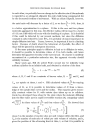
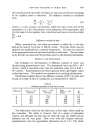
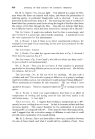
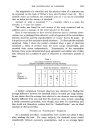
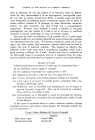
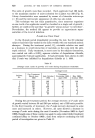
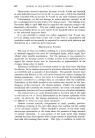
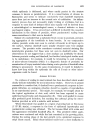
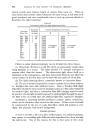
THE INVESTIGATION OF DANDRUFF 611 The magnitude of a sensation and the physical value of a stimulus can be expressed on the basis of Weber's Law and Fechner's Law (1). By a suitable choice of constants, the combined score (x q-y) can be converted into an index for the amount of dandruff: Amount of scale = (constant) x + y q- constant, where x = score for severity, y ---- score for extent. This index was found for each section of the scalp examined and by addition, gave a measure of the total amount on the head. Since it was necessary to have several observers and to continue obser- vations over a prolonged time-interval, a critical appraisal of the concordance between observers and the reproducibility of "scores" had to be made. It is hoped to record this analysis in detail elsewhere. To illustrate the methods employed, Table I shows the pattern obtained when a pair of observers examined a series of sections from the same scalps concurrently, and recorded their scores independently. Examination of the association between these scores demonstrated good agreement and similar sets of data were obtained for a number of pairs of observers in consecutive periods of time. Table I Concordance between observers {Figures represent numbers of scalp sections) Score for Severity: Observer A 0 1 2 3 4 5 Score for 0 8 ..... Severity: 1 1 98 4 -- -- -- Dbserver B 2 -- 8 20 2 -- -- 3 -- -- 3 2 -- -- A further comparison between observers was obtained by finding the average difference between the dandruff indices recorded per scalp section. It was shown that the average bias relative to one observer was not signi- ficantly different frbm zero and that the observers were, in fact, operating a stable assessment procedure, even though such tests for consistency and bias would not themselves confirm that the "dandruff index" was an ideal measure of clinical severity. STUDIES ON "UNTREATED" SUBJECTS As a standard procedure, examinations were carried out about 5 days after washing the hair. For many subjects, the dandruff scores varied considerably between successive examinations, and so an average figure
Purchased for the exclusive use of nofirst nolast (unknown)
From: SCC Media Library & Resource Center (library.scconline.org)