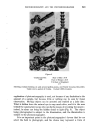
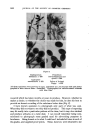
630 JOURNAL OF THE SOCIETY OF COSMETIC CHEMISTS foliative dermatitis, but this is a more serious skin abnormality, and is quite different from dandruff. DR. A. W. HO•.MF-S: Our own work on the electron microscopy of dan- druff scales has so far failed to reveal the presence of any nuclei. Are you sure that your sections are in fact revealing nuclei ? TIFF- LECTURF-R : Results of electron microscopy often disagree with those of optical microscopy, but it does not necessarily follow that the electron microscope is more truthful. You have a negative finding but we have a positive result demonstrated by two independent techniques. We have no doubt whatever that there is nuclear-staining material in dandruff scales. These are probably not functioning nuclei but are at least partly degen- erated since they are elongated in shape, they appear to be breaking down, but their presence cannot be denied. DR. F. J. EB•.•NG: There can be no doubt that androgens have an effect on the sebaceous output and probably on the superficial epidermis. But Dr. Marechal's statements did not really show a direct connection between interference with the blood supply and the cutting down of androgens. It would be quite possible to cut off the blood supply and still have ample androgens. The statement that the hair follicle has little need for a blood supply is rather misleading for if the blood supply to animal skin is inter- rupted for more than about two days, the hair follicles cease to function though the rest of the skin survives. Active hair follicles, however, provided they are in a region where blood can come, will call up the amount of blood they require. On the question of hormones, have you related the dandruff studies to age and to hormonal state, for example, possible fluctuations in dandruff during the menstrual cycle or during pregnancy ? TIFF. LF-CTURF-R: In our studies, the subjects were employees of one group of companies and were not representative of the population as a whole. They were, in a sense, a closed community. If dandruff is an infectious process, it would be wrong to draw epidemiological conclusions from such a community, owing to the special risk of cross-infection. It would be of great interest to foster a world-wide expedition to look for a tribe that either has dandruff and no P. Ovale on the scalp, or P. Ovale on the scalp and no dandruff. Our impression was that age within our groups had no particular effect, nor did we notice any marked difference between the incidence of dandruff on males and females. Regarding the possible effects of the menstrual cycle, this would not show up with our technique. We would be unable to show any such influence with a periodicity of less than six weeks, as we were conducting fortnightly observations but an effect due to the menstrual cycle is not unlikely.

J. Soc. Cosmetic Chemists 15 631-639 (1964) ¸ 1964 Society of Cosmetic Chemists of Great Britain MODERN TRENDS IN THE ASSESSMENT OF SHAMPOOS J. Iv[. BROMLEY* Presented at the Symposium on "Hair", at Brighton, Sussex, on 16th April A method for determining foam viscosity and sl•ecific foam volume is described. It is a major d•f•erence be•een •he method described, and original suggestions, that instead of taking viscosity and sl•ecific foam volume readings at •fferent beating times, a standard beating time is used and the number of dilutions tested is extended with constant soil level. This d•f•er- entiates the l•rOdUCtS which are likely to be unsatisfactory as foaming agents under heavy soil The evaluation of shampoos has been the subject of much discussion and many papers have been presented to the various Societies of Cosmetic Chemists throughout the world. Attempts have been made to eliminate the need to use salon testing of shampoos, as such tests tend to become difficult to control even when using statistical methods for the design of experiments. Although salon testing or the use of expensive consumer panels does give valuable results, it is obviously advantageous to have a method of screening shampoos in the laboratory prior to either checking formulations in the salon or having them tested by a consumer panel. It would appear that the lather is the characteristic of a shampoo which is most important to the general public. In particular the amount, texture and the ease with which the lather is rinsed from the hair. Other aspects which are naturally taken into account when assessing shampoos in the salon or by a consumer test are the cleanliness, gloss, manageability, soft- ness, and freedom from snagging of the hair. Tests designed to assess the characteristics of any new shampoo formula- tion in a hairdressing salon must be statistically arranged, and inevitably are time-consuming particularly if the differences in performance are slight. Variations between individuals in the type of hair, the length of the hair and the amount of soil are usually considerable, and results obtained may be affected by various treatments previously carried out on the hair such as bleaching, dyeing, permanent waving, the use of cationic hair rinses, and lacquers. *Marchon Products, Ltd., Whitehaven, Cumbs. 631
Purchased for the exclusive use of nofirst nolast (unknown)
From: SCC Media Library & Resource Center (library.scconline.org)