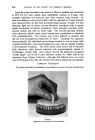
634 JOURNAL OF THE SOCIETY OF COSMETIC CHEMISTS temperature of the foam does not fall to below 23 ø C during this operation. After this three-minute beating, the foam is sampled and its viscosity deter- mined using the Techne Viscometer. At the same time, a further sample is withdrawn and placed in a pre-weighed cup of known volume so that this can be weighed subsequently, and the specific foam volume figure calculated. The standard soil is obtained by exhaustively extracting hair clippings with dichloromethane in a Soxhlet extractor. The solvent is removed from the residue by distillation. Several other solvents have been tried and can be used diethyl ether appears to be satisfactory although, as will be obvious, soil obtained from the hair varies in its characteristics depending on the type of solvent used. It is one disadvantage of obtaining a natural soil in this manner that there appears to be some variation in its properties from batch to batch. Consequently it is necessary to produce as big a blend as possible in an attempt to limit these batch to batch variations. Each batch of soil is checked against a 'standard' soil using a solution of triethanolamine lauryl sulphate as the shampoo. Soil obtained by the above procedure is a soft black solid with a setting point of approx. 23 ø C. We have tried to make synthetic soils but, unfortunately, we have not, as yet, managed to find a synthetic mixture which behaves in a similar manner to that obtained from natural hair. Throughout our work we used, as a control shampoo, a solution of triethanolamine lauryl sulphate with a Cetavlon value of 200 ml M/S00 cetavlon/g of product (17.3% AI) as this level of active ingredient is typical of the level used in retail liquid shampoos. Viscosity and specific foam volume determinations were carried out using a 25%, 12.5% and 6'25•o solution of the above control, or the shampoo formulation under test. As can be seen the tests carried out under these conditions give varying ratios of shampoo to soil, and also take into account the dilution of the shampoo. As can be expected the greater the dilution, the worse the reproducibility of the figures becomes, but I nevertheless believe that such dilutions are useful, as they indicate those shampoos which are unlikely to give satis- factory performance under normal use conditions where heavy soil loads are encountered. Additional tests were carried out in soft and hard water. The whole of the above testing procedure requires great attention to be paid to the timing, temperature and agitation conditions as well as to the accuracy of weighings if reproducible figures are to be obtained. Slight variations in timing or temperature of the solution have a marked effect on the results which are obtained. The other major difference between the methods we are now using, and the original suggestions, is that instead of taking viscosity and specific foam

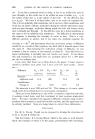
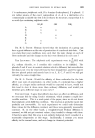
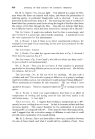
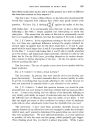
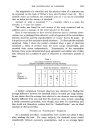
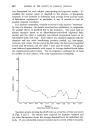
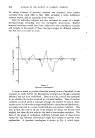
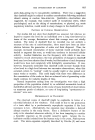
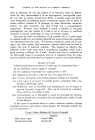
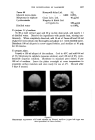
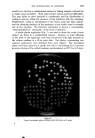
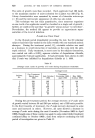
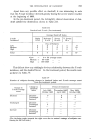
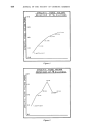
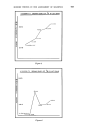
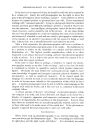
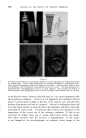
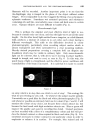
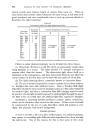
MODERN TRENDS IN THE ASSESSMENT OF SHAMPOOS 635 volume readings at different beating times, we use a standard beating time and extend the number of dilutions tested, keeping the soil level constant. This differentiates the products which are likely to be unsatisfactory as foaming agents under heavy soil loads. Naturally the above tests do not give an answer as to whether a shampoo is acceptable or not, but salon testing time is saved by the use of this pro- cedure. We believe we can now predict whether or not a product will give an acceptable lather volume when used in the salon under normal testing conditions. We have considered the advisability of carrying out the Standard Labora- tory Shampooing technique (5) where hair which has been solvent-degreased, and resoiled with a standard amount of soil is wetted and shampooed. This type of test appears to be extremely useful but somewhat time-consuming. We believe it is preferable to produce foam from the shampoo and added soil, using a Mixmaster, as this eliminates the problem of contamination of the foam with hair and subsequent difficulty in the assessment of the foam's physical properties. Various retail shampoos have been tested, and we find the following average figures for specific foam volume and foam viscosity for the various dilutions. Table I Concentration 25.00% 12.50% 6-25% Specific Foam Volume 13'9 12.2 7'8 Foam Viscosity 30.7 23.5 16.5 It must be emphasized that the figures in Table I apply to the tests carried out in our own laboratory, using the particular type of soil obtained by extraction of hair, as described above. It is also possible that while these figures may not be exactly reproducible when using soil extracted from the hair using alternative solvents, the general pattern of results should be none-the-less valid. The test method described has been used to test a range of products using triethanolamine lauryl sulphate as the control, and Figs. 1, 2, $ and 4 show the effect of adding coconut diethanolamide to a solution containing 17.3% triethanolamine lauryl sulphate active matter, on foam viscosity and specific foam volume. Unfortunately there does not seem to be a quantitative relationship between foam viscosity and specific foam volume figures, compared with results obtained in the salon. There is no doubt that these figures can be used as a guide in selecting formulations worthy of further salon testing. (Received: 6th March 19•l.)
Purchased for the exclusive use of nofirst nolast (unknown)
From: SCC Media Library & Resource Center (library.scconline.org)