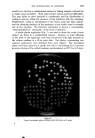
J. Soc. Cosmetic Chemists 15 641-656 (1964) ¸ 1964 Society of Cosmetic Ckemists of Great Britain PHOTOMICROGRAPHY AND THE PHOTO MI CR OG RAPH E R D. F. LAWSON, F.I.B.P., F.R.M.S. A lecture delivered before the Society on 23rd March 1964. Emphasis is placed on the problems of the industrial photomicrographer in establishing and maintaining the proper relationship to the organization. The responsibility of the man behind the camera microscope and the justifica- tion for a photonficrographic laboratory. The photomicrographer must learn to process his own materials, understand and apply the use of colour filters in black and white and colour photonficrography. His strategic position allows him to help solve many problems, if only given the material to work on. The usefulness of photomicrography and the photomicrographer depends upon the ability of the man behind the recording instrument, and the micro- scope is no better than the brain that interprets what the eye sees. INTRODUCTION The role photomicrography plays in the laboratory, in translating information otherwise difficult to observe and interpret, has witnessed a great step forward in recent years. Furthermore, I detect a healthy desire today to explore the technique of photomicrography. In this respect the pro- fessional chemist is concerned with the use of the microscope during his academic training, and his findings in a research programme. It is no doubt true to say that most, if not all of us, learned our chemistry through glass, and it is difficult to imagine just how handicapped we should be without direct visual observation. A close-up look through glass (objec- tive) is the natural way for a microscopist to study a substance and its behaviour. Photomicrography, however, takes us very much further, and is the means of our producing a permanent record of visual aids. The sooner photomicrographic records are made during a particular investigation the sooner it is realised how great is their value. One of the advantages of photomicrography, as compared with micro- scopy, is that its results are permanent, i.e. the evidence is always available for continued study, either by the individual or in groups (Fig. 1). When a quantity of a new synthetic product is limited, or say, an impurity in a soft drink, the appearance of crystal formation in a liquid or perhaps a breakdown in a tablet, to mention a few problems, the application is obvious. The study 641

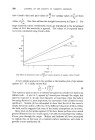
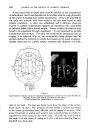
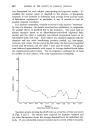
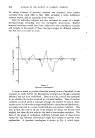
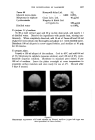
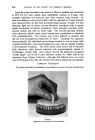
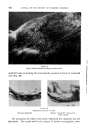
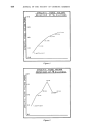
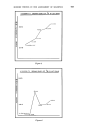
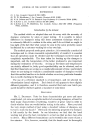
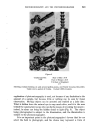
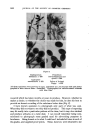
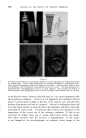
642 JOURNAL OF THE SOCIETY OF COSMETIC CHEMISTS Assistant holding lineoverlap of Skin of Mouse. Figure I Section of Skin of Mouse x 75 Original specimen 10 mm in length, recorded on nine exposures enabling the scientist to view the subject from end to end at a magnification of XI00. These nine exposures were enlarged to an overall length of 15ft. and exhibited at Europhot., Cologne in 1961. Data. 25 mm objective x 8 eyepiece 12" bellows extension Filter--nil Emulsion Kodak 0.250 Specimen stained by Gridleys' Brown. Three coloured slides of this subject were shown demonstrating the value of staining in con- junction with photography when using both colour and black and white emulsions. of a problem is pursued by comparison, partical size measurement, dissolu- tion, growth and behaviour (Fig. oe), and in many instances the technical
Purchased for the exclusive use of nofirst nolast (unknown)
From: SCC Media Library & Resource Center (library.scconline.org)