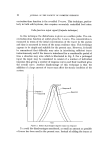
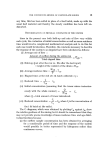
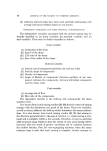
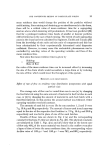
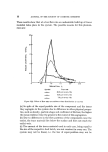
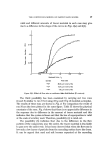
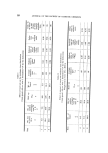
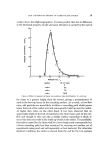
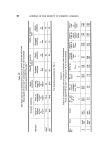
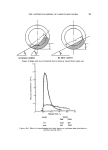
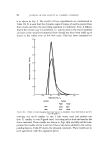
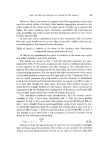
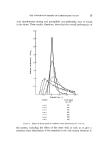
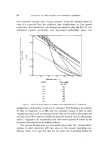
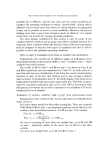
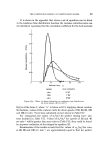
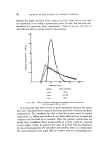
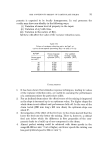
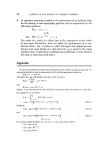
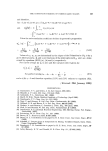
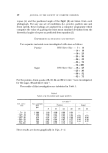
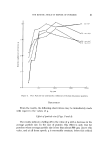
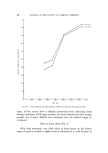
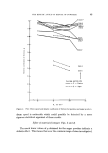
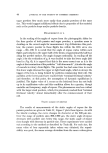
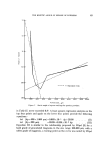
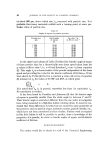
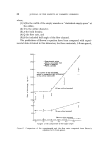
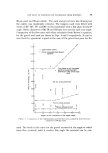
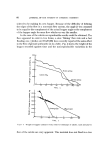
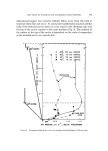
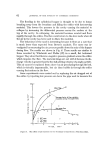
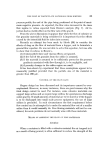
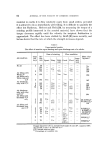
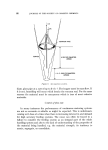
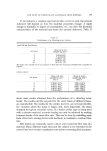
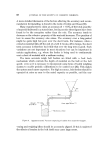
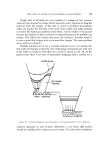
TIlE CONTINUOUS MIXING OF PARTICULATE SOLIDS 27 absolute size is different, and the mix ratio and size ratio of particles are changed, the operating conditions to obtain "pseudo-ideal" mixing will be different and in certain cases when there is a strong tendency to segregation it may not be possible to arrive at such conditions. However, the present findings show that a great deal of improvement of efficiency of a simple drum mixer can be done by varying operating conditions. The ideal mixing considered in this section is only in terms of the variation between batches and in many cases this is of prime interest. For situations where variation within the batches is also of interest experiments must be designed to measure both types of variations and then it xvill be possible to select the optimum operating conditions. Effect of angle of inclination of the drum on residence time distribution Experiments were carried out at different angles of inclination of the drum independently at drum speeds of 60 rev min- • and 80 rev min- I. Other variables were held constant. The results at 60 rev min-1 and 80 rev min-1 are shown in Figs. 9 (a) and 9(b) respectively, and are summarised in Table VI. In both cases it is seen that with increase of inclination of the drum the extent of axial mixing increases in spite of the fact that hold-up and so also average residence time decreases. At inclinations above 4 ø the whole length of the drum is not being utilized and the hold up becomes appreciably less. Therefore, in many cases the maximum inclination that can be used will be determined from this practical viewpoint and in other experiments an inclination of 3 ø to the horizontal has been adopted. Evaluation of variance reduction ratio, t•o2/tJi2 from experi•nental results Examination of the results in Fig. 8 shows that there are basically three types of curves: (a) Curves almost parallel to the perfect mixing line. These are at speeds of 60, 80 and 100 rev min- l and empirical equations can be fitted to the residence time distribution functions. For 60 rev min- 1 for example: F(t) =0 t 0.55• 10 F(t)---1--e- 1.11(t--0.55•0) t 0.55 •10 {b) Curves consisting of more than one straight line, as at 50 and 120 rev min-• Equations similar to the above can be fitted to the three sections. (c) Curves not straight lines, as at 20 and 40 rev min-1

28 JOURNAL OF THE SOCIETY OF COSMETIC CHEMISTS
Purchased for the exclusive use of nofirst nolast (unknown)
From: SCC Media Library & Resource Center (library.scconline.org)