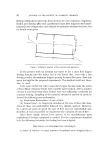
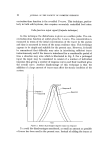
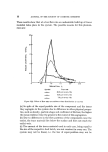
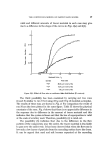
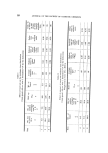
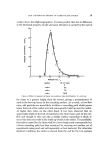
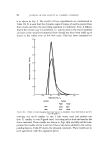
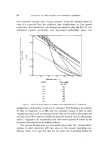
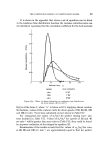
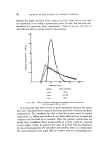
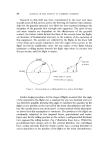
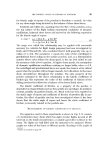
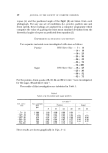
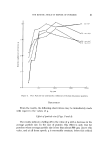
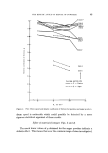
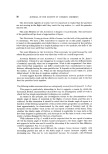
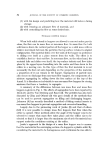
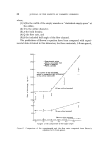
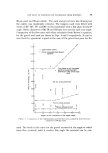
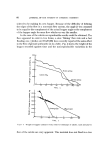
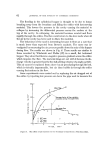
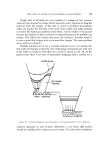
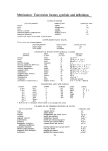
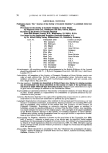
60 JOURNAL OF THE SOCIETY OF COSMETIC CHEMISTS sidered to be making its own hopper. Because of the difficulty of defining the edges of the flow in a non-mass flow system, the angle It was assumed to be equal to the complement of the actual hopper angle or the complement of the hopper angle for mass flow whichever was the smaller. In the case of the calcite no reproducible results could be obtained. The flow appeared to exist in two forms, a slow 'flaking' flow rate and a fast flooding one [Jenike and Bruff (26) have recently reported the same effect in the flow of ground anthracite on to a belt_]. Fig. • shows the weight of the hopper recorded against time and the non-reproducible variations in the 80( 6oc 400 200 • IOOC • eoo • 600 "'- 40C o ß ? 200 _ Calcite 55/z rl I J I J I '•'••rifice 20 40 60 80 I00 120 140 160 Time, s 20 40 60 80 I00 •20 Time, s Figure 4 Weight of hopper contents versus time for discharge of calcite, sand and gravel. flow of the calcite are very apparent. This material does not flood in a two

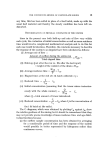
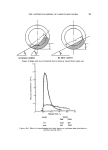
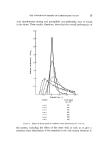
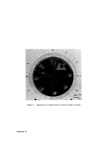
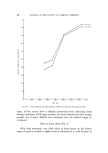
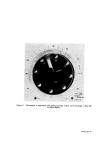
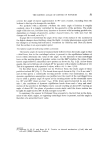
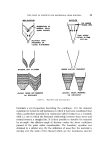
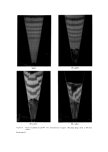
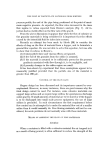
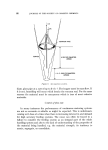
St&•c 10 s after 20 s after 30 s after Figure 5. Flow of calcite in an 80 ø two dimensional hopper 152 mm deep with a 30 mm orifice. Facing page 61
Purchased for the exclusive use of nofirst nolast (unknown)
From: SCC Media Library & Resource Center (library.scconline.org)