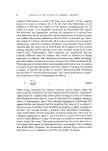
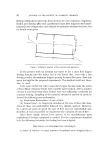
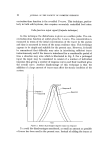
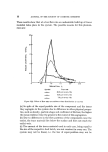
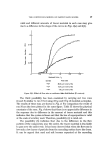
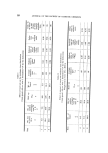
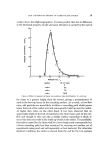
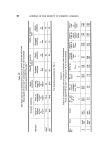
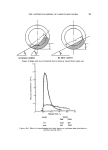
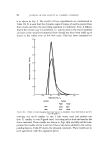
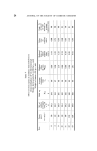
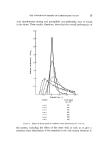
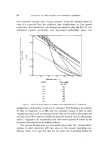
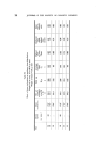
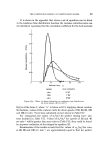
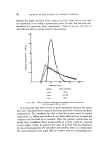
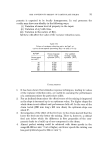
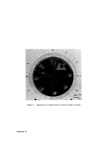
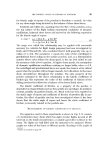
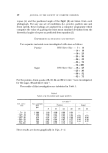
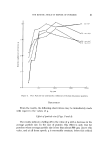
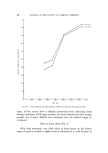
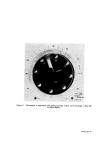
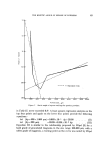
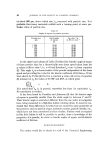
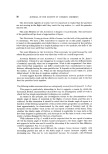
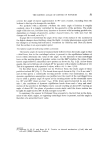
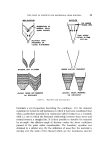
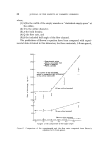
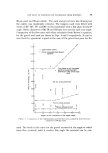
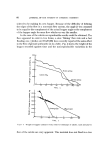
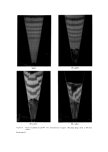
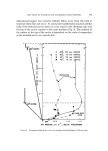
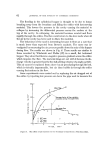
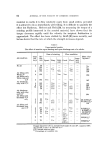
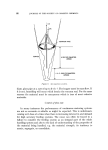
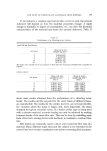
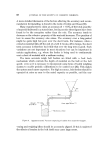
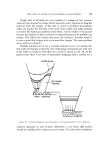
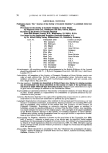
44 JOURNAL OF THE SOCIETY OF COSMETIC CHEMISTS sugar powders flow much more easily than pumice powders of the same size. This would suggest additional effects due to properties of the material such as the particle shape and/or particle density. MEASUREMENT OF •, In the reading of the angles of repose from the photographic slides for the finer grades of both pumice and sugar powders, a question arose in deciding on the correct angle for measurement. Fig. 6 illustrates this prob- lem the pumice powder in these flights lies within the BSS sieve size range --52+ 100. It is noted that the angle of repose varies within each flight particularly in the upper half of the drum at approximately half way along the powder surface, the angie changes noticeably. In reading off the angle L for the evaluation of I•, it was decided to take the lower angle (left hand in Fig. 6) it is argued that this is the more correct one as it is the angle at the termination of the particles' "roll downwards' ' it is also the angle of cascade in rotary drum flights. The powder has had some time to reach this lower angle whereas the upper or right hand angle, which is always the bigger of the two, is being formed by particles commencing their roll. The particles at the lower point have reached their 'terminal frictional velocity' and therefore, at this point, the assumption of dynamic equilibrium is justified. The higher value of •, occurs as the frictional force has not built up to its equilibrium value and this condition allows for a greater, though unstable and temporary, angle of repose. The phenomenon was less evident with the larger sized powders, which, it is presumed, reached their 'terminal frictional velocity' almost immediately after the commencement of their roll. STATIC ANGLE OF REPOSE The results of measurements of the static angles of repose for the pumice powders are given in Table II Figure 7 plots these figures. As with the kinetic readings, the curve changes its character at the 500 I•m size. Over the-range of particle sizes 500-1 800 [tm, the static angle of repose decreases with particle size below this range, the static angle of repose rises sharply with decrease in particle size. These experiments were carried out according to the method as described by Train (6). For each size, the •nean value of four separately taken values was obtained the repeat- ability was good, the mean average deviation from the mean values given

Figure 6. -. 330 Photograph of apparatus with pumice powder of B.S. sieve size range --52 d-100 in closed flights. Facing page 44
Purchased for the exclusive use of nofirst nolast (unknown)
From: SCC Media Library & Resource Center (library.scconline.org)