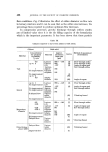
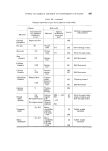
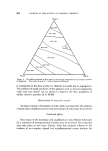
442 JOURNAL OF THE SOCIETY OF COSMETIC CHEMISTS that the action of alkali on a PGA solution brings about a very marked drop in viscosity. The degraded product contains some non reducing end groups having a 4-5 double bond as can be demonstrated by means of the thiobarbiturate reaction (2). Some saponification and degradation will take place even if a PGA is made alkaline for only a short time and for that reason users of the product are advised to exercise great care in any adjust- ment of the free acidity of PGA solutions. The product is sold with a pH in the range $ to 5, and if for any reason this has to be adjusted to a slightly higher level very careful addition of dilute alkali with extremely good stirring is necessary to avoid any local alkaline conditions in the solution. Adjustment to a pH of above 6 is not advised. Some years ago a patent for the preparation of alginic acid amide by the reaction of anhydrous ammonia with PGA was published (3). It is stated therein that the moisture content of the system should not exceed 50% of the dry solids, and should preferably be much lower. The description in two later patents of the reaction of PGA with amino compounds in aqueous alkaline conditions, to give useful products was therefore rather surprising (4, 5). The important reaction to the inventor companies was that of the PGA with gelatine to give a photographic emulsion that could be processed at temperatures at which an untreated gelatine emulsion would melt, but one of them {4) included claims to cover the preparation of water insoluble film forming compounds from alginic acid esters and compounds having at least two primary or secondary amino groups. The general method described in these patents is to form on a suitable support a mixed film of the PGA and gelatine or a neutralised amino com- pound, at a pH of below 7, and to immerse it in an alkaline bath to bring about the insolubilization. In photographic work the normal alkaline developers have this effect. The insolubilization can also be shown by holding a mixed solution of PGA and gelatine at a temperature above the melting point of gelatine (say at 40 øC) and adding sufficient sodium carbon- ate to bring the pH to about 10. The mixture then rapidly stiffens and cannot be melted by holding in a boiling water bath, nor will it dissolve when mixed with more hot water. In the course of some work to study the conditions for reaction with various amines some control tests were made in which no amine was included. It was then found that if sufficiently concentrated solutions of PGA were made slightly alkaline there was a marked increase in viscosity instead of the expected decrease. Further experiments showed that increases in viscos- ity and gel formation could take place in mixed solutions of PGA and a

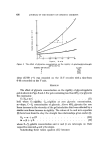
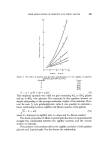
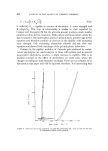
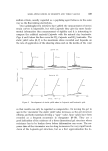
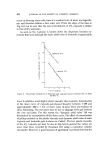
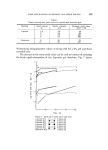
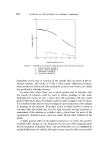
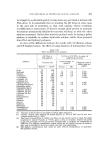
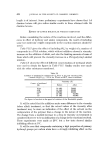
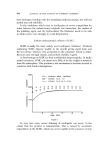
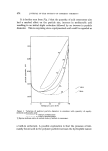
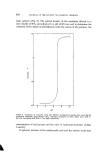
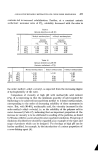
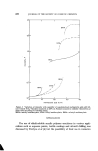
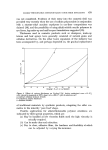
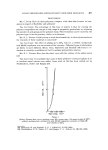
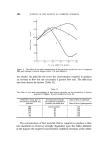
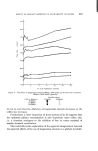
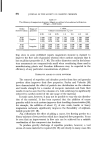
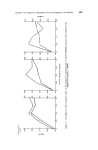
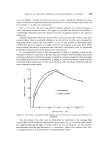
NEW REACTIONS OF PROPYLENE GLYCOL ALGINATE 443 number of other polymers containing hydroxyl groups (6). Mixtures with polyvinyl alcohol or starch are particularly effective, and only low concen- trations of PGA are necessary. It was found that the conditions for reaction with amines are rather different than those for hydroxy compounds and a further difference between the two types is found in the effect of including low molecular weight compounds in the reaction mixtures. NATURE AND MEASUREMENT OF THE EFFECTS The solutions of PGA, either alone or mixed with other compounds, had viscosities in the range 10--50 000 cP depending on concentrations and the degree of polymerization. Within certain ranges of composition and temperature there was a rapid change in the rheological properties of the mixtures when a suitable amount of alkali was added. In some cases definite gels were formed and in others there was a very marked rise in viscosity and the development of some elasticity. It is not practicable to give a precise quantitative description of the properties of the modified solutions, but measurements made with the Brook field viscometer give some indication of the changes. With this instrument the dial reading is a measure of the torque required to rotate a spindle in the liquid at one of several speeds and the viscosity is calculated by means of factors provided with it. Although the results are expressed in terms of "viscosity" this assumes that the whole of the torque is required to maintain the constant rate of rotation, and is balanced by the viscous drag. This is not the case with visco elastic liquids as part of the torque is used to bring about elastic deformation of the matehal. The contributions of the two components to the torque will clearly vary with the speed of rotation, but from experience with highly viscous alginate solutions it is to be expected that the viscous drag will also vary with the speed of rotation so that varying the speed does not allow the elastic and viscous forces to be separated. As the experiments gave products with a very wide range of consist- encies, different spindles and speeds had to be used to obtain significant readings on the scale of the instrument and the measurements are therefore not strictly comparable. In an experiment where the viscosity increase was not very great it was possible to obtain readings over a wide range of speeds as shown in Fig. I. It will be seen that after treatment the viscosity readings are much more
Purchased for the exclusive use of nofirst nolast (unknown)
From: SCC Media Library & Resource Center (library.scconline.org)