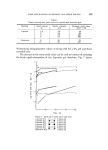
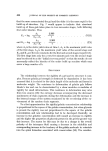
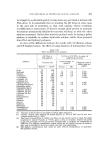
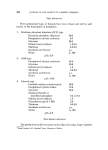
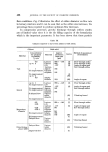
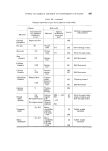
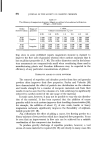
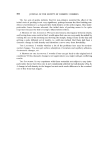
446 JOURNAL OF THE SOCIETY OF COSMETIC CHEMISTS a rise in viscosity with lower concentrations of PGA. Preliminary experi- ments indicated that 0.5 millimoles Na2C03 per g. PGA gave the best results. (ii) PGA and polyvinyl alcohol In these experiments mixed solutions of PGA and several types of polyvinyl alcohol {PVA) were prepared and treated with alkali as with solutions of PGA alone. As some experiments indicated that 1 mmole Na2C 03 g-1 PGA gave the best results, this amount was used as a standard in these mixtures. Some typical results are given in Table I! Table II Treatment of mixed solutions of PGA and PVA with alkali PGA used: Sample B Temperature: 20øC 1 mmole Na,CO• g-• PGA used, mixture reacidified after 15 rain PGA concentration g 100g -• 0.5 0.8 0.5 0.8 1.0 1.0 1.0 1.0 1.0 1.0 1.0 1.0 1.0 0.8 1.0 Polyvinyl alcohol type and concentration g 100g -• Elvanol 50-42 (a) 2.0 2.0 4.0 4.0 Viscosity (P) Before 0.25 0.60 1.10 3.00 After 0.21 2 000 425 20 000 Alcotex 88-05 (b) 1.5 3.0 5.0 Alcotex 88-20 (c) 1.0 1.5 3.0 6.0 Elvano171-30 (d) 1.0 2.0 3.0 3.0 0.37 0.52 0.74 0.50 0.60 1.20 5.00 0.45 0.91 0.63 1.68 0.20 0.75 32 0.35 60 3 000 12 000 0.60 2 600 2 200 8 340 Notes: (a) About 88 % hydrolyzed, high viscosity (mol. wt. approx. 200 000} {b) About 88 % hydrolyzed, low viscosity (mol. wt. approx. 25 000) {c) About 88 % hydrolyzed medium viscosity {mol. wt. approx. 80 000} {d) Fully hydrolyzed medium viscosity {mol. wt. approx. 130 000) It will be seen that as with PGA alone, the viscosity increase on alkali treatment takes place provided that there is sufficient of both PGA and

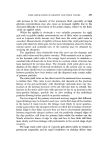
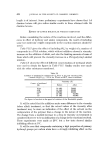
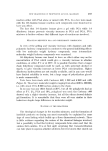
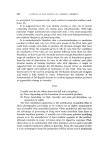
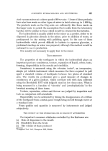
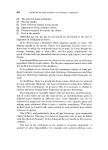
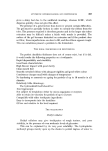
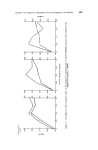
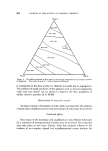
NEW REACTIONS OF PROPYLENE GLYCOL ALGINATE 447 PVA present. An experiment at lower temperatures shows again that the concentration necessary is reduced as the temperature is decreased. The use of mixtures of PGA and PVA enables the reaction to be carried out at lower initial viscosities than is the case with PGA alone. As with the PGA alone, the dried film of the mixed reaction product is insoluble in water. {iii) PGA and starch The starch used, Viscosol 810, is a thin boiling starch made commercially by hypochlorite treatment of potato starch. The starch solution was made in boiling water and cooled before mixing with the PGA solution. Compar- able results have been obtained in a few tests with other starches. Some results with starch are given in Table III. Table III Treatment of mixed solutions of PGA and starch with alkali PGA used: Sample B Starch used: Viscosol 310 1 mmole Na,CO, g-• PGA added, acidified after 15 min Concentration g 100g -• Viscosity (P) PGA Viscosol Before After 1.0 0.5 1.0 2.0 0.5 1.0 4.0 8.0 8.0 8.0 12.0 12.0 0.44 0.14 0.47 2.20 0.20 0.45 0.42 0.12 90.00 stiff gel 3.80 84O.OO It will be noted that considerably higher concentrations of starch than of PVA are necessary, but the starch will allow the PGA concentration to be reduced to a similar extent. Conditions for viscosity increases The examples given show that one necessary condition to produce a viscosity increase is to have a sufficiently high concentration of PGA in the solution and to work at a sufficiently low temperature. Another factor to be considered is the amount and type of alkali used. In most of the examples given this has been sodium carbonate, but trisodium phosphate and sodium metasilicate have given similar results. No success has been obtained with sodium hydroxide, perhaps because with the methods of
Purchased for the exclusive use of nofirst nolast (unknown)
From: SCC Media Library & Resource Center (library.scconline.org)