J. Soc. Cosmet. Chem. 21 459-470 (1970) ¸ 197o Society of Cosmetic Chemists of Great Britain Synthetic dentifrices hydrocolloids and C. A. WATSON* Presented at the Symposium on "Gums and Thickeners", organised by the Society of Cosmetic Chemists of Great Britain, at Oxford, on lSth October 1969. Synopsis--Most SYNTHETIC HYDROCOLLOIDS used in conventional TOOTHPASTES are derivatives of CELLULOSE Their behaviour in three typical dentifrice formulations is described and discussed, giving a basis for selection from the many types available. A few synthetic THICKENING agents which are not cellulosic in origin have been evaluated and the difficulties of using materials of this type are described. THE TOOTHPASTE SYSTEM The toothpaste system is one of the most complex products with which we have to deal in cosmetic chemistry. It usually consists of a polishing agent, or very often a blend of polishing agents, suspended in an aqueous glycerine, sorbitol or propylene glycol liquid phase by means of a hydrocolloid. The polishing agent normally has a specific gravity of about 2.7 and the aqueous phase is usually about 1.1 Complicating factors are the presence of electrolytes, adsorbed ions on the polishing agent, macro and micro emulsions of the flavour oil/foaming agent/aqueous glycerine, and the interactions and their products which occur during storage. The hydrocolloid plays a key role in preserving product stability and obtaining optimum attributes to the consumer. Synthetic and natural or processed plant extracts are extensively used. Both have their advantages and disadvantages. *Unilever Research Laboratory, Isleworth, Middlesex. 459

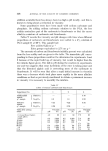
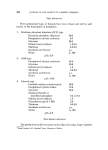
460 JOURNAL OF THE SOCIETY OF COSMETIC CHEMISTS TEST PRODUCTS Three generalised types of formula have been chosen and will be well known to the formulators of dentifrices. 1. Dicalcium phosphate dihydrate (DCP) type Dicalcium phosphate dihydrate 40.0 Precipitated calcium carbonate 5.0 Glycerine 20.0 Sodium lauryl sulphate 1.5-2.5 Thickener 0.5-2.0 Saccharin and flavour q.s. Water to 100 pH =7.8 2. Chalk type Precipitated calcium carbonate 45.0 Glycerine 20.0 Sodium lauryl sulphate 1.5 Thickener 0.5-2.0 Saccharin and flavour q.s. Water to 100 pH=10.0 3. Fluoride type Insoluble sodium n,etaphosphate 28.0 Precipitated hydrated silica 12.0 Glycerine 30.0 Stannous fluoride or monofluorophosphate Sodium lauryl sulphate Polyethylene glycol 1 500 Thickener Saccharin and flavour Water pH=4.5 0.4 or 0.8 1.5 2.0 0.5-2.0 to 100 PROCESSING METHODS The products have all been made on the 3 kg scale using Lang* stainless *Lang London Ltd., Southall Lane, Hounslow, Middx.
Purchased for the exclusive use of nofirst nolast (unknown)
From: SCC Media Library & Resource Center (library.scconline.org)