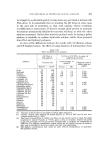
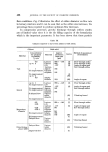
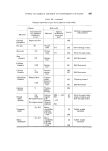
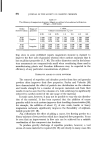
SYNTHETIC HYDROCOLLOIDS AND DENTIFRICES 463 gives a slimy feel due to the undiluted mucilage, whereas SCMC, which disperses quickly, does not give this effect. The presence of a gel structure does however present certain difficulties. The gel must be partially broken in order to extrude the ribbon from the tube. The pressure required is therefore greater and in the larger size tubes extrusion may be difficult unless a fairly wide nozzle is provided. The surface of the gel becomes disturbed on extrusion and if the product does not flow, these imperfections are slow to fill, and the ribbon appears rough. This can sometimes present a problem to the formulafor. THE IDEAL THICKENER FOR DENTIFRICES The perfect dentifrice thickener does not of course exist, but if it did, it would confer the following properties on a toothpaste: Rapid dispersibility and rinsibility Good foam characteristics High flavour impact with good clarity Clean mouth feel Smooth extruded ribbon with adequate rigidity and good white colour Consistency changes small with changes of temperature No hardening or syneresis on ageing for periods of up to 18 months in all climates Relatively little thixotropy. The hydrocolloid itself should be: Non hygroscopic Not subject to breakdown either by micro-organisms or enzymes Able to retain its viscosity for periods of up to 2 years Compatible with other toothpaste ingredients Easy to incorporate into the dentifrice Of low cost relative to the level required. THE CELLULOSICS Methyl cellulose Methyl cellulose may give toothpastes of rough texture, and poor stability, in the presence of even moderate levels of glycerine. This can be explained by its very poor solubility. The hydrophobic methoxyl groups merely open up the chains to permit ingress of water to

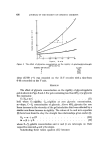
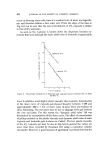
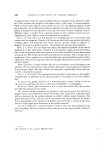
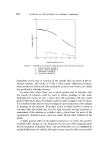
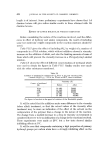
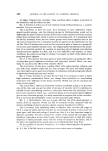
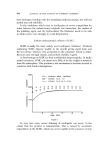
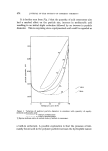
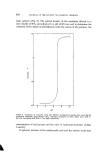
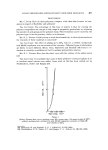
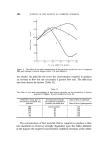
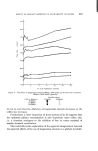
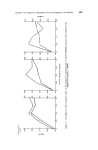
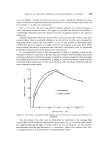
464 JOURNAL OF THE SOCIETY OF COSMETIC CHEMISTS form hydrogen bonding with the remaining hydroxyl groups, but will not permit any real solubility. In the conditions which exist in toothpastes of severe competition for water between the sodium lauryl sulphate, the humectant, the surface of the polishing agent and the hydrocolloid, the thickener needs to be able to retain water very strongly to avoid dehydration. Sodium carboxymethyl cellulose (SCMC) SCMC is easily the most widely used toothpaste thickener. Products containing SCMC disperse readily in the mouth giving rapid foam and flavour release, which is very acceptable to the consumer. Colour is white, flavours come through cleanly, and product stability is good. A disadvantage of SCMCs is their considerable hygroscopicity. In badly sealed containers, SCMC can absorb over 20% of its dry weight of moisture from the atmosphere. This problem is not uncommon in factories located in countries with humid atmospheres. 300' u 200. • ioo .•_ U XX-- hydroxy ethyl Cellulose 00-- SCMC D.S. 1.2 -,---- SCMC D.S 0'7-0'8 X X X X X X X X X X X X o 0 o O O 0 O o G 0 O 0 4 6 8 Age-days I0 Figure 1 In very rare cases, severe thinning of toothpaste can occur, to the extent that the product is unmarketable. This is caused by enzymatic degradation of the SCMC, which can occur rapidly in the presence of only
Purchased for the exclusive use of nofirst nolast (unknown)
From: SCC Media Library & Resource Center (library.scconline.org)