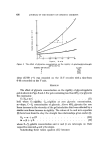
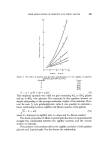
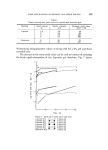
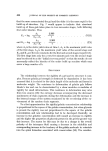
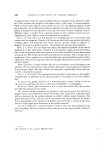
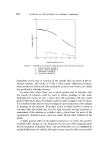
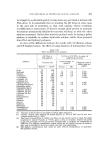
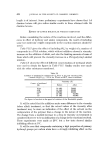
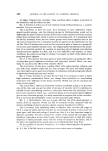
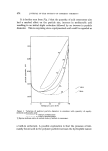
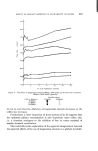
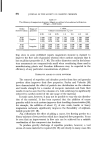
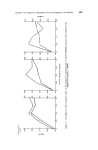
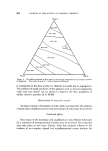
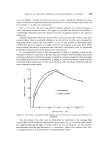
ALKALI-THICKENABLE METHACRYLATE COPOLYMER EMULSIONS 473 methyl methacrylate, 0.01% 2:4-dimethyl-6-tert-butylphenol ethyl metha- crylate, 0.1% hydroquinone n-butyl methacrylate, 0.004% p-methoxy- phenol methacrylic acid, 0.025% p-methoxyphenol. Polyoxyethylene (4-5) monolaurate was a 93% pure grade containing 1.1% free polyethylene glycol (supplied by Rex Campbell & Co. Ltd.). Sodium dodecyl sulfate was 99.9% pure (supplied by Cyclo Chemicals Ltd.). The remaining ingredients were reagent grades. Process The water phase, contained in a 11 glass flask, was purged free of oxygen with nitrogen. At a temperature of 18-20øC, the monomers, dodecyl mercaptan, ferric chloride, sodium persulfate and sodium metabisulfite, were added with stirring. Agitation was continued throughout at such a rate as to ensure continuous uniform mixing of the ingredients. The temper- ature rose rapidly to about 80øC and was maintained at this temperature for 30 min. The emulsion was cooled down, its pH adjusted to 4.4-4.5 with 20% aq. sodium hydroxide and filtered through 400 mesh nylon. The emulsions were prepared in random order. Conversions of monomer to polymer were greater than 98%. Viscosities A portion of each emulsion was diluted to a non-volatile of 10% and its pH adjusted to 8.4-8.6 with aq. NaOH. The viscosity was determined after 60 min using a Ferranti portable concentric cylinder viscometer. Particle diameters were estimated by a turbidimetric technique {8). Optical densities were determined on the products adjusted to pH 8.4-8.6 at a non-volatile of 10%, through a 10 mm glass cell using filtered light of wavelength 580 nm. RESULTS AND DISCUSSION Increase in the quantity of surfactant in emulsion polymerization usually results in a decrease in diameter of the polymer particles, often in inverse proportion to the surfactant: monomer ratio. In the present series {Fig. 1 ), for given copolymer compositions the particle size in the emulsion state showed a similar reduction with increase of the anionic surfactant {i.e. sodium dodecyl sulfate) concentration.

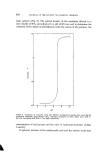
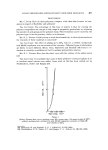
474 JOURNAL OF THE SOCIETY OF COSMETIC CHEMISTS It is further seen from Fig. 1 that the quantity of acid comonomer also had a marked effect on the particle size, increase in methacrylic acid resulting in an initial slight reduction followed by an increase in particle diameter. This is surprising since copolymerized acid could be regarded as o.•o ß • o,o6 E .u_ 0.0,' i I ! ! / /' I I I 0 10 20 3o 4o methacrylic acid (%wt) MMA "BMA Figure I Variation of polymer particle diameter in emulsion with quantity of copoly- merized methacrylic acid. methyl methacrylate -- n-butyl methacrylate. % figures indicate ratio of sodium dodecyl sulfate to monomer. a built-in surfactant. A possible explanation is that the presence of inti- mately bound acid in the polymer particle increases the hydrophilic nature
Purchased for the exclusive use of nofirst nolast (unknown)
From: SCC Media Library & Resource Center (library.scconline.org)