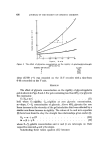
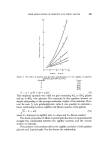
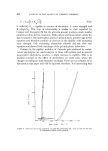
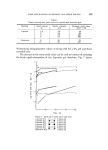
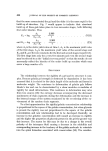
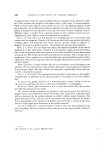
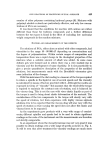
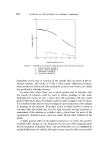
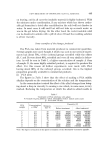
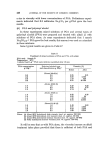
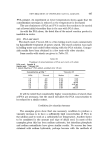
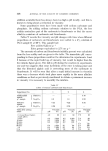
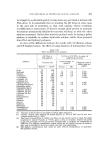
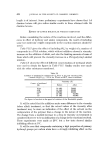
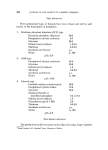
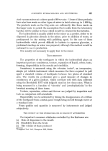
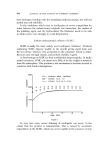
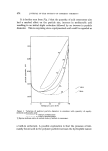
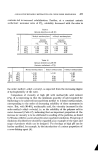
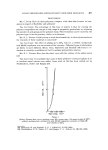
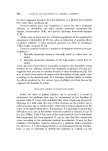
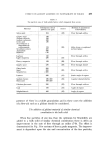
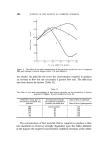
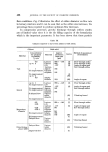
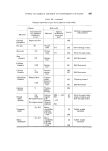
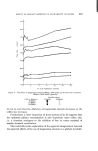
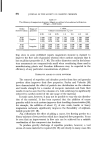
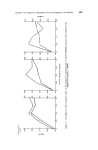
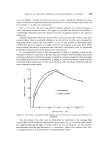
ALKALI-THICKENABLE METHACRYLATE COPOLYMER EMULSIONS 477 contents led to increased solubilization. Further, at a constant anionic surfactant: monomer ratio of 2%, solubility decreased with the ester in Table I Optical densities at pH 8.5 10% 2O% 3O% 4O% Methyl methacrylate Anionic surfactant 1% s% 1.00 0.59 0.46 0.10 0.04 0.04 0.01 0.01 n-Butyl methacrylate Anionic surfactant 1.00 0.52 0.56 0.30 0.07 0.25 -- 0.07 Table II Optical densities at pH 8.5 (Anionic surfactant: = 2 %) Methyl methacrylate Ethyl methacrylate n-Butyl methacrylate -- 0 % 1.00 1.00 1.00 10 % 0.66 -- 0.57 20% 0.13 0.20 0.29 SO % 0.04 0.05 -- 40 % 0.01 , 0.03 0.07 the order: methyl ethyl n-butyl, as expected from the increasing degree of hydrophobicity of the ester. Comparison of viscosity at high pH with methacrylic acid content (Fig. $) is interesting in that the minimum quantity of acid required for thickening to be achieved increased from methyl to n-butyl methacrylate, corresponding to the order of decreasing solubility of these monomers in water. But, with 30-40ø//0 methacrylic acid, the viscosity increased in the order methyl ethyl n-butyl, i.e. as the solubility of the polymer salt in water decreased (Table II), indicating that an important proportion of the increase in viscosity is to be attributed to swelling of the particles, as found by Wesslau (12) for a series of acrylic ester copolymer emulsions. The group o f emulsions described here should be regarded as an example of the type and range of products which can be designed. The rheology at high pH can be further modified, for example, by the introduction of a minor proportion of a cross-linking agent (4).

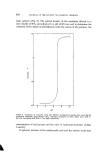
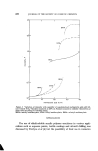
478 JOURNAL OF THE SOCIETY OF COSMETIC CHEMISTS 10 16' I I I ! / ! / EM/• / / ld 2 I 0 30 40 I BMAi i / / EMA / MMA/ / / / / I I lO 20 methacrylic acid (% wt) t igur• 8 Variation of viscosity with quantity of copolymerized methacrylic acid. pH 8.5, non-volatile 10 •. Viscosity measured at 25øC on Ferranti concentric cylinder viscometers at shear rates according to viscosity range. MMA= methyl methacrylate, EMA---- ethyl methacrylate, BMA---- n-butyl methacrylate. APPLICATIONS The use of alkali-soluble acrylic polymer emulsions in various appli- cations such as aqueous paints, textile coatings and oil-well drilling, was discussed by Fordyce et al (4) but the possibility of their use in cosmetics
Purchased for the exclusive use of nofirst nolast (unknown)
From: SCC Media Library & Resource Center (library.scconline.org)