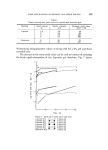
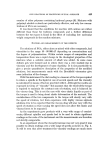
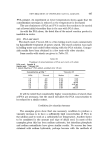
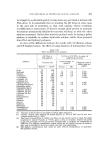
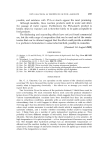
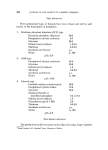
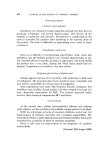
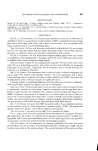
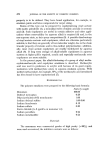
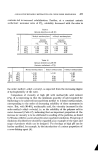
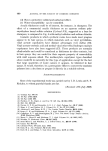
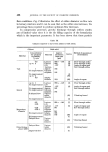
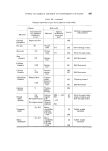
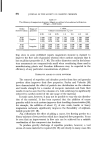
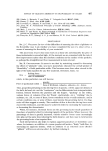
EFFECT OF GLIDANT ADDITION ON FLOWABILITY OF SOLIDS 489 Table III--continued Glidants reported to have been added to bulk solids. Material Calcium phosphate Fly ash Microcell Zinc stearate Lithium stearate Calcium stearate Aluminium stearate Calcium silicate Fumed silica dioxide Pyrogenie silica Silico- aluminate Glidant Concentration for optimum flowability % Improved flow 20 3.6 0.5 0.25 2 0.25 Delayed flow 0.25 0.5 0.25 No improvement No improvement 0.1-0.5 0•1-0.5 Bulk solid Material Ottawa sand Ottawa sand Sponge Iron Sponge Iron Lactose sponge iron Various tablet diluents Sponge iron Thermo- plastic Powder Lactose Aspirin S.D. Lactose Calcium sulphate Micro- crystalline cellulose S.D. Egg yolk Micro- crystalline cellulose S.D. egg yolk Approx. arithmetic mean size (•m) 711 711 950 -+ -149 541 -177 541 Method of assessment of flowability Flow through orifice Flow through orifice Hall flowmeter Hall flowmeter Hall flowmeter Vibrating funnel Hall flowmeter Flow through orifice Angle of repose and flow through orifice Tablet weight variation Tablet weight variation

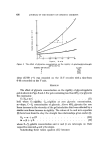
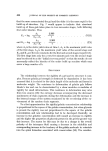
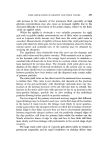
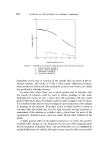
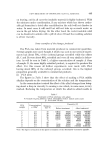
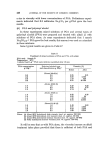
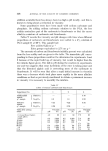
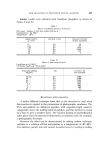
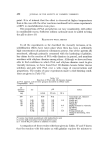
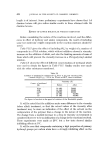
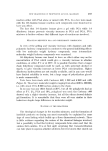
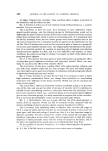
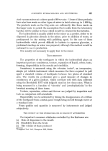
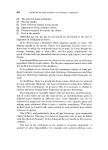
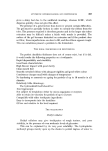
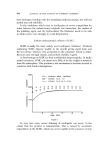
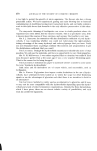
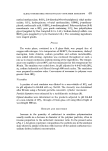
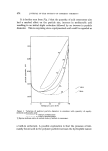
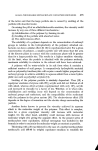
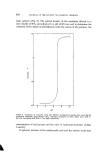
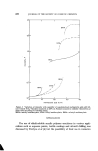
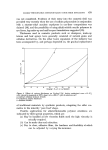
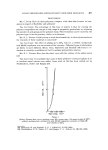
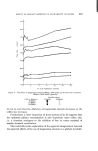
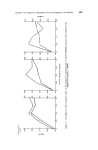
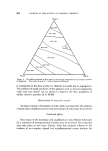
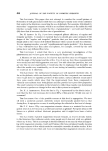
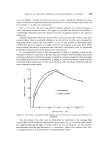
490 JOURNAL OF THE SOCIETY OF COSMETIC CHEMISTS size distribution effects are relevant to the tabletting process (8, 13) and that provided segregation is not significant the presence of a large quantity of fine material is not necessarily unacceptable (14). Addition of material of dissimilar chemical constitution to the bulk solid In some cases, even though an optimum particle size and size distribu- tion is achieved, the bulk solid may still not possess the desired flow proper- ties. Furthermore, it may be that a monosized system is required by a specification. In these circumstances a material chemically dissimilar to the bulk can be added to improve flowability. In this context it has been reported that the inclusion of lubricants in a tablet granulation may improve or impair its flow properties (1). The literature contains many different types of material that have been used as glidants in this category and Table III summaries some of these. It is obvious that the glidants differ not only in chemical properties but also in their physical characteristics such as size, frictional properties, crystalline structure and density. It can also be seen that the concentration of glidant varies with the material to which it is added and that in some cases there is some doubt as to their efficiency in improving the flow properties of the bulk solid. In order to explain these apparent anomalies in glidant efficiency a preliminary study has been carried out using a model system. Fig. $ illustrates the effect of particle shape and concentration of glidant on the flow rate of mixtures of magnesium stearate with lactose. The lactose was granulated with 15% w/v PVP in 50% alcohol and the variation in shape produced by passing coarse equidimensional lactose granules through a dry granulator so that fracture occurred. It is clear that for both particle forms, the rate of flow is improved by the addition of magnesium stearate (-66•m) up to a limiting concentration of glidant. Above this concentration (between 0.25 and 1%) flow rate is not significantly changed until an excessive amount of glidant is added. At the lower concentration, the results are in good agreement with those of Gold, Duvall, Palermo and Slater (7) but these authors report the results of investigations using only one orifice diameter. Table VI presents the data of the present investigation in terms of a glidant efficiency factor f where f = Rate of flow in presence of glidant Rate of flow in absence of glidant
Purchased for the exclusive use of nofirst nolast (unknown)
From: SCC Media Library & Resource Center (library.scconline.org)