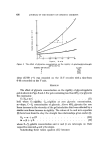
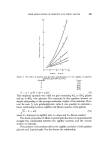
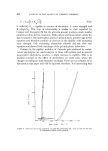
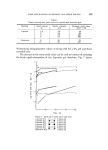
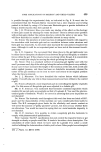
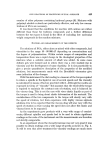
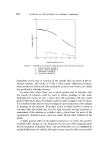
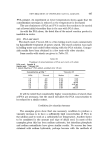
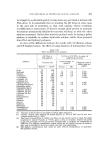
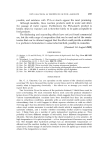
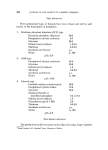
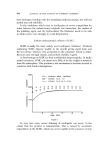
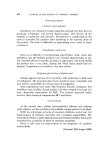
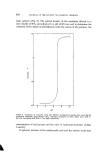
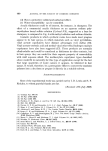
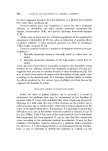
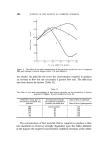
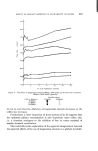
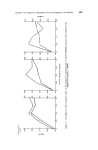
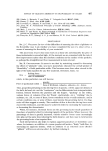
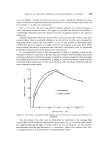
EFFECT OF GLIDANT ADDITION ON FLOWABILITY OF SOLIDS 491 900 -- 800 -- e• e Y'• 600 -- 50C L • 400 • •00 200 'mm mmm/m I 00• o 2 4 6 8 I0 12 ø/o w/w magnesium stearate Figure $ The effect of magnesium stearate 66pro (-230 mesh) on the flow rate of lactose 951gin (14/22 mesh) granules. Particle shape Orifice diameter Regular Irregular 8.67mm ß [] 11.58mm ß 12.62mm ß It can be seen that the efficiency of magnesium stearate decreases as the orifice size increases. Furthermore a closer inspection of these systems (Fig. •t) suggests that the optimum glidant concentration is also dependent upon orifice size, i.e. a situation analogous to the addition of fine to coarse matehal of similar chemical constitution. This could offer some explanation of the apparent disagreement between the reported effects of the use of magnesium stearate as a glidant in tablet-

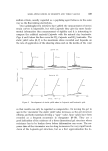
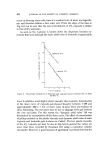
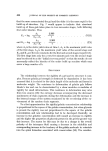
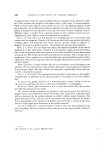
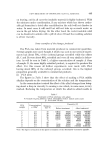
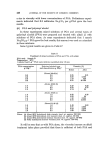
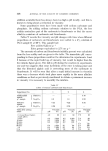
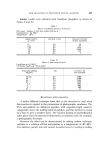
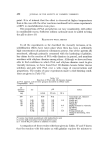
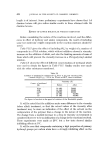
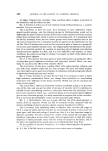
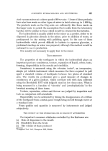
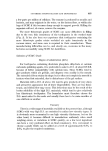
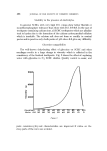
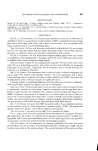
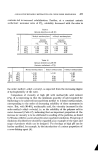
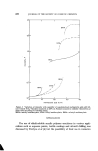
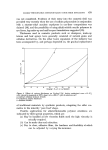
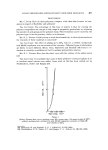
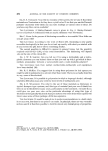
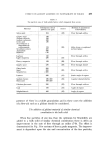
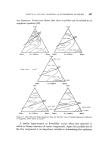
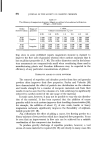
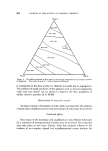
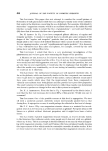
492 JOURNAL OF THE SOCIETY OF COSMETIC CHEMISTS Table IV The efficiency of magnesium stearate (-66[tm) as a glidant when admixed with lactose (951 gm --14/22 mesh) Orifice diameter (mm) 8.67 11.58 12.62 8.67 11.58 12.62 Shape of granules Regular Irregular f value Glidant concentration % w/w 0.25 0.5 0.75 1.0 2.0 4.0 8.0 1.098 1.157 1.133 1.151 1.181 1.163 1.309 1.093 1.151 1.117 1.116 1.105 1.162 1.229 1.095 1.078 1.038 1.066 1.016 1.062 1.184 1.112 1.205 1.175 1.177 1.195 1.185 1.347 1.085 1.103 1.118 1.138 1.123 1.148 1.226 1.062 1.061 1.076 1.081 1.081 1.121 1.205 ting since in some published reports magnesium stearate is claimed to improve the flow rate of granules whereas other authors maintain that it has no glidant properties (1, 7, 10). The orifice diameters used in the labora- tory assessments are comparatively small when considering those used in manufacturing plants and therefore differences may be expected in the efficiency of any particular concentrations of glidant. GLIDANTS ADDED TO FINE POWDERS The removal of superfine and ultrafine powder from fine and granular powders often improves their flow properties. Farley and Valentin (15) have demonstrated the effect of particle size distribution on the cohesion and tensile strength for a number of inorganic materials and from their results it can be seen that the cohesion of a bulk solid may be significantly reduced by careful control of the size range of the material. In some cases, however, it may not be possible to vary the size distribu- tion of the material. It has been reported that the addition of coarse granular solids to such systems improves their handling characteristics (16), for example, the addition of about 1% of zinc oxide, kaolin or heavy magnesium carbonate significantly improves the flowability of sulphani- lamide powder (17, 18). Fig. 5 illustrates the effect of adding a coarse, free flowing powder to a binary mixture of two powders which have impaired flow properties. It can be seen that an improvement in flow rate can be achieved by a suitable combination of the component size fractions. To produce gravity discharge of superfine powders, however, a vast excess of coarse material is required (16, 19) and clearly in many cases this
Purchased for the exclusive use of nofirst nolast (unknown)
From: SCC Media Library & Resource Center (library.scconline.org)