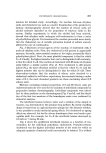
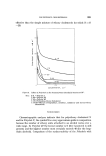
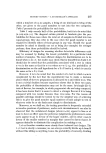
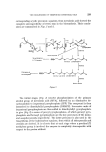
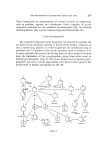
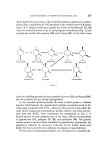
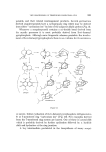
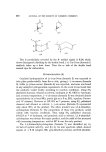
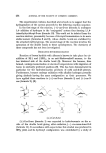
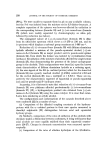
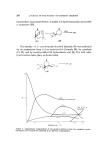
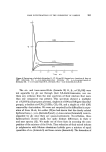
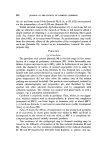
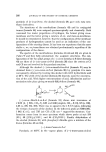
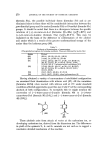
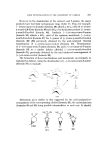
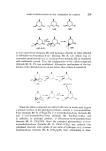
THE BIOGENESIS OF TERPENOID ESSENTIAL OILS 237 which dilutes the precursor so that in the biosynthesis of geranyl pyrophos- phate (Figs. I and 2) from [2-14C] mevalonic acid C-4 will be more radioactive than C-8. A similar reason may explain the results of Sandermann (21, 32) when he studied limonene (Fig. 5) and pulegone biosynthesis (Fig. 7), and possibly his results with a-pinene (26) and thujone (33). In the other cases • • '-o -•--o menthofuran pulegone menthol 0 i 5o merithone Figure 7 where the labelling pattern has been examined [carvone (22) and thymol (34)] the two positions are not clearly distinguished. In the essential oil field probably the most studied system is Mentha piperita. Unfortunately the experimental problem necessitates much of the work being conducted with 14CO 2. However, this precursor does allow the study of the variation in concentration, specific activity, and total activity, with time (24, 35-37). Their conclusions are summarised in Fig. 7. A limited amount of work supports some of the steps, with the incorporation of piperitenone (37), pulegone (37, 38), and menrhone (36). The general scheme seems to involve allylic oxidation to piperitenone, presumably via piperitenol, followed by successive reduction of the double bonds and finally the ketone function (or oxidation of pulegone to menthofuran). Several other monoterpenoid skeleta are encountered in essential oils.

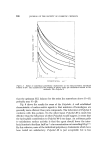
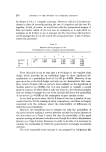
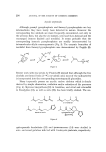
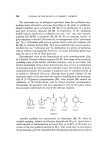
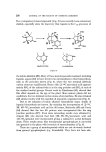
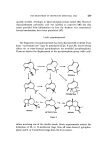
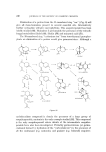
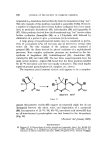
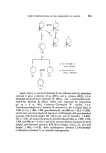
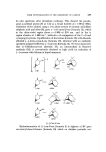
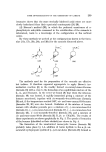
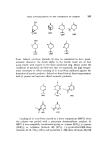
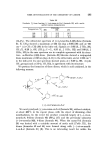
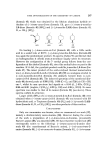
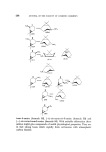
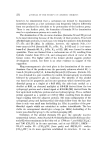
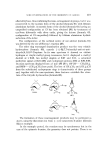
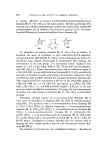
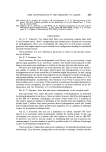
238 JOURNAL OF THE SOCIETY OF COSMETIC CHEMISTS The cyclopentanyl monoterpenoids (Fig. 8) have recently been extensively studied, especially since the discovery that loganin is the C 10 precursor of ß ••NM½' ! ncpat a la½ tone •- skyton thine Figure 8 the indole alkaloids (39). Many of these monoterpenoids examined, including loganin, appear (40) to have involved an intermediate in their biosynthesis, such as the precursor shown (Fig. 8), where the two terminal aidehyde carbon atoms are equilibrated. Hence with [2-]4C •mevalonic acid approxi- mately 50% of the radioactivity is in the ring position and 25% at each of the oxidised methyl groups. Recent work by Eisenbraun (41) showed that this effect depends on the age of the plant. More mature plants did not equilibrate the two terminal carbon atoms of skytanthine. He also obtained (42) similar results with the essential oil terpenoid, nepatalactone (Fig. 8). Due to the stimulus of indole alkaloid biosynthesis many details of loganin biosynthesis are known. By studying the incorporation of [2-] 4C, 3R, 4R-3H• lmevalonic acid and the 4S isomer, Battersby (43) and Coscia (44) showed that the two 4R protons were incorporated into the ring junction positions (H*). Even more interesting results were obtained by Arigoni (45) who showed that both [3R, 5R-3Ht]mevalonic acid and [1S-3H•lgeraniol were incorporated giving a radioactive acetal hydrogen atom. These results mean that trans-geranyl pyrophosphate is converted into geraniol in the plant with inversion of stereochemistry (Fig. 8). There are a group of monoterpenoids which are not obviously derived from geranyl pyrophosphate (e.g. lavandulol). They have not been ade-
Purchased for the exclusive use of nofirst nolast (unknown)
From: SCC Media Library & Resource Center (library.scconline.org)