J. So(. co, met. Chore., 23, 593-603 (Scptcml)cr 14, 1972) Aziridine Chemistry for Cosmetics Applications JANET WOODARD, B.S.* Presented November 3, 197l, be[ore the New York Chapter Synopsis--AZIRIDINES are relatively new to the COSMETIC industry but there are many areas which can utilize their properties and chemistry. SUBSTANTIVITY is a very desirable property in both HAIR and SKiN applications. Using a RADIOACTIVE TRACER tech- nique, POLYETHYLENIMINE has been shown t,o be highly substantive to hair. Aminocthylation of starch has been described and this same technology might success- fully make PROTEINS more substantive to hair and skin. Oxamination offers a whole new group of antimicrobials and surfactants. Its m•iquc chemistry pro idcs great versatility which allows us to create interesting products. INTRODUCTION Ethylenimine (El) is not used in the cosmetic industry today, but its chemistry, particularly that of its derivatives, is taking on new signifi- cance. El itself is a reactive chemical intermediate, but it is somewhat difficult to handle because of its toxicity and low boiling and flash points. Regardless of this fact, its chemistry and two reactive sites make this monomer worth considering as a way to achieve a unique result perhaps in a way offered by no other chemical intermediate. ]•THYLENIMINE STRUCTURE AND PROPERTIES The three-membered ring of El containing 1 nitrogen and 2 carbon atoms is referred to as an aziridine. There are two principal properties '* Dow Chemical Co., Midland, Mich. 48640. 593

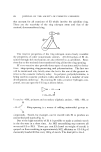
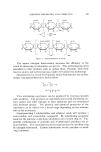
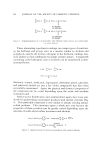
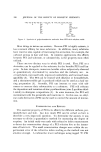
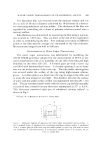
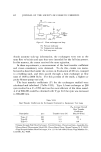
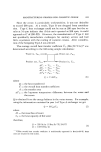
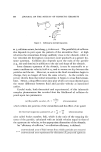
594 JOURNAL OF THE SOCIETY OF COSMETIC CHEMISTS that account for all reactions of E1 which involve the aziridine ring. These are the reactivity of the ring nitrogen atom and that of the strained, three-membered ring. OH2 The reactive properties of the ring nitrogen atom closely resemble the properties of other nonaromatic amines. All derivatives o[ EI ob- tained through this mechanism are also referred to as aziridines. Reac- tions due to the strained three.-membered ring all involve ring opening. EI's two reactive sites provide three types of reactions and/or deriva- tives: ring-opening, ring-preserving, and polymerization. The first two will be mentioned only briefly since the last is the one of the greatest in- terest to the cosmetic industry to.day. Its p.olymer, polyethylenimine, is being used in cosmetic products today and there are a number of new developments underway. By reacting El with a reactive hydrogen corn~ pound, one can open the El ring as shown below. ..,NH + HY H I Y-CH2 -CHz-NH Y may be --OH, prixnary and secondary aliphatic amines, --OR, --SR, or' 0 --O--C// Ring-opening is a means of adding aminoethyl groups to R compounds. Starch, for example, can be reacted with EI to produce an aminoethylated starch (Fig. 1). Due to the high reactivity of EI it is possible to make a cationic starch in the dry state in a short time. An HC1 neutralizing step converts all irareacted EI t,o PEI. Three per cent EI (based on weight of starch) is sprayed on flour resulting in approximately 50% efficiency or 1.2-1.8 g of chemically bonded EI for every 100 g of starch. The final pH is 4 to 5.
Purchased for the exclusive use of nofirst nolast (unknown)
From: SCC Media Library & Resource Center (library.scconline.org)