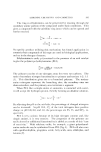
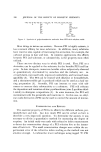
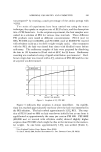
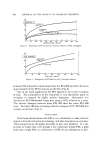
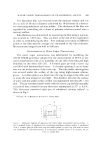
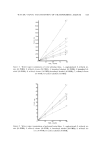
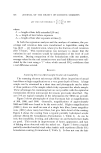
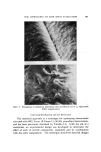
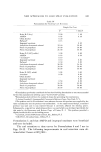
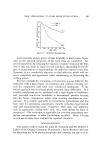
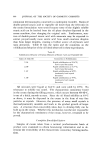
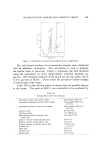
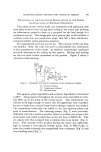
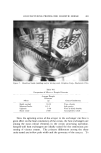
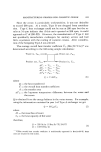
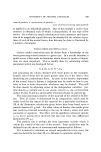
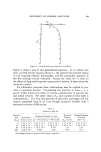
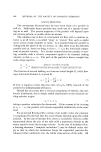
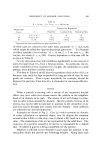
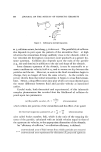
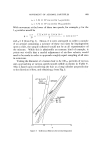
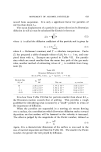
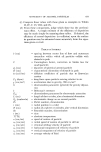
AZIRIDINE CHEMISTRY AND COSMETICS 599 was prepared * by reacting a small percentage of the amino groups with •4CH.qI. Two series of experiments have been cart'led out using the tracer technique, the uptake or sorption rate of PEI by hair, and the desorption rate of PEI from hair. In the sorption experiment, the hair samples were soaked in a solution of PEI for various time intervals. Three different PEI products were tested at different concentrations: PEI 6 (tool wt 600), PEI 600 (mol wt 60,000), and PEI 600E (mol wt 60,000 PEI reacted with ethylene oxide at a 1 to 0.75 weight-weight ratio). After treatment with the PEI, the hair was rinsed four times with distilled water before radioassay. The radioassay samples of hair were prepared by dissolving the hair in lag hyamine in 20-ml vials at 60øC for 24 hours. Radioassay counting was conducted using a liquid scintillation spectrometer.* Dark brown virgin hair was treated with a 5% solution of PEI 600 and the rate of sorption was determined. 0 10 20 30 40 50 60 70 80 CONTACT TIME, MINUTES oeigt•r½ 5. $orption of 5% PE! 600 Figure 5 indicates that sorptio,n is almost immediate. An equilib- rium was reached approxima. tely one hour after the hair was immersed in the PEI solution. The hair sorbed approximately 1.2% PEI. The sorp- tion of PEI 6 (mol wt 600) on hair was slower initially but at one hour it equilibrated at approximately the same per cent as PEI 600. PEI 600E (600,000 mol wt reacted with ethylene oxide) showed slightly higher sorption than PEI 600 which might be due to the increase in the molecu- lar weight. At one hour, approxima'tely 1.6% was sorbed (Table I). * New England Nuclear Corp., Boston, Mass. 02118. ? Tri-Carb, Model 3380, Packard Instrument Co., Inc., Downers Grove, Ill. 60515.

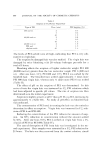
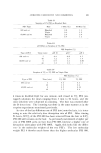
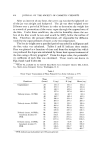
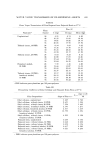
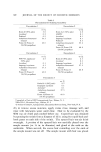
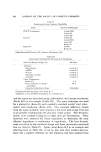
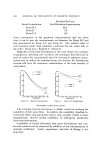
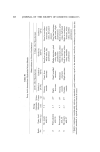
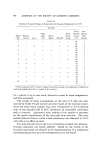
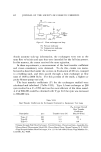
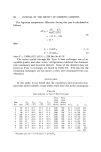
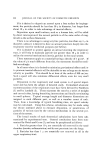
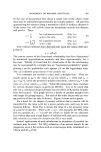
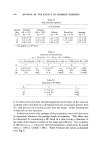
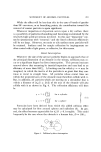
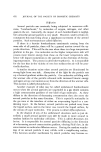
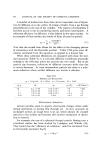
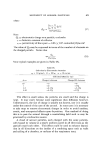
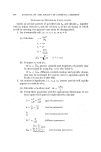
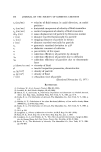
600 JOURNAL OF THE SOCIETY OF COSMETIC CHEMISTS Table I Sorption of 5% PEI on Virgin Hair Type of PEI Time (rain) PEI Sorption (%) 600 tool wt 2 5 60 60,000 tool wt 2 5 6O 60,000 tool wt 2 PEI and 5 ethylene oxide 60 _ 05 06 1 2 08 09 1 2 1 0 1 2 1 6 The levels of PEI sorbed were all high, indicating that PEI is very sub- stantive to virgin hair'. The sorption by damaged hair was also studied. The virgin hair was da•naged by twice bleaching with 20 vohnne hydrogen peroxide for a total of 5 hours. Bleaching affects the sorption of higher molecular weight PEI 600 (60,000 mol wt) greater than the low molecular weight PEI 6 (600 tool wt). After one hour, 3.4% PEI 600 and 1.5% PEI 6 was sorbed by the bleached hair. The bleached hair sotbed approximately 3 times more PEI 600 than virgin hair, whereas only ¬ times more PEI fi was sorbed (Table II). The effect of pH on the sorption of PEI was determined. In this series of tests the virgin hair was immersed in 5% PEI solutions which had been adjusted to specific pH values. The rate of sorption was then determined as in the initial experiment. Sorption is slightly greater at pH 7 than pH 10 or pH 2, increasing by approximately ¬ (Table III). No study of pH effect on bleached hair was conducted. The concentration of PEI used in treating the hair was also varied to determine its effect on sorption. Virgin hair was immersed in 1% solu- tions of PEI 6 and PEI 600. Reducing the concentration of the PEI reduces the axnount of sorp- tion. An 80% reduction in concentration reduced the amount sotbed by 50%. After one hour, 0.6% PEI is sotbed on virgin hair from a 1% •,,()lution of PEI 6 or PEI 600 (Table IV). The rate .of desorption ot• PEI from hair was investigated in the sec- ond experiment. Hair samples were saturated in a 5% PEI solution for 24 hours. The hair was then removed from the c(mtact solution, rinsed
Purchased for the exclusive use of nofirst nolast (unknown)
From: SCC Media Library & Resource Center (library.scconline.org)