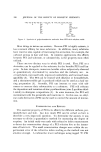
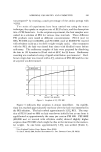
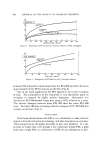
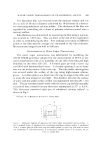
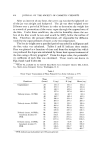
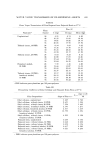
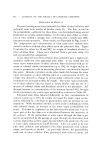
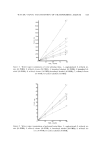
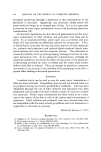
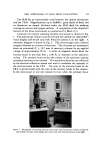
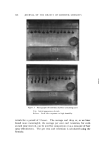
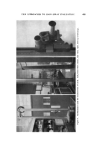
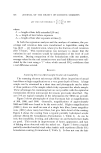
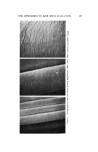
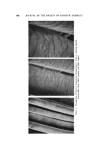
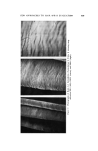
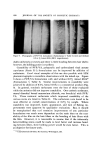
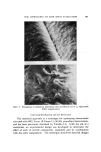
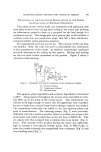
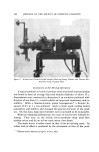
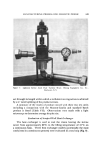
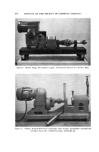
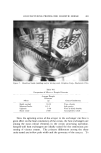
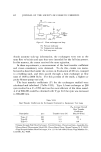
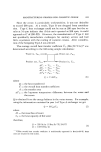
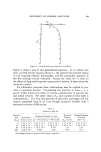
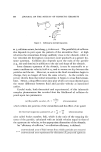
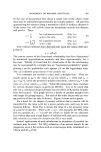
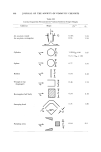
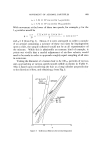
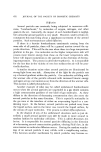
NEW APPROACHES TO HAIR SPRAY EVALUATION 623 in a vacuum evaporator (3 X 10 -5 mm of Hg) for deposition of approx- imately 300 ]t of metallic gold on the hair surface. From the vacuum evaporator, the sample mount was placed in the specimen holder in the microscope column. An alternative procedure was to glue the hair on the sample mount before spraying. Either procedure gave equivalent results. Both the Cambridge Instrument Co. "Stereoscan" SEM and .Japan Electron Optics Laboratory Co. Type JSM instruments have been used for evaluating coatability of hair spray films. Hair spray formulations were prepared by conventional methods. Surfactants were added to commercial products by dissolving them in alcohol and injecting the alcohol solution through the aerosol valves with the use of a syringe equipped with a rubber gasket instead of a needle. The aerosol cans were chilled to reduce the internal pressure. Curl Retention Studies As previously described by Takada (14), untreated European dark brown human hair was made into 1.5 (ñ0.1)-g switches about 18 cm long. The switches were twice shampooed, rinsed in warm water, and the excess water was squeezed out between the fingers. Creme rinse was then applied and thoroughly massaged into the hair followed by warm water rinsing until all excess creme rinse was removed. The excess water was again squeezed out between the fingers and, while still wet, the hair was wound up on «-in. (o.d.) curlers and allowed to air dry over- night. The curls were then placed in a low humidity box (-20% RH) for at least 24 hours. The hair switch was removed from the curler and rewound on the finger to the same uniform curl configuration. Six or eight curls were used with each sample and were sprayed individually from a distance of 10 in. using five rapid back-and-forth passes on each side of the curl (total spraying time per curl was about 8 sec). The sprayed curls were allowed to dry at ambient conditions for about 5-10 rain and then placed into a transparent humidity chamber. This chamber was kept at ambient temperature and maintained at 95-98% RH using a saturated copper sulfate solution with excess crystals present (Fig. 3). Measurements were made using a cathetometer (Fig. 4). The initial measurement was made immediately by first taking readings at the bottom of the curls and then measuring the top of the switch. The difference between the top and bottom measurements at this point was the starting length or length of the hair before exposure. Subsequent measurements were just made at the lowest part of the curl and were taken at half-hour in-

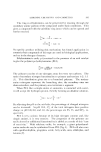
JOURNAL OF FHE SOCIETY OF COSMETIC CHEMISTS Figure 3. Photographs of hmnidity chamber containing cm'ls Top. Initial appearance of curls Bottom. Cm'ls after exposure to high humidity tervals for a period of 3 hours. The average curl drop or, as we later found more meaningful, the average per cent curl retention, for curls at each time interval, can be used for comparison or as a measure of hair spray effectiveness. The per cent curl retention is calculated using the formula:
Purchased for the exclusive use of nofirst nolast (unknown)
From: SCC Media Library & Resource Center (library.scconline.org)