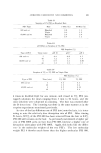
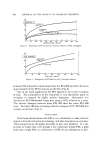
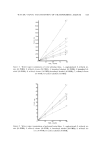
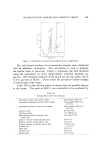
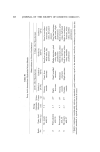
J. Soc. Cosmet. Chem., 23, 605-615 (September 14, 1972) Effect of Concentration of Plasticizer on the Water Vapor Transmission of Selected Film-Forming Agents* J. J. SCIARRA, Ph.D., and S. P. PATEL, M.S.t Presented December 29, 1971, American Association for the Advancement of Science, Philadelphia, Pa. Synopsis--Several different FILMS cast from solutions of ETHYL CELLULOSE or POLY- AMID RESIN were plasticized with varying concentrations of hexadecyl alcohol or tributyl citrate. Additional films were cast using a PLASTICIZER consisting of a combination of the above two materials. The •qATER VAPOR TRANSMISSION of each ooe these fihns was determined and expressed in milligrams o,f water vapor permeating through a fihn of 0.l-ram thickness per unit time (flux). From these values, the PERMEABILITY COEFFICIENT was calculated. The permeability coefficient of ethyl cellulose films was found to bc sub- stantially greater than that for films consisting of polyamid resin. It was also noted that the permeability coefficient was dependent upon the plasticizer used as well as its concentra- tion. Mixtures of plasticizers were found to have a varying effect upon this value depending- upon the nature of the fihn and the quantity of total plasticizer. INTRODUCTION Many different polymers have been used by the cosmetic chemist over a number of years for various purposes. The use of PVP/VA co- polymers in hair sprays as well as the use of poly•neric films for topical and * Abstracted in part from a thesis submitted by S. P. Patel to the Graduate Division, Col- lege of Pharmacy, St. John's University, in partial fulfillment of the requirements for the Master of Science Degree, June 1971. ? College of Pharmacy, St. John's University, Jamaica, N.Y. 11432. 605

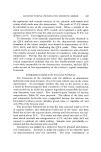
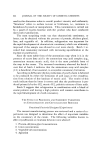
606 JOURNAL OF THE SOCIETY OF COSMETIC CHEMISTS facial preparations is known. Spray-on bandages represent another ap- plication of films to the skin. The water vapor permeation of these films is an important characteristic of all films as it is an indication of the "breathing" quality of the film. Breathing films, unlike occlusive fihns, will not impair the normal functions of the skin. As the use of these fihns in cosmetic products increases, the water vapor transmission be- comes increasingly important and should be determined. There has been an increased interest in the use of different polymeric agents for the formulation of a spray-on bandage. These polymeric agents must be capable of forming a continuous film when either sprayed or otherwise applied to the skin surface. These films have found wide- spread use due to their ease of application. Several have been used in surgical procedures as reported by Wallgren (1). He described a fihn consisting of an acrylic resin which had a water vapor permeation of I4 mg/cm2/day at 32øC when applied at a thickness of 100 •. A fluid surgi- cal dressing (2) of hydroxylated vinyl acetate-vinyl chloride copolymer, •t-butyl methacrylate polymer, ethyl cellulose, and other polymer systems has also been reported and said to provide a nontoxic, sterile, trans- parent, and water-resistant sprayable film. Miller et al. (3) have men- rioned the use of cellulosic compounds plasticized with 2-ethoxyldi- phenyl phosphate as a sterile plastic dressing in general surgery. In ad- dition, a number of new spray-on-tissue adhesives, consisting of cyano- acrylate resins and derivatives, have been reported (4-6). Lange and Gonet (7) and Lange and Fang (8) have also reported 'the use of a number of aqueous topical spray-on bandages consisting of a copolymer of poly- vinyl alcohol/polyvinyl acetate or acrylic resin and other water-soluble resins. The selection of a polymeric fihn for application as a protective film to the skin is determined by a consideration of various physicochemical and biological properties. Sciarra and Gidwani (9) reported some of these properties for several films including hardness, modulus of elas- ticity, alkali resistance, water vapor transmission, and stability to degra- dation from exposure to ultraviolet radiation. These properties were evaluated in order to determine the use of certain film plasticizers which could be used with films and applied to the body via an aerosol spray. A film-forming polymer which is suitable for application to injured skin should be permeable to water vapor so as to decrease the possibility for the growth of anaerobic bacteria in the vicinity of the wound. On the other hand, there are conditions which may require .the use of an
Purchased for the exclusive use of nofirst nolast (unknown)
From: SCC Media Library & Resource Center (library.scconline.org)