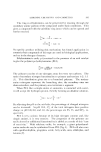
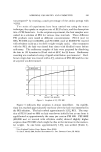
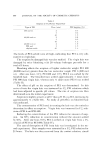
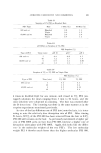
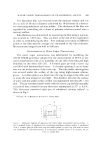
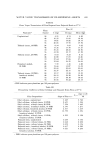
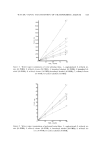
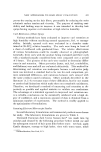
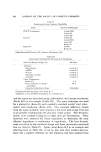
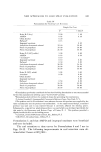
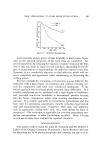
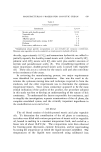
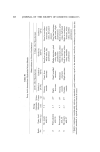
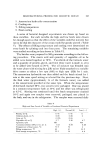
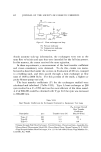
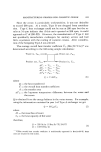
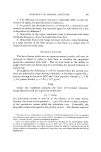
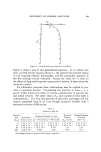
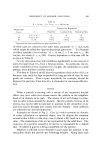
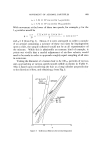
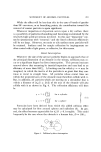
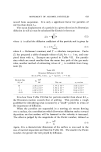
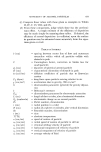
NEW APPROACHES TO HAIR SPRAY EVALUATION Table IV Formulations for Studying Curl Rctcntion 633 Resin R-2 (dry) 2 AMPD • 0 Oleyl alcohol 0 Perfume a 0 Isopropyl myristate Anhydrous denatured ethanol 32 Freon 11 propellant 39 Freon 12 propellant 26 Weight Per Cent 6" 7 (Best) b 00 1.50 05 0.10 20 ... 15 ... 0.40 60 38.00 00 30.00 .00 30.00 Resin G-2 (50% solids) 3.00 3.00 AMPD e 0.10 0.04 "Acetulan"* 0.10 . . . Isopropyl myristate 0.10 0.20 Perfume! 0.50 0.50 Anhydrous denatured ethanol 36.20 36.26 Freon 11 propellant 30.00 30.00 Freon 12 propellant 30.00 30.00 Resin D (50% solids) 3 Acetulan e 0 Oleyl alcohol Isopropyl myristate Perfume -t 0 Anhydrous denatured ethanol 36 Freon 11 propellant 30 Freon 12 propellant 30 00 3.00 20 0.20 0.20 0.20 50 0.50 30 35.90 00 30.00 00 30.00 a Formulations previously considered the best hard-holding formulation or one recommended by the resin manufacturer as being a good "hard-to-hold" product. b Formulations derived from the statistical design for optimizing the concentrates. c 2-Amino-2-methyl-l,3-propanediol, Commercial Solvents Corp., New York, N.Y. a The perfume used in Formulation 6 was unknown because this product was supplied by the resin manufacturer and the perfume was unidentified. In the experimental design, a standard perfume was used and it was rejected because it adversely affected the holding power. Subsequently, a special low plasticizing perfume was used which was developed specifically for this resin by the Haarmann and Reimer Corp. of Union, N.J. This perfume provided a slightly beneficial effect on the holding power. e Amerchol, a Unit of CPC International, Inc., Edison, N.J. ! GD-6763-1, Givaudan Corp., Clifton, N.. J. Formulation 7, and that AMPD and isopropyl myristate were beneficial and were included. The curl retention rs. time curves for Formulations 6 and 7 are in Figs. 10-12. The following improvements in curl retention were ob- tained after 3 hours at 98% RH.:

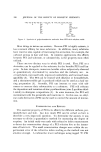
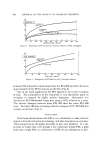
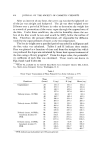
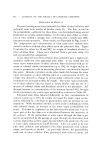
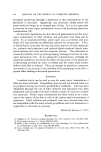
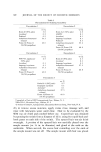
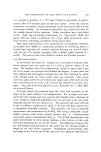
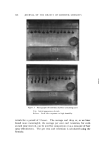
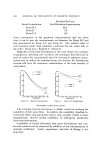
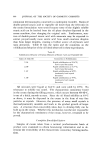
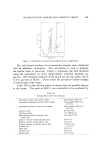
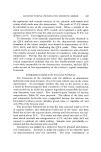
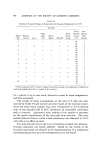
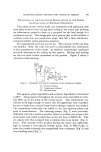
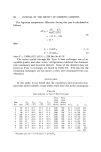
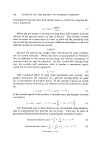
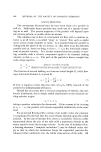
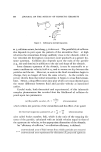
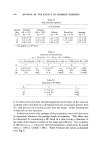
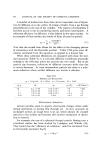
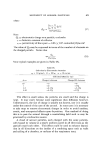
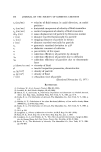
634 JOURNAL OF THE SOCIETY OF COSMETIC CHEMISTS Absolute Per Cent Resin Formulation Curl Retention Improvement Resin R-2 22.5 Resin D 5.0 Resin G-2 6.0 From examination of the graphical representations and the above data, it can be seen the improvements are dramatic for Resin R-2 and less pronounced for Resin G-2 and Resin D. The relative order of curl retention under high humidity conditions for the resins falls in the order: Resin G-2 •- Resin R-2 •- Resin D. Regardless of the basic formulation or the resin chosen for a number of properties, including curl retention, the technique described can be used to reduce the experimental time for arriving at optimum formu- lations and to reduce the manufacturing cost because the formulation selected will have the minimum concentration of the least number of components. •100 'r -' FORM. 6 '"" X•,• m FORM, 7 $ 90 [eo t- • 70 •' 50 o o!5 ,'.o ,'.5 ' 2.0 .5 $.0 TIME (HRS) Figure JO. Resin D formulations IOO [ ao _•70 [•o e. 50 0 8•.0 .... FORM. 6 -- FORM. 7 0.5 1.0 1.5 2.0 2.5 ZLO TIME (HR$) Figure 11. Resin G-2 formulations Summ^r¾ ^nI• Conclusions The scanning electron microscope is ideally suited •or studying the coatability of hair spray fihns. It confirms the coatability, bonding be- tween hair fibers, and appearance that is only partially visible at lower magnifications, thereby giving confidence to subsequent predictions from these observations. Coatability of typical laboratory hair spray formulations and com- mercial products can be improved by addition of low concentrations of nonionic surfactants. Luster, appearance, and lack of flaking is also improved.
Purchased for the exclusive use of nofirst nolast (unknown)
From: SCC Media Library & Resource Center (library.scconline.org)