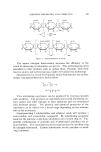
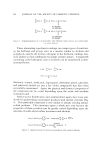
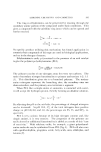
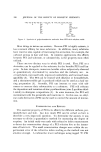
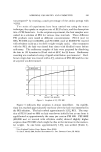
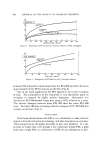
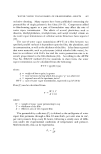
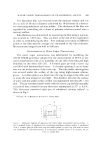
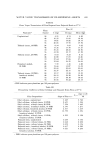
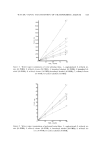
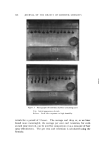
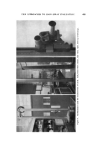
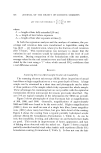
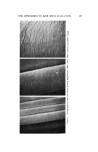
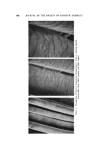
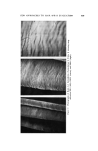
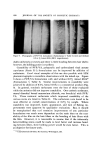
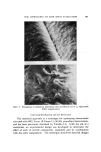
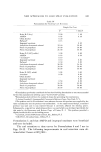
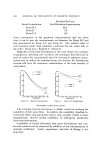
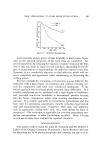
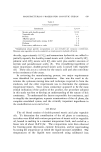
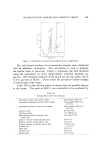
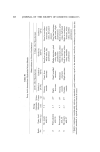
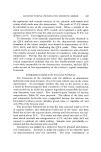
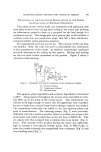
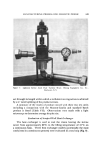
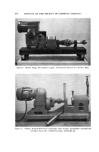
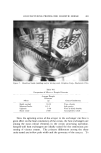
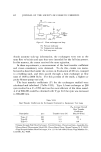
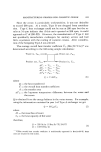
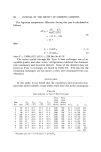
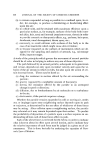
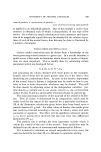
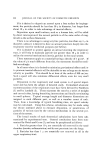
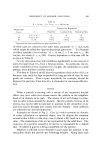
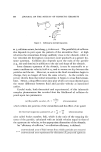
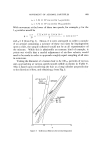
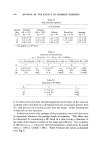
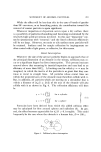
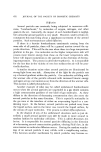
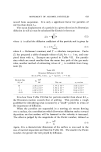
MANUFACTURING PROCESS FOR COSMETIC CREAM 647 PILOT STUDY OF tHE CONTINUOUS MANUFACTURE OF THE CREAM AND EVALUATION OF PERTINENT EQUIPMENT This phase of the overall study was concerned with gathering data from pilot studies in the mixing and cooling of the cream and utilizing the information gained to draw up a proposal for the final design of a continuous system. The design goal was a process ,that would produce a uniform cream that was pearlescent white, that had a firm consistency, and good stability and application properties. An experimental test loop was set up. The purpose of the test loop was twofold. First, the loop was used to demonstrate the continuous in-line manufacture of the cream. In addition, experiments conducted provided information for scaling up the process. Mixing and cooling are the two most critical operations in the process. Figure 2 shows a schematic of the test loop. •'!•: PJ• Pr•T• • aJ• •o Figure 2. Equipment test loop for continuous in-line mixing and cooling PI. Pressure indicator TI. Temperature indicator VA. Volt-amp meter The aqueous phase ingredients and oil phase ingredients were heated to 60øC. Temperatures throughout the process were controlled to main- tain 60øC up to the point of the in-line mixer. This temperature was selected to be high enough to insure that all ingredients were liquefied, but not so high that potential large heat-exchanger capacity was needed. The ammonium hydroxide was added to the hot aqueous phase just prior to emulsification. The metering pumps (Fig. 3) were previously calibrated with the respective product phases to achieve the proper ratio of oil/water and a final product flow in the test loop of 200 lb/hr. The two phases were then pumped into a common line to an in-line (Fig. 4) xnixer. The viscosity of the product leaving the mixer was sufficiently high to warrant a low-capacity booster pump (Fig. 5) (200 lb/hr) to move the product through the scraped-wall heat exchanger (Fig. 6) and into a holding vessel (Fig. 7).

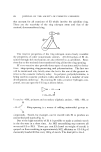
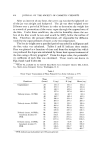
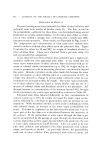
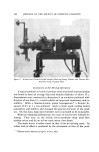
648 JOURNAL OF THE SOCIETY OF COSMETIC CHEMISTS Figure 3. Wallace and Tieman Double Simplex Metering Pump, Wallace and Tiernan Div., Pennwalt Corp., Walpole, Mass. Evaluation of the Mixing Operation A typical production batch Of product when examined microscopically was found to have an average dis!•ersed droplet diameter of about 15 t•- Experiments were conducted to determine if an emulsion produced with droplets of less than 15 t• would exhibit an improved consistency and/or stability. With a Manton-Gaulin piston homogenizer • a droplet di- ameter of 0.1 to 1 t• was achieved. Such a cream upon cooling lacked consistency and stability and changed the general character of the prod- uct. On this basis, high shear blenders were concluded to be unsuitable. With the foregoing information, two types of mixers were selected for testing. They were (a) the in-line low-to-moderate shear axial flow turbine mixer and (b) an in-line static mixer (low shear). The static mixer is rather novel in that it has no moving Darts. Its action and/or effect is produced by the movement or flow of the prod- • Manton-Gaulin Manufacturing Co., Everett, Mass.
Purchased for the exclusive use of nofirst nolast (unknown)
From: SCC Media Library & Resource Center (library.scconline.org)