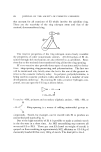
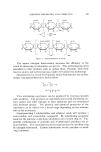
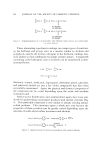
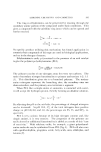
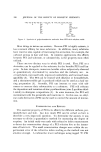
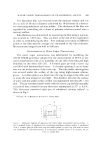
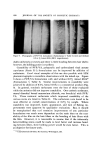
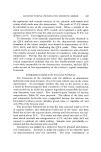
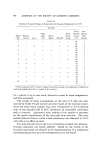
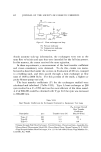
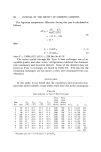
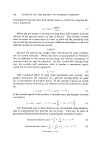
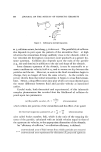
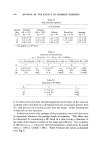
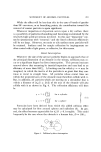
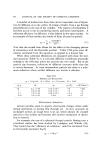
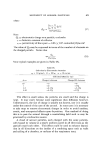
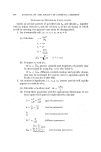
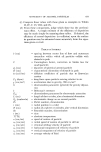
AZIRIDINE CHEMISTRY AND COSMETICS 597 The ring in ethylenimine can be preserved by reacting through the secondary amine portion o[ the compound under basic conditions. This gives a compound with the aziridine ring intact which can be opened and further reacted. o NH + R-•-X + BASE - R-C-N•] + BASE ß HX No specific product utilizing this mechanism has found application in cosmetics but compounds o[ this type are used in biological applications, such as in the therapy o[ tumors. Ethylenimine is easily Fo'.ymerized in the presence o[ an acid catalyst to give the polymer polyethylenimine (PEI). •NH ACID • _½CH2 CH2 N•)•:. CATALYST The polymer consists of one nitrogen atom for every two carbons. The ratio of secondary nitrogen functionality to primary and tertiary is 2: 1: 1 (1). This distribution gives rise to a branched polymer. The tertiary amino nitrogens represent the branching sites, the secondary ones are chain extenders, and the primary ones terminate a seg•nent. When PEI, like a simple amine or ammonia, is contacted with water, it will accept the hydrogen proton, thereby forming an alkaline solution. H •NH + HzO • IiN © H + OH By adjusting the pH to the acid side, the percentage of charged nitrogens can be increased. At pH 10.5, 4% of the total nitrogens have positive charge at pH 8.0, 6.0, and 4.0, the percentages are 25, 33, and 50%, re- spectively. PEI is very cationic because of its high nitrogen content and, like simple amines, it is very rea,ctive. The properties of the polymer are easily altered or additional functionality is added as a result of this "ease of reactivity." With ethylene oxide, for example, a giant polyethanol- amine molecule can be synthesized from PEI (Fig. 4). PEI will also react with epichlorohydrin, propylene oxide, fatty acids, urea, aldehydes, and ketones (2).

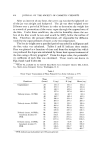
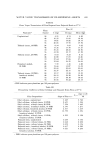
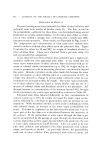
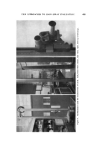
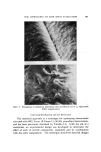
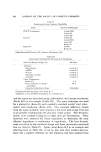
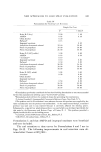
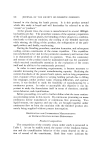
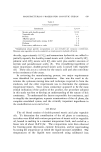
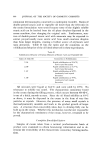
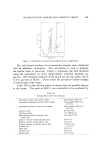
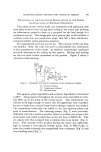
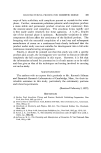
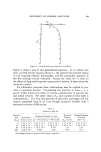
598 JOURNAL OF THE SOCIETY OF COSMETIC CHEMISTS Figure 4. Synthesis of pol)•ethanolamine molecule from PEI with ethylene oxide Most things in nature are anionic. Because PEI is highly cationic, it has a natural affinity for most substrates. In addition, many substrates have reactive sites capable of increasing this attraction, for example, the carboxyl groups in hair and skin. In cosmetic applications this affinity between PEI and substrate, or substantivity, is the property most often utilized. There are two distinct ways in which PEI is used. First, PEI or a derivative can be applied to the substrate for the benefits PEI itself im- parts. In hair shampoos, numerous benefits either subjectively observed or quantitatively determined by ourselves and the industry are: in- creased sheen, increased body, improved combability, and increased man- ageability (3). The PEI can be reacted with diketene or formaldehyde, and a thermoreversible gel is produced which can be used as a hair set- ting preparation (4). Secondly, PEI can interact or react with sub- stances to increase their substantivity to a substrate. PEI will enhance the deposition and retention of zinc pyridinethione (zinc 2-pyridine-thiol- 1-oxide) in detergent compositions (5). In some instances, the PEI will overinteract with the germicide and inactivate it. In this case, an ethyl- ene oxide derivative of PEI can be used to control the amount of interac- tion. EXPERIMENTAL AND R•St•LTS The essential property of PEI is its affinity for different surfaces, par- ticularly hair and skin. Just how much PEI can be sotbed on hair is therefore a very important question. To determine the answer, it was necessary 'to devise a quantitative method for measuring the degree of sotpriori. An initial study was made with refractive index measurement to detect the concentration change of a PEI solution due to the immer- sion of hair in it. The small concentration changes were within the ex- perimental error of the refractive index reading so the method was not sensitive enough. A radioactive tracer technique using tagged $4C PEI
Purchased for the exclusive use of nofirst nolast (unknown)
From: SCC Media Library & Resource Center (library.scconline.org)