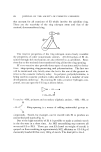
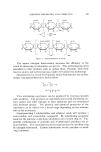
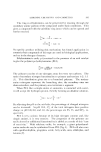
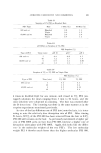
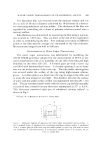
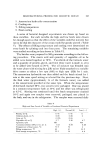
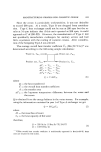
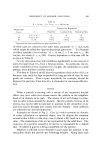
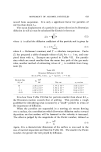
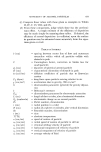
AZIRIDINE CHEMISTRY AND COSMETICS 595 CH:,OH { CH:,OH CH:,OH H H H H H I I H OHL__ HO.-' ' --] •00'•'"ø/ø t• •H • 100o C + HN H20 Figure 1. Aminoethylation o[ starch The amino nitrogen functionality increases the efficiency ot • the starch by enhancing its substantive properties. This technology has been extended to other products such as carbon black. Proteins, with their reactive amines and carboxyl groups, might well utilize this technology. Oxamination is a recent development which demonstrates yet another unique ring-opened derivative shown below. .o4-%:-•-c-•-o0-. R' R R" " True alternating copolymers can be produced by reacting epoxides with aziridines. The products are essentially linear with alternating ter- tiary amines and ether linkages in their backbone and are terminated with hydroxyl groups. The physical and chemical properties ot• the copolymer can be varied over a broad range depending on the substitu- ents ,on the monomers. Copolymerizing 1-ethylaziridine and ethylene oxide will produce a water-soluble and oil-insoluble compound. By substituting propylene oxide for the ethylene oxide these solubilities are reversed (Fig. 2). The possible combinations ot• epoxides and N-substituted aziridines are al- most limitless. The oxamination process requires that the aziridine ring be nitrogen-substituted. Carbon substitution on the aziridine or oxide ring is optional.

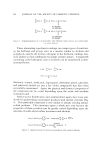
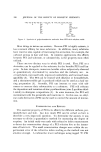
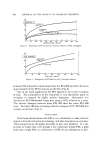
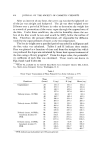
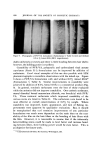
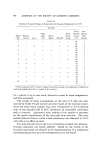
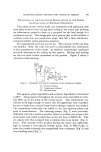
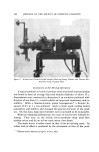
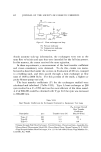
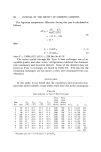
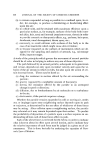
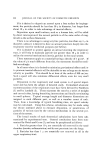
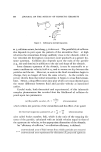
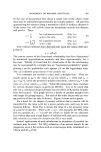
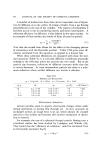
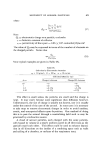
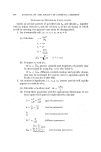
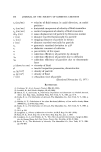
596 JOURNAL OF THE SOCIETY OF COSMETIC CHEMISTS N-C-C + •o • HO•C-C--N--C--C--O-)--H I n C H20 SOLUBLE OIL INSOLUBLE C •N-C7C +"1•0 ---• HO-(--C--C-iN--C--•-O-)-E-. H C C H:,O INSOLUBLE OiL SOLUBLE Fig•tre 2. Copolymerization of l-ethylaziri(line with ethylene oxide (al)o•e) an(l with propyl- e'•c oxide (beh•w) These alternating copolymers undergo two major types of reactions: (a) the hydroxyl end groups react in a manner similar to alcohols and polyglycols, and (b) the tertiary nitrogens in the backbone tindergo reac- tions similar to those undergone by simple tertiary amines. Compounds containing active hydrogens, such as alcohols, can be oxaminated as dem- onstrated below. R-OH + •N-R' + •0 • R-O-•- C--C-N-C--C--O r4• H Methanol, octanol, dodecanol, isopropanol, diethylene glycol, glycerine, and polyvinyl alcohol are jus,t a few of the compounds that have been successfully oxaminated. Again, the physical and chemical properties of the compound can be varied depending tipon the oxide and aziridine toohomers used. Surface-active disinfectants and antimicrobial agents have been pro- duced by quaternizing oxaminated products with methyl chloride (Fig. 24). This particular compound is very similar to already existing antimi- crobial products. This chemistry opens a whole new area because the properties of these products can be greatly varied depending tipon the selection of oxide and aziridine monomers and alcohols. (C"3)•C-CHz(CH•)zC-'• OH + PhCHzCHzN•] +•__•0• CHiCle_ • CH2CH2Ph I + - (CH3)3C-CH•(CH3)•C-'•/ •Nk• -- O--CH2CHzN -CH2CH20H cm Figure 3. Quatcrnization of oxaminalcd products with methyl chloride
Purchased for the exclusive use of nofirst nolast (unknown)
From: SCC Media Library & Resource Center (library.scconline.org)