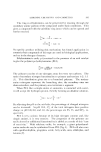
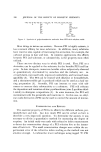
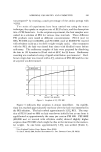
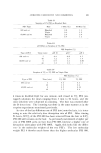
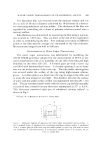
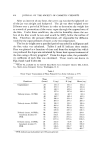
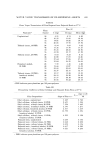
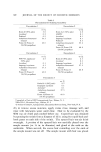
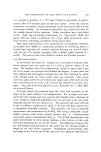
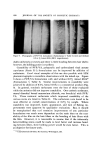
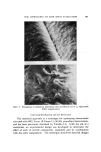
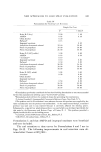
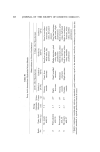
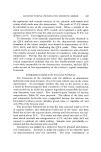
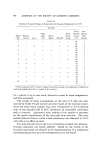
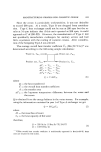
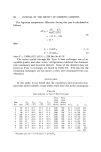
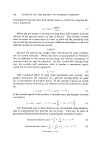
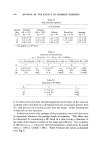
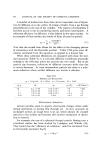
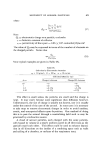
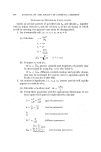
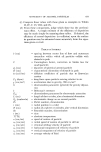
MANUFACTURING PROCESS FOR COSMETIC CREAM 645 5. Ammonium hydroxide concentration 6. Cooling rate 7. Filling temperature 8. Final cooling A series of factorial designed experiments was drawn up based on these variables. For each variable the high and low levels were chosen far enough apart so that the effect of the variable could be noticed, but not so far that the character of the cream would be greatly altered (Table V). The effects of filling temperature and cooling were determined on every batch by splitting each into four parts. The remaining variables were studied according to data shown in Table VI. The batches were prepared in 500-g amounts according to the follow- ing procedure. The stearic acid and quantity of vegetable oil to be added were heated together to 70øC. Two-thirds of the formula water and a quantity of protein, glycol, and lime (lime water is made in situ) to be added were heated to 70øC. The oil mixture was blended into the water phase with stirring by a Jiffy mixer blade attached to a variable drive motor at either a low rpm (460) or high rpm (920) for 1 min. The ammonium hydroxide was then added and the batch stirred for 1 rain at the same speed setting as selected for the previous step. Next, the final water (approximately ¬ of the formula water) was added at the temperature specified at the same rpm. When the temperature of the batch reached 40øC, two samples were packaged. One was placed in a constant temperature bath at 34øC and the other was refrigerated at 4.5øC. Stirring was continued until the batch temperature reached 34øC and again two samples were removed, packaged, one placed in the bath, and one in the refrigerator. The samples were removed daily Table V High and Low Levels of Variable m Fractional Factorial Experiments High (-[-) Normal (0) Low (--) Protein, wt % 0.45 Alkylene glycol, wt ½/c 0.80 Lime, wt % 0. 096 Vegetable oil, wt % 5.7 Agitation, rpm 920 Ammonia solution (28% w/w), wt • 1.02 Temperature of final water, øC 73.9 Filling temperature, øC 40 Final storage temperature, øC 33.9 0.45 0 0.80 0 0.06 ... 5.20 4.7 ... 460 0.85 0.68 70 0 41 33.9 10 4.4

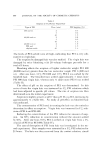
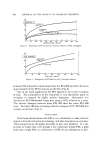
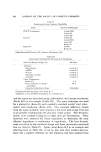
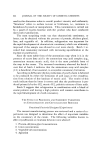
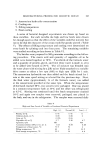
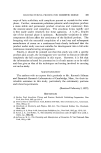
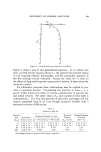
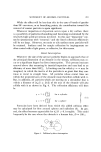
646 JOURNAL OF THE SOCIETY OF COSMETIC CHEMISTS Table VI Results of Factorial Design of Experiments for Samples Refrigerated at 4.5øG Batch No. __ Variable Final Con- Vege- Final Process sistency Protein- table Stirrer Water Temp After Glycol Lime Oil Speed NH4OH Temp (øC) 4 Days ø I -- -- q- - + -- 40 1 34 2 2 -- + -- -- + + 4O 2 34 2 3 -- -- + + - + 40 2 34 2 4 -- + -- + - -- 4O 2 34 2 5 + -- + -- - + 40 1 34 1 6 + + .... :•0 1 34 I 7 + - - + + + 4O 2 34 1 8 + + + + + + 40 2 34 2 9 + - 0 + 0 0 40 2 34 2 10 q- - -- q- + -- 4O 1 34 2 • When compared with a control (typical production sample), the judgment is subjectively made and classified as 0 (fair), 1 (good), or 2 (excellent). for a period of up to one week, allowed to come to room temperature, and then examined. The results of these examinations at the end of 4 days are sum- marized in Table VI and include only the results of the factorial experi- ments for those batch samples that were refrigerated at 4.5øC because none of the samples held at 34øC developed an acceptable consistency and/or structure. Apparently then, cooling of the samples is necessary for the rapid crystallization of the acid soap from solution. The most notable feature of these results is that consistency was obtained at 4.5øC with little or no effect on color. The tests showed, that at the level of variation studied, the structure- forming mehanism was hardly affected. Based on the results of the factorial experiment, no obstacle to the implementation of a continuous •nanufacturing process up to the refrigeration cycle was found.
Purchased for the exclusive use of nofirst nolast (unknown)
From: SCC Media Library & Resource Center (library.scconline.org)