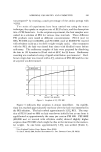
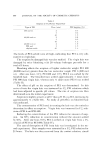
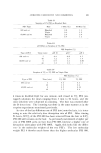
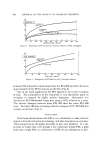
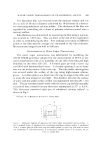
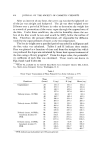
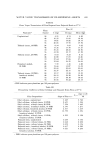
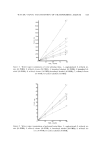
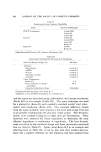
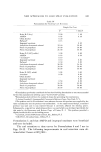
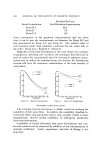
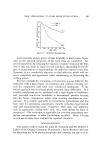
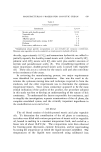
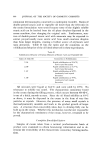
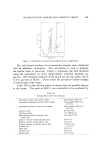
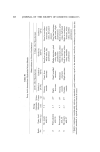
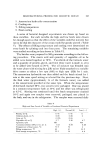
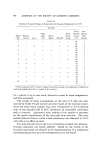
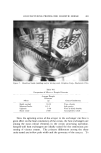
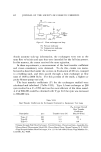
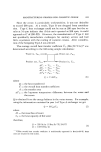
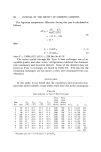
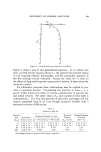
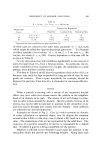
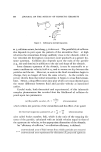
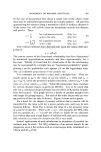
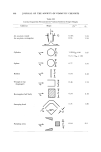
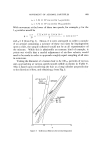
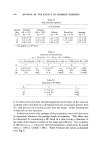
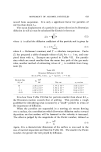
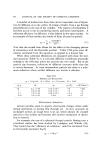
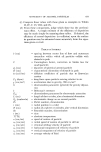
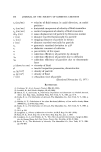
MANUFACTURING PROCESS FOR COSMETIC CREAM 641 t.500- 0.730 ' l igure 1. Calorimetric measurements of specific heat vs. temperature The calorimetric analyses of representative samples were conducted with an adiabatic calorimeter. The calorimeter is used to measure the specific heats of materials. Figure 1 represents the data obtained using the calorimeter or QTA (Quantitative Thermal Analysis) ap- paratus. The important features of the graph are the two peaks, one at 37.4øC and one at 56.20C. These reveal the presence of phase changes oF constituents of the cream. Table III lists the melting points of species that are possibly present in the cream. The peak at 56.2øC was concluded to be produced by Table III Melting Points of Pertinent Species Ammonium oleate: oleic acid complex Ammonium palmitate.palmitic acid complex Ammonium stearate:stearic acid complex Calcium oleate Calcium stearate Equimolar mixture of palmitic acid- stearic acid Eutectic mixture of oleic-palmitic acid Eutectic mixture of oleic-stearic acid Eutectic mixture of palmitic-stearic acid Linoleic acid Oleic acid Palmitic acid Stearic acid Decomposes 70øC (3) Decomposes 100øC (3), 89øc (5) Decomposes 110øC (3), 93øC (5) 83-84øC (3) 179-180øC (3) 55.5-56.5øC (4) 12øC (4) 13øC (4) 54-55øG (4) -•tøc (3) 14øc (3) 64øc (3) 69.4oc (3)

642 JOURNAL OF THE SOCIETY OF COSMETIC CHEMISTS
Purchased for the exclusive use of nofirst nolast (unknown)
From: SCC Media Library & Resource Center (library.scconline.org)