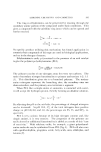
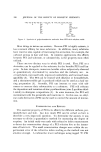
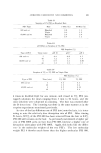
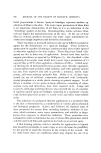
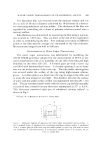
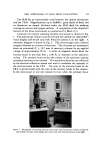
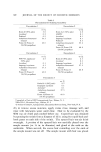
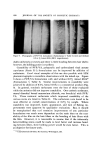
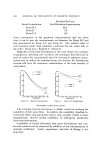
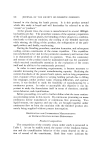
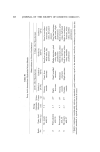
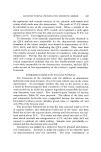
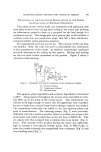
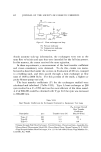
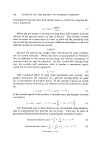
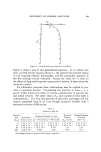
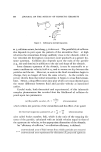
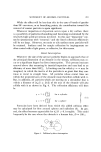
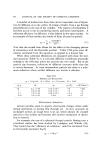
WATER VAPOR TRANSMISSION OF FILM-FORMING AGENTS 609 The deposited film was removed from the mercury surface and cut into a circle ot 10 cm in diaIneter and dried for 18-24 hours in a desicca- tot containing anhydrous calcium sulfate. The thickness of the fihn was regulated by controlling the wfimne of polymer solution poured onto a mercury surface. Film thickness was determined by measuring the film using a microin- eter accurate to ñ0.01 min. This was done at the end of the experiment in order to avoid defacing the film. Five readings were taken at different points of the film and the average was calculated as the film thickness. Measurements ranged frown 0.05 to 0.06 min. Determination of Water Vapor Transmissio•z The water vapor transmission was determined by •nodifying the ASTM E96-66 procedure adopted for the measurement of WVT at ele- vated temperatures with a low humidity on one side of the film and high humidity on the other side (15). A 4-ounce glass jar with a screw cap was filled with demineralized water. A circular opening 2 cm in diam- eter was cut in the center of the screw cap. The film under investigation was secured under the surface o[ the cap using high-vacuum silico.ne grease. A rubber gasket was fitted into the cap to support the film and to make the unit leakproof and tight. The distance between the surface of water and the under surface of film was maintained between 20 ñ 0.5 min. The jar was then fitted loosely with the screw cap and the assembly was placed into a heated vacuum desiccator maintained at 37 ø ñ 0.5øC. This desiccator contained eight .jars o[ anhydrous calcium sulfate * as shown in Fig. 1. ß Ihierite, W. A. Hammond I)rierite Co., Xenia, Ohio. 11 6 5 lo 4 Figure 1. Schematic diagram of apparatus for water vapor transmission determination. I, lid 2, jacketed heater 3, perforated jar containing anhydrous calcium sulfate 4, perforated shelf 5, 4-ounce glass jar with screw cap and rubber gasket 6, screw cap with hole in cente• and model film 7, dial the•nmmeter 8, temperature variable screw 9, to vacuum 10, air inM 1 l, model film

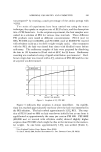
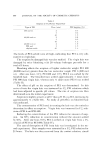
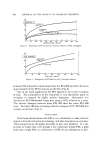
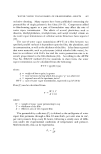
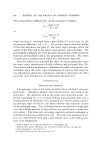
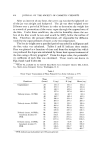
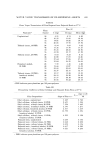
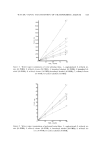
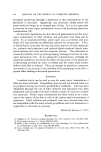
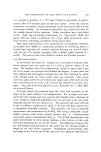
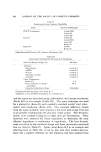
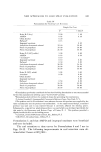
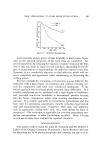
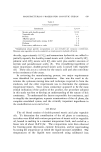
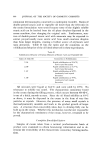
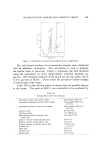
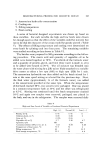
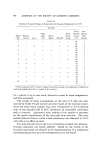
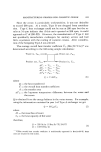
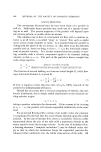
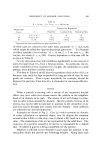
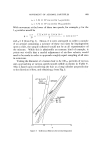
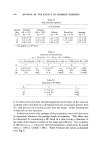
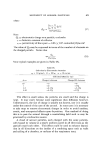
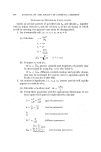
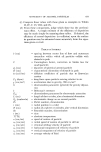
610 JOURNAL OF THE SOCIETY OF COSMETIC CHEMISTS After an interval o.f one hour, the screw cap was slowly tightened un- til the jar was airtight and leakproof. The jar was then weighed every 24 hours over a period of 96 hours in order to determine the weight loss as a result of permeation of the water vapor through the exposed area the film. Under these conditions, the relative humidity above the sur- face of the film would be zero and would be 100% below the surface of film. Therefore, the pressure differential, /xp, responsible for diffusion would be the vapor pressure of water a't the test .temperature. The loss in weight over a specified period was noted in milligrams and the flux value was calculated. Tables I and II indicate these results. Flux was plotted as a function of time and from the straight line which was produced the slope was calculated by linear least square treatment of the data using a library program.* From the slope value, the permeabil- ity coefficient of each film was calculated. These results are shown in Figs. 2 and 3 and Table III. * STAT 9A, available on the Control Data Multi-Access Computer (System 420), C.E.I.R. Inc., Multi-Access Computer Service, Washington, D.C. Table I Water Vapor Transmission of Films Prepared from Ethyl Cellulose at 37øC Flux (F) Time Plasticizer• (hours) I (mg) II (mg) Mean Unplasticized 24 151.3 151.5 151.4 48 275.9 277.6 276.8 72 410.9 412.0 411.4 96 537.0 547.8 542.4 Tributyl citrate, 10 PHR 24 84.0 84.9 84.4 48 162.7 162.4 162.5 72 220.0 221.4 220.7 96 281.0 279.5 280.3 Tributyl citrate, 20 PHR 24 120.2 121.1 120.6 48 269.6 270.6 270.1 72 450.2 451.8 450.5 96 645.8 647.4 646 6 Tributyl citrate, 10 PHR 24 254.5 253.7 254.1 hexadecyl alcohol, 10 48 572.1 573.9 573.0 PHR 72 869.5 871.6 870.6 96 1177.0 1179.6 1178.3 Tributyl citrate, 15 PHR 24 110.0 93.4 101.7 hexadecyl alcohol, 15 48 219.6 176.4 198.0 PHR 72 3½3.5 270.7 307.1 96 473.5 338.0 405.7 • PHR indicates parts plasticizer per 100 parts polymer.
Purchased for the exclusive use of nofirst nolast (unknown)
From: SCC Media Library & Resource Center (library.scconline.org)