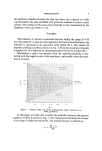
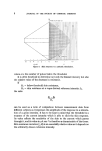
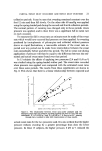
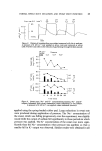
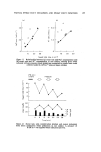
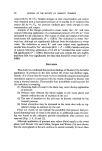
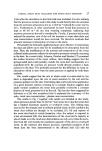
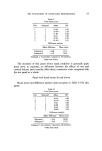
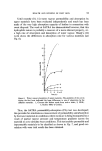
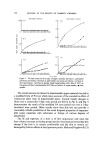
PARTIAL SWEAT DUCT OCCLUSION AND SWEAT DUCT FUNCTION 17 demonstrated that sweat excretion fell significantly following intradermal injections of antidiuretic hormone. This hormone is known to increase water re-absorption in the collecting tubules of the kidney and to increase trans- port of water through frogs' skin. Fasciolo et al (10) therefore considered that a similar process occurred in the sweat duct. Nitta (11) sprayed collo- dion over one forearm and found this significantly reduced sweating compared to sweating in the other forearm he considered that collodion had partially obstructed the flow of sweat from the gland orifices at the surface. Shuster (12) adapted the 'stop-flow' method, which had been developed to study renal tubular function and used it to investigate the activity of the sweat duct. He found that by applying pressure to the skin surface sweat rate could be reduced and this reduction appeared to be related to the pressure applied. Using this technique he was also able to demonstrate reduction in the output of electrolytes. The prin- ciple of the method derives from the observation that sweat composition varies with the rate of sweat flow as coil secretion always has the same composition the efficiency of absorption by the duct must be modified by the rate with which the sweat flushes through it. By applying pressure, the superficial sweat ducts can be partially occluded thereby slowing the rate of flow of sweat through them. The ensuing sweat will be modified by ductal processes to a greater extent than free flowing sweat collected simulta- neously. The nature of ductal absorption can then be inferred from differences between the rate and composition of sweat collected under pressure and free flowing sweat. In this paper we present evidence regarding the nature of absorption in the sweat duct using the technique of partial duct occlusion. METHODS Thirty-two subjects took part in this study they were either volunteers or patients under treatment for localized skin diseases. Sweating was induced in small areas of healthy forehead skin by iontophoresis of 0.2• pilocarpine nitrate, using a current of 4 mA passed for 5 min. This method has already been described by Gibson and Cooke (13) and produces relatively high rates of sweating. After iontophoresis the skin was washed several times with distilled water and dried thoroughly. Subsequently, consecutive 4 rain sweat collections were made from this skin.

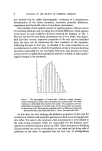
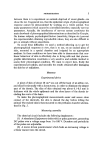
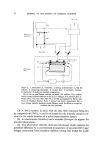
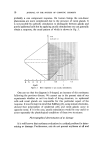
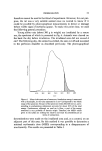
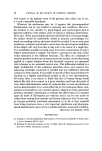
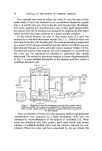
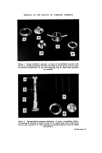
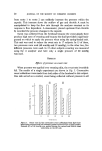
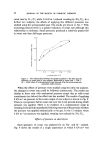
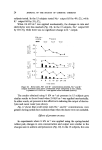
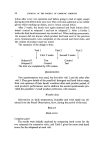
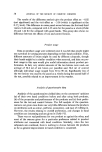
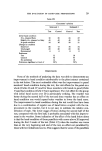
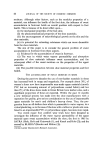
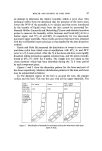
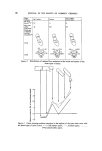
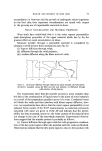
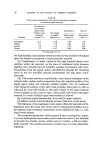
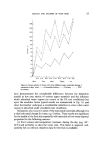
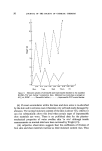
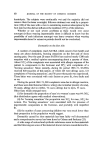
18 JOURNAL OF THE SOCIETY OF COSMETIC CHEMISTS Two methods were used to collect the sweat. In one, the area of skin under study (7 cm •) was enclosed by an unventilated aluminium c•psule (Fig. 1, A and B) this was stuck to the skin with Durofast glue (Rawlplug). The sweat produced was absorbed onto a disc of filter paper placed within the capsule. The rate of sweating was measured by weighing the filter paper before and after the sweat collection in a plastic airtight container. In the second method, the area of skin under study (4.5 cm •) was enclosed by a ventilated aluminium capsule (Fig. 1, C, D and E) which was also stuck to the skin with Durofast glue. The sweat produced was evaporated by a stream of dry nitrogen passed through the capsule the effluent gas was then directed through an infra-red water vapour analyser (Hilger-I.R.D.). The electrical output of the analyser was time-integrated on a recorder and the sweat rate was calculated by reference to calibration data already determined. This system for measuring sweating is shown diagrammatically in Fig. 2. A more detailed description of the analyser and flow system is published elsewhere (14). INFRA-RED ANALYSER RADIATORS I PREAMPUF•ER Figure 2. Diagram of the infra-red analyser and gas flow system used to measure sweating. The system was calibrated by evaporating known quan- tities of water placed inside the calibration capsule which lies in parallel to the skin capsule. Three constituents of sweat were also measured. Sodium and potassium concentrations were measured on a flame photometer while urea was estimated by micro-adaptation of the method of Archibald (15). When sweat was absorbed onto filter papers, these were eluted with known volumes of acidified distilled water and the solution analysed for con- stituents. When the sweat had been evaporated by the gas stream, the
Purchased for the exclusive use of nofirst nolast (unknown)
From: SCC Media Library & Resource Center (library.scconline.org)