COUNTING AND TESTING FOR MICRO-ORGANISMS 67 sample complicate counts by being confused with colonies and also that spreading organisms do not form separate colonies, thus making counts erroneous (40, 41). This latter disadvantage can be overcome to a great extent by adding an overlay of medium as was used by White, Bowman and Kirshbaum (11) in their determination of the microbial contamination of antibiotic preparations. Roll-tube count Instead of using Petri dishes, as in the pour-plate method, tubes or bottles containing a small amount of suitable medium are mixed with diluted test material and rotated horizontally until the medium sets. Although there are no published reports of this method being used for the estimation of micro-organisms in products, it would be as suitable as the pour-plate method and offers considerable savings in media and incubator space. Surface count A small volume, usually 0.1 ml, of the diluted test material is spread uniformly over the surface of a previously dried plate containing a suitable medium. Surface-plate techniques enable strictly aerobic bacteria to de- velop rapidly. The method has been used for examining oral liquid prepara- tions (7) and is recommended for use in preference to the pour-plate method by the International Atomic Energy Agency (38) for estimating viable micro-organisms in irradiated food. Since the surface-count method uses only a relatively small amount of test material, it is not recommended for products containing less than 3 000 micro-organisms g-• or 1 ml of sample. If the count is less than that number, the pour-plate method is the one of choice (38). The popularity of surface-count methods is growing because many different culture media can be used and it is also possible to differen- tiate types of colony and the proportion of the different bacteria present. It is usually not suitable when spreader type organisms are present. Drop count This is a variation of the surface-count method and was developed in 1938 by Miles and Misra. The diluted test material is deposited as individual drops of 0.02 ml on to the surface of a culture plate which has been pre- viously dried. If spreading type organisms are present, the method is of little value quantitatively. It is useful as a screening test and was used in Public Health Laboratory Service Working Party investigation (17).

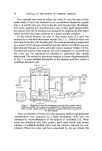
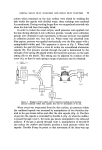
68 JOURNAL OF THE SOCIETY OF COSMETIC CHEMISTS Multiple-tube or most probable number or index (MPN) Briefly, this method involves appropriately diluting the test preparations, inoculating them into liquid culture media and, after incubation, counting the number of tubes showing growth or no growth in each dilution. By reference to prepared tables an estimate of the most probable number of micro-organisms in the original sample can be calculated. The MPN index represents the estimated number of micro-organisms present in a given amount of sample. The computation of this index is based on two assumptions: (a) that the micro-organisms are distributed randomly in the test ma- terial, and (b) that a positive reaction is obtained if, and only if, the portion of test material tested contains one or more micro-organisms. The technique is widely used for the estimation of coliforms in water (39) but can be used with other products if growth characteristics, such as turbidity, acid, or gas production can be easily observed. The method is recommended in the U.S.P. 18th rev. (37) for counting micro-organisms especially if present in disperse systems. Hess, Kniisel and Mullen (27) pro- posed the method to estimate small numbers (less than 100 g-•) in topical preparations. Dip-inoculum Meghji, Buddle and Cherryman (20) have proposed an alternative to the methods routinely used. It is based on the dip-inoculum technique suggested for use in the detection of bacteriuria and makes use of plastic spoons or glass slides lightly coated with culture medium. The prepared spoons or slides are dipped into the product, allowed to drain and then incubated. The method is said to be reliable when no inhibitory ingredients are present and if the product is not unduly viscous. Membrane filtration There are two basic recognized methods for performing conventional sterility tests of pharmaceuticals. One is the direct method, which allows the test sample to be inoculated directly into an appropriate culture medium. The other is the filtration method, in which the test sample is solubilized in a non-toxic diluting fluid and then filtered through a bacterial retentive filter. The filter is washed free from inhibitory substances and transferred
Purchased for the exclusive use of nofirst nolast (unknown)
From: SCC Media Library & Resource Center (library.scconline.org)