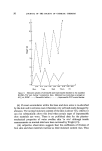
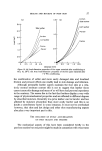
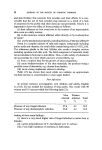
60 JOURNAL OF THE SOCIETY OF COSMETIC CHEMISTS keratolysis. The subjects were continually wet and the majority did not remove their footwear overnight. Silicone ointment was used by a propor- tion (120) of the men with a view to minimizing moisture absorption by the foot skin but this did not influence the incidence (55•o) of the infection. Whether or not such severe problems as these would ever occur amongst civilians wearing impermeable shoes is difficult to know but the possibility of such infections amongst very heavy sweaters when wearing impermeable shoes for extensive periods should not be overlooked. Dermatitis on the foot skin A number of complaints reach SATRA which concern foot health and many are about dermatitis, burning sensations on the feet and of shoes causing pain. Over the past 20 years SATRA has received nearly 1200 such enquiries with a medical opinion accompanying about a quarter of them. About 53•o of the complaints were associated with allergic response of the patient to components in the footwear and 29•o with complaints of a 'burning sensation'. More recently, during the period 1965-71, SATRA received 420 enquiries of this nature, of which 223 were allergy cases, 121 complaints of 'burning sensations', and 76 cases where pain was experienced. These latter were associated with such factors as poor fit, shoe faults and so on. During the period 1962-71,288 complaints were due to allergic reaction, and these were distributed as follows: allergy due to leather (mainly chrome), 78 cases allergy due to rubber, 72 cases allergy due to dyes, 55 cases. Other facts which emerged were: (i) for dermatitis the proportion of men's to women's cases was 64: 36•o (this distribution agrees with medical observations). (ii) for 'burning sensations' the proportion was 76•o for men, 24•o for women. The 'burning sensations' were associated with the presence of impermeable components in the footwear, and probably with imperfect fit. (iii) the number of cases concerning children was very much lower than their proportion in the population would suggest. Dermatitis caused by shoe materials has been fairly well documented and a comprehensive survey has been done by Calnan and Sarkany (25). A wide range of natural and synthetic substances occur in shoe materials and the following are some of the materials known to have caused dermatitis.

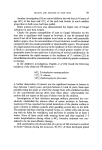
HEALTH AND HYGIENE OF FOOT SKIN 61 Upper leather Fabric linings Felt linings Shoe linings Toe puff materials Leather insole material. Lining leather Rubber and rubber additives, e.g. mercapto-benzthiazole, mono- benzyl ether of hydroquinone, tetra-methyl thiuram, mono- and disulphides, dithiocarbamate. Vinyl-coated fabrics are widely used as linings for the back part of shoes and it is of interest that Jordan (26) was unable to obtain a reaction to vinyl resins amongst his patients. Recently an insock material has been marketed in Germany which slowly evolves formaldehyde, the manufacturers claiming that a 3-day wear period with the insock will reduce the sweat rate of the foot thus improving foot comfort. In this connection it is interesting that Jordan observed no adverse reaction to formalin. Calnan and Sarkany comment in their paper that the precise chemical sensitizer in chrome leather has not been satisfactorily defined. Patch tests showed that of 27 leather-sensitive patients only five reacted to potas- sium dichromate and none to chromic sulphate. Divalent and trivalent chromium rarely sensitizes. An aspect which seems to have been overooked is the action of sweat on chrome leather. The lactate present in sweat is well known as causing release of chrome from the leather fibre and it may well be that the state of the chromium in the extracted state and in the presence of one or more sweat components may be such as to sensitize the wearer. A number of synthetic tanning ('syntans') agents are also used in the retanning of chrome leathers and since these contain phenolic and sulphon- ated end-groups they may be sensitizing agents. Calnan and Sarkany suggest that of the materials used to make leather the following might be suspected as possible dermatitic agents: Vegetable, chrome and synthetic tanning agents Anti-mildew substances, e.g. pentachlorophenol, ethyl mercuric phosphate Dyestuffs Leather finishes, e.g. nitrocellulose and acrylic resins. In view of the possible long-term interaction between sweat and various shoe components it is significant that Calnan found few patients who could relate their dermatitis to the purchase of a new pair of shoes. In some cases the attack could be related to a particular old pair of shoes this is clearly of significance with respect to degradation of the shoe materials by sweat. In the same way the biodegradation products of saprophytic fungi growing
Purchased for the exclusive use of nofirst nolast (unknown)
From: SCC Media Library & Resource Center (library.scconline.org)