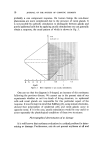
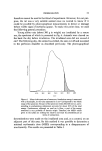
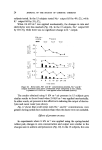
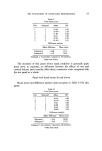
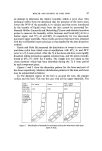
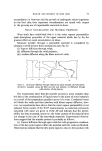
THE EVALUATION OF HAND=CARE PREPARATIONS 33 large panel of housewives. In addition to the trained observer's assessment of hand condition, the panel members themselves were asked for their opinions on the performance of the lotions. METHOD Hand assessment Previous workers (12, 13) have used a grading system based on a general assessment of hand condition, taking into account dryness, scaling, redness and cracking. The disadvantage of this method is that a region of skin in poor condition, even though small in area, is likely to have a dispropor- tionately large effect on the observer's judgement than a much larger area in not such poor condition. In order to remove this objection, the present test method was developed by colleagues at the Unilever Research Labora- tory at Port Sunlight. Each hand is divided into six areas: the back, the web between thumb and index finger, the webs between the fingers, the backs of the fingers, the palms, and the fronts of the fingers. Each area is assessed separately by the operator on a scale ranging from 0 (no visible damage) to 6 (erythema/flaking/cracking). The sum of the scores for the areas of both hands is taken as a measure of hand condition. The total possible score is thus, 72 (6 x 6 x 2) but a score of over 20 is shown by hands which are distinctly dry and scaly. Trial design Although the months of January and February are probably best for carrying out this type of trial, the test to be described was conducted at Isleworth during March and April. The test product was a hand lotion con- taining a plant extract alleged to have beneficial properties to skin. This was compared with a control lotion in which the plant extract was replaced by an equal amount of water. The test and control lotions were similar in appearance, viscosity and perfume. The panel consisted initially of 240 women, 20 years of age upwards but mostly middle-aged housewives. No special criteria of selection were employed. The panellists' hands were assessed on their first visit and they were allocated to one Of two subpanels. One subpanel was supplied with the test lotion, the other with the control lotion. The bottles issued to the subpanels were coded differently. Panellists were instructed to use the hand

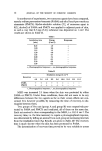
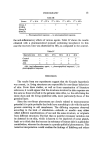
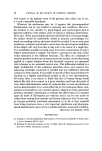
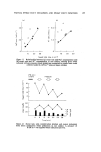
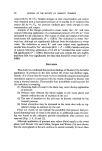
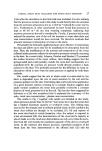
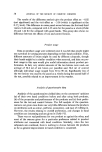
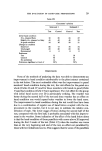
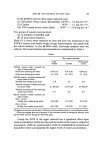
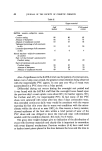
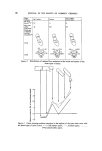
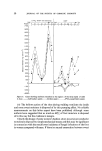
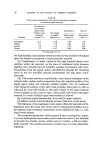
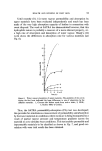
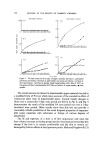
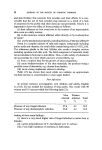
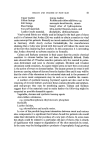
34 JOURNAL OF THE SOCIETY OF COSMETIC CHEMISTS lotion after every wet operation and before going to bed at night, except during the 24 h before their next visit. They were also asked not to use rubber gloves whilst washing-up dishes, and to return unused lotion. After 2 weeks, the hands were again assessed and fresh lotions distri- buted-control to subpanel 1 and test to subpanel 2. After a further 2 weeks the final hand assessment was carried out. When making assessments, the assessor did not known which product had been used or the previous score. Questionnaires were completed on the second and third visits, and the volume of product used was noted. The summary of the design is thus: Subpanel 1 Subpanel 2 Visit 1 Visit 2 Visit 3 I First 2 weeks • Second 2 weeks • Test Control Control Test The trial was completed by 198 women. Questionnaires Two questionnaires were used, the first after visit 2 and the other after visit 3. They gave details of the panellists' detergent and hand lotion usage, their own opinions of their hands' condition after each product period, of each product's performance, and in addition the second questionnaire pro- vided the panellists' overall product preference, with reasons. Weather data Information on daily temperature, humidity and wind speed was ob- tained from the Royal Observatory, Kew, during the period of the trial. RESULTS Hand scores Complete panel The results were initially analysed by comparing hand scores for the two subpanels for successive visits, and Table I gives the mean total hand scores for the subpanels at each visit.
Purchased for the exclusive use of nofirst nolast (unknown)
From: SCC Media Library & Resource Center (library.scconline.org)