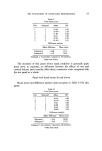
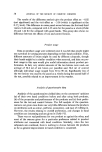
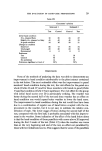
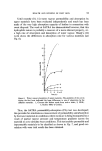
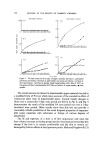
28 JOURNAL OF THE SOCIETY OF COSMETIC CHEMISTS reabsorption of water in the sweat duct has been shown to be less than re-absorption of electrolytes and urea (22). However, miliaria has never been observed in this skin disease and at present we are unable to offer a really satisfactory explanation of this. We have found that water re-absorption is always greater than solute re-absorption during partial duct occlusion. Since, as we have already quoted, the evidence is that the primary fluid secreted in the coil is isotonic to blood, we must conclude that the ductal absorptive process that we have observed cannot account for the production of hypotonic sweat. This means that some other mechanism probably lower down in the sweat duct or possibly within the distal part of the coil is responsible for producing hypo- tonic sweat, and that the re-absorption of water, Na +, K* and urea which are revealed by partial duct occlusion would occur more distally. In other words, it is necessary to postulate two separate absorptive areas within the sweat duct. Further evidence for this conclusion comes from a study of a diseased state. In fibrocystic disease of the pancreas, sweat collected at the skin surface has greatly increased electrolyte concentrations. Indeed this is one of the diagnostic investigations carried out in this unpleasant disease of childhood. If, as has been suggested the coil of the sweat glands secretes a normal isosmotic fluid in this condition (5) then there must be defective re-absorption of electrolytes by the ducts. Our own recent investigations of this condition using partial sweat duct occlusion gave identical results to those presented in this study. This gives further support to the view that there are two re-absorptive sites in the sweat duct and that the proximal site is abnormal in fibrocystic disease while the distal site appears to respond normally to partial duct occlusion. These findings are also supported by a previous study (23). A surprising finding was that water re-absorption was more rapid than solute re-absorption in this distal absorptive site. The mechanism by which pressure increases re-absorption of solute-free water is not known. It could be that pressure increases the escape of water molecules between the cells of the sweat duct and this could possibly be a site of action of antidiuretic hormone (10). The fact that re-absorption of urea also takes place in the distal sweat duct does mean that urea concentration cannot be taken as an index of increased water absorption within the gland. In conclusion, the technique of partial sweat duct occlusion has defined a distal absorptive site in the sweat duct and has given some insight into its capacity. The technique is applicable to a study of sweat gland disorders. (Received: 25th January 1972)

PARTIAL SWEAT DUCT OCCLUSION AND SWEAT DUCT FUNCTION 29 REFERENCES (1) Ellis, R. A. Advances in biology ooeskin 3 30 (1962) (Pergamon Press, Oxford). (2) Munger, B. L. An electron microscopic study of human eccrine sweat glands. Anat. Rec. 133 313 (1959). (3) Hibbs, R. G. The fine structure of human eccrine sweat glands. Amer. J. Anat. 103 201 (1958). (4) Schulz, I., Ullrich, K. J., Fr6mter, E., Holzgreve, H., Frick, Anselm and Hege, U. Micro- punktion und elektrische Potentialmessing an Schweissdrusen des Menschen. Pfiiigers Archiv. 284 360 (1965). (5) Siegers, J. F. G. The mechanism of eccrine sweat gland function in normal subjects and in patients with mucoviscoidosis. Dermatologica 127 242 (1963). (6) Dobson, R. L. The human eccrine sweat glands. Structural and functional interrelation- ships. Arch. Envir. Health 11 423 (1965). (7) Thompson, N. Eccrine sweat glands in human skin grafts. In Advances in biology of•kin 3 76 (1962) (Pergamon Press, Oxford). (8) Schwartz, I. L., Thaysen, J. H. and Dole, V. P. Urea excretion in human sweat as a tracer for movement of water within the secreting gland. J. Exp. Med. 97 429 (1953). (9) Brusilow, S. W. Evidence for a non-plasma source of urea in sweat. Nature (London) 214 506 (1967). (10) Fasciolo, J. C., Totel, G. L. and Johnson, R. E. Antidiuretic hormone and human eccrine sweating. J. Appl. Physiol. 27 303 (1969). (11) Nitta, H. On the possibility of a re-absorption in the excretory duct of the sweat glands. Nagoya Med. J. 1 59 (1953). (12) Shuster, S. Graded sweat-duct occlusion: a technique for studying sweat gland function. Clin. Sci. 25 89 (1963). (13) Gibson, L. E. and Cooke, R. E. A test for concentration of electrolytes in sweat in cystic fibrosis of the pancreas utilizing pilocarpine by iontophoresis. Pediatrics 23 545 (1959). (14) Johnson, C. E. and Shuster, S. The measurement of transepidermal water loss. Brit. J. Dermatol. 81 Suppl. 4 40 (1969). (15) Archibold, R. M. Colorimetric determination of urea. J. Biol. Chem. 157 507 (1945). (16) Collins, K. J., Sargent, F. and Weiner, J. S. The effect of arterial occlusion on sweat gland responses in the human forearm. J. Physiol. 148 615 (1959). (17) Johnson, C. E., Dawber, R. and Shuster, S. Surface appearance of the eccrine sweat duct by scanning electron microscopy. Brit. J. Dermatol. 83 655 (1970). (18) Allen, S. D. and O'Brien, J.P. Tropical anidrotic asthenia preliminary report. Med. J. Aust. 2 335 (1944). (19) Sultzberger, M. B. and Zimmerman, H. M. Studies on prickly heat, II, Experimental and histological findings. J. Invest. Derrnatol. 7 61 (1946). (20) Shelley, W. B. Experimental miliaria in man. Sweat retention vesicles following destruction of terminal sweat ducts. J. Invest. Derrnatol. 16 53 (1951). (21) Johnson, C. E. and Shuster, S. Eccrine sweating in Psoriasis. Brit. J. Derrnatol. 81 1 ! 9 (1969). (22) Shuster, S. and Johnson, C. E. The abnormality of sweat duct function in psoriasis. Brit. J. Derrnatol. 81 846 (1969). (23) Shuster, S., McKendrick, T. and Stammers, M. The site of the sweat gland defect in fibro- cystic disease. Bri t. J. Dermato!. 77 105 (1965),
Purchased for the exclusive use of nofirst nolast (unknown)
From: SCC Media Library & Resource Center (library.scconline.org)