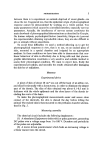
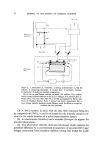
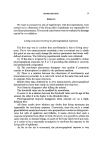
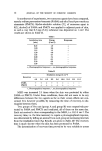
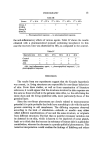
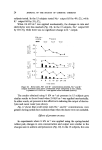
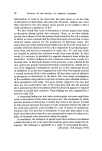
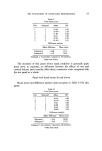
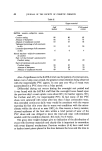
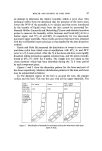
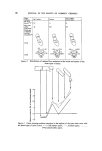
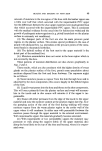
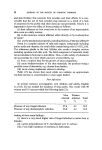
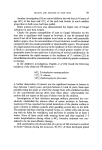
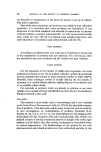
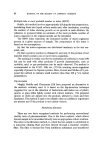
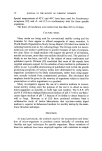
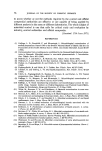
52 JOURNAL OF THE SOCIETY OF COSMETIC CHEMISTS Table III Water vapour permeability and moisture desorption properties of saturated upper materials Wt loss from jar by water vapour trans- Saturated wt Final wt mission or de- Wt change sorption* of upper* Initial condi- Initial satur- Material (mg cm '• h 'x (mg crn '2 h -x) tioned wt ated wt Calf leather 21.5 - 11.0 1.99 1.22 Clarino 2.1 •- 1.6 2.04 2.16 Corfam 2.8 -{- 1.9 2.32 2.46 Porvair 2.7 q- 0.7 2.00 2.04 *Average rate over 7 h. the high humidity microclimate within the shoe but the position will depend upon the thermal conductivity of each particular material. (ii) Condensation of water vapour at the high humidity liquid water interface within the material. As the mass of condensed water increases capillary flow towards the low humidity external environment will occur. Evaporation from the liquid surface and diffusion through the remaining pores to the low humidity external environment will take place simul- taneously. (iii) The system reaches an equilibrium water vapour condenses on the internal water surface and re-evaporates from the opposite surface of the liquid region within the material. Limited capillary flow of condensed water along the surfaces of the open voids probably takes place as well, as indicated by sweat salt transfer to the outer surface of the upper material where it appears as salt crusts or 'spue'. Sweat solids will occur in the upper material as a result of direct liquid sweat transfer as follows: (a) at pressure points between skin, hose and the upper material (b) indirect transfer from the plantar surface of the foot via the insole. The thickness of the condensed water region within the material will be dependent upon the sweat rate of the wearer, temperature gradient across the material, and its thermal conductivity in the equilibrium state, i.e. with liquid water present. This proposed mechanism, which requires further investigation, applies to porous hydrophobic man-made polymer materials and it is not intended to describe the transfer process which occurs in leather, a fibrous hydro- philic material. The transfer processes in leather have not been adequately explained.

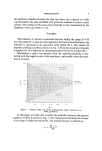
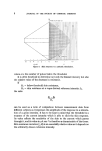
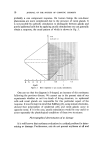
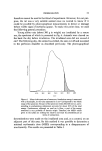
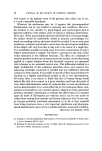
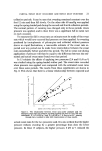
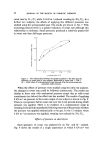
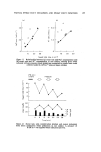
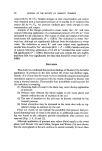
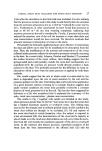
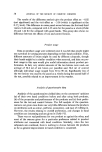
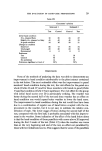
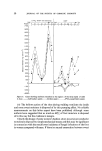
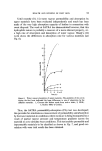
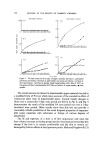
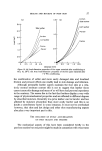
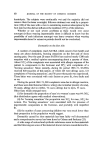
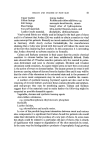
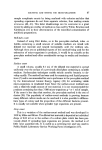
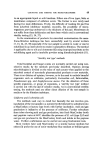
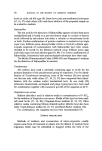
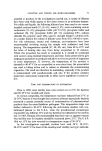
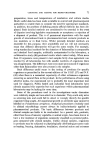
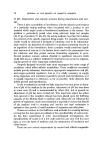
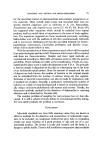
HEALTH AND HYGIENE OF FOOT SK1N 53 Until recently (10, 11) water vapour permeability and absorption by upper materials have been evaluated independently and much has been made of the very high absorption capacity of leather in connection with sweat disposal. The work at SATRA has demonstrated however, that this hydrophilic nature is probably a measure of a more relevant property, viz. a high rate of absorption and desorption of water vapour. Blazej's (12) work shows the differences in absorption rate for various materials (see Fig. 6). • 8 ß ß ß--4 I I I I 0 2 4 6 8-.".-I0 Time (h) Figure 6. Water vapour absorption of upper materials. The gradients of the curves during the first hour indicated the large differences in rate of absorption by the different materials. 1, Chrome side leather made from native hides 2, PKK 3, Clarino 1000 4, Corfam. Thus, the SATRA permeability-absorption (PA) test was developed this provides for simultaneous measurement of permeability and absorption by footwear materials in conditions where moisture is being transported as a result of partial vapour pressure and temperature gradients across the material so as to simulate wear conditions. This test enables permeable and impermeable materials to be classified as shown in Fig. 7, and good cor- relation with wear trial results has been obtained.
Purchased for the exclusive use of nofirst nolast (unknown)
From: SCC Media Library & Resource Center (library.scconline.org)