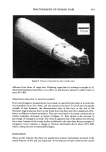
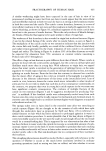
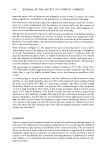
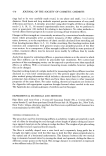
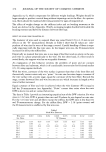
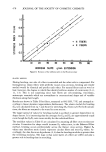
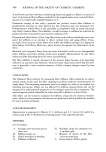
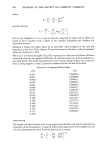
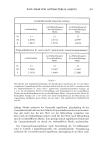
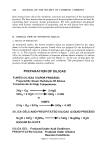
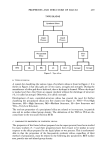
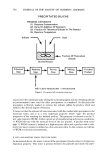
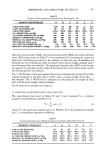
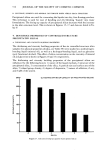
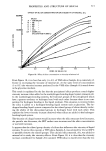
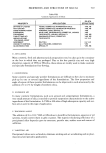
498 JOURNAL OF THE SOCIETY OF COSMETIC CHEMISTS 1iave learned more about the chemistry, structure and properties of the precipitated products. We have learned that the properties of the precipitated silicas can be fixed by controlling their structure during precipitation. We have synthesized precipitated silicas with diverse combinations of properties, and we will discuss how their silica structure can be correlated to key properties and functional performance. II. OVERALL VIEW OF SYNTHETIC SILICAS A. METHOD OF PREPARATION As mentioned earlier, the known synthetic silicas are prepared either by the vapor phase or by the liquid phase process. Fumed silicas are prepared by the hydrolysis of silicon tetrachloride vapor in a flame of hydrogen and oxygen at an elevated tempera- ture (2, 3). The reaction conditions are shown in Figure 1. Silica gels and precipitated silicas are prepared by the acidulation of aqueous sodium silicate solution (4) with an acidification agent, such as sulfuric acid (see Figure 1). In the case of silica gels, the reaction is generally conducted under acid conditions. The precipitated silicas are produced under alkaline reaction conditions. PREPARATION OF SILICAS FUMED SILICAS (VAPOR PROCESS) Prepared By Steam Hydrolysis Of Silicon Tetrachloride At High Temperatures. 2H 2 + 02 • 2H20 SiCI4 + 2 H20 r SiO 2 + 4 HCI or 2 H 2 + 02 + SiCI4 - 1000øC •,• SiO2 + 4 HCI SILICA GELS AND PRECIPITATED SILICAS (LIQUID PROCESS) Na20 x SiO2 + H2SO4 SODIUM SILICATE • x SiO 2 + Na2SO4 + H20 SILICA GEL: Produced Under Acid Conditions. PRECIPITATED SILICA: Produced Under Alkaline Reaction Conditions. Figure 1. Preparation of silicas

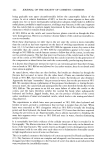
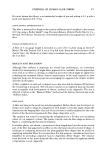
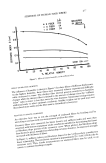
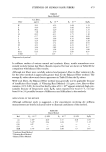
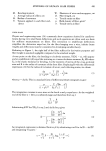
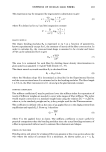
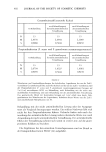
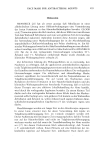
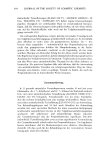
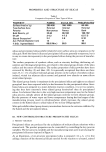
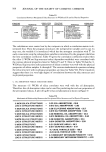
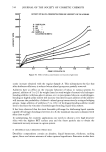
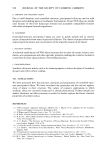
PROPERTIES AND STRUCTURE OF SILICAS 499 TYPE SILICAS I Synthetic Silicas I I Vapor Liquid Process Process 1 Silica Gel Precipitated Silica , I Figure 2. Type silicas Xerogel B. TYPES OF SILICAS A system for classifying the various types of synthetic silicas is found in Figure 2. It is shown in Figure 2 that silica gels are of two types, xerogels and aerogels. During the manufacture of silica gels first a hydrosol, then a hydrogel is formed. When a hydrogel is washed and then dried from an organic medium without the shrinkage of structure (4), it is called an aerogel. Otherwise, it is called a xerogel. Development of new, controlled-structure silicas has created the need for further classifying the precipitated silicas into five classes (see Figure 2): VHS--Very High Structure, HS--High Structure, MS--Medium Structure, LS--Low Structure and VLS--Very Low Structure. The end-use properties of a precipitated silica are related to its structure, its particle size and its surface silanol group density. The definitions of the VHS to VLS are dis- cussed later in the text under Section III-B. C. COMPARATIVE PROPERTIES OF SYNTHETIC SILICAS The properties of the fumed silicas (prepared via the vapor process) have been studied by many workers (5-7) and their properties have been found to be similar in some respects to the silicas prepared by the liquid phase or wet process. This is understand- able in that the properties of the fine-particle synthetic silicas, regardless of their method of preparation, must be related to the following key parameters: BET surface area, particle size and silanol group density.
Purchased for the exclusive use of nofirst nolast (unknown)
From: SCC Media Library & Resource Center (library.scconline.org)