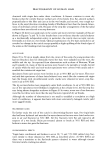
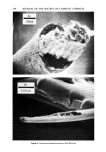
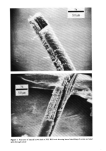
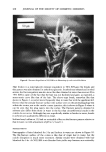
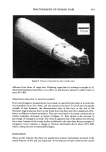
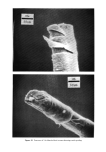
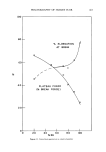
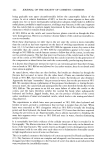
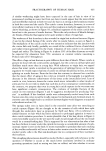
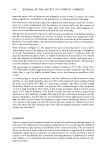
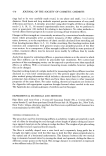
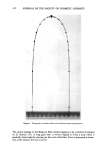
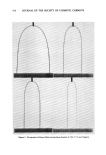
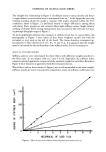
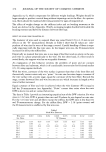
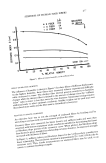
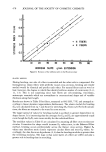
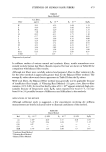
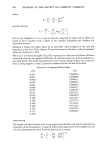
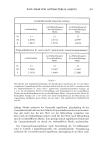
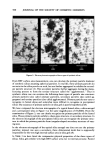
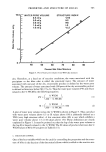
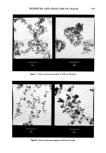
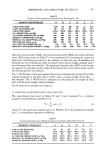
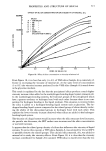
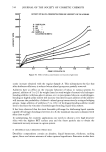
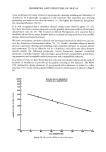
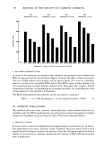
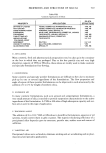
500 JOURNAL OF THE SOCIETY OF COSMETIC CHEMISTS •ILICA P•ECIPITATE•D SILICA Figure 3. Electron photomicrographs of three types of synthetic silicas From BET surface area measurement, one can calculate the primary particle diameter of synthetic silicas assuming spherical particles. In real life, these primary particles do not exist in the silica powder as such, but are further aggregated to exhibit the second- ary particle structure (3). The secondary particles further aggregate during the manu- facturing process to form the tertiary structure called the "agglomerates." Thus in synthetic silicas one can envision the following three types of particle size structure: primary particles (also called ultimate particles), secondary particles (also called ag- gregates) and tertiary particles (also called agglomerates). Primary particles are easy to recognize in fumed silicas and somewhat more difficult to recognize in precipitated silicas. The existence of primary particles in silica gels is purely hypothetical (8). We have compared the electron micrographs of a typical fumed silica, a silica aerogel and a precipitated silica in Figure 3 at the same magnification of 69,800X. From the examination of Figure 3, one can clearly recognize the primary particles of the fumed silica. These primary particles exhibit a chain-type structure or secondary structure. In the electron micrograph of the precipitated silica one can recognize the primary struc- ture in which the primary particles form irregular-shaped secondary structure of vary- ing sizes. In the electron micrograph of the typical silica aerogel one does not see the primary particles instead, one sees a secondary, three dimensional mesh that is supposedly responsible for the very high internal surface area in silica gels (8). In Table I we have listed the comparative physical properties of the three types of silicas. Silica gels exhibit very high BET surface area due to internal porosity. Fumed

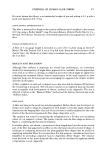
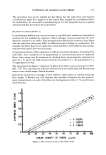
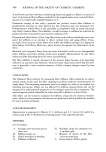
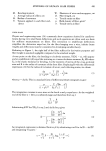
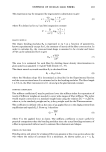
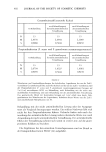
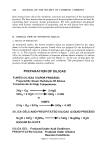
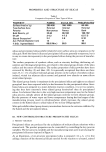
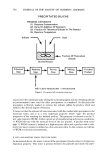
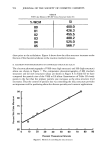
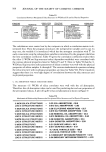
PROPERTIES AND STRUCTURE OF SILICAS 501 Table I Comparative Properties of Three Types of Silicas PROPERTY FUMED SILICA GEL PRECIPITATED Surface Area (m:/g) 200-400 300-1000 60-300 Type Surface Area External Internal External Porosity Non-porous Porous Both Bulk Density, g/I 32-64 96-160 160-192 5% pH 3-4.2 4-7.5 6.5-7.5 Silanol Groups/nm 2 2-4 4-8 8-10 Ave. Particle Diameter (nm) 14 -- 18 % SiO 2 (Ignited Basis) 99.8 (Min.) 99.5 98.0 silicas and precipitated silicas exhibit relatively lower surface areas in comparison to the silica gels. Both the fumed silicas and precipitated silica are generally nonporous, but it is easy to create microporosity in the precipitated silicas during the process of manufac- ture. The surface properties of synthetic silicas, such as viscosity building, thickening, ad- sorption and rheological properties, are related to the silanol group density of the silica surface and the extent of hydration. The surface properties of silica powders have been reviewed by Hockey (9) and Hair (10). It is generally recognized that there are three types (9, 11-13) of surface hydroxyl groups present on the surface of synthetic silicas: isolated, vicinal (on adjacent silicon atoms) and geminal (two silanols on same silicon atom) silanol groups. The silanol group density is maximum in the precipitated silicas and eight to ten silanol group/nm 2 have been reported widely in the literature for the precipitated silicas. Since fumed silicas are prepared in a water-deficient reaction condition, it is not too surpris- ing that they have extremely lower silanol group density/nm 2 than do precipitated silicas. It is believed that due to the very high reaction temperature used in the fumed silica process, initially almost all the silanol groups condense to form siloxane groups. But the presence of water vapor and lower temperature during the final stages of the manufacturing process result in rehydroxylation which increases the silanol group content in the fumed silicas to a final value of two to four OH group/nm •. Silica gels exhibit silanol group density intermediate between the extreme exhibited by the fumed and the precipitated silicas. III. NEW CONTROLLED-STRUCTURE PRECIPITATED SILICAS A. PROCESS VARIABLES Precipitated silicas are produced by the acidulation of sodium silicate solutions with a mineral acid. The product properties can be controlled by controlling the key process variables. The key process variables and the manufacturing steps used in producing the precipitated silicas are depicted in Figure 4. As an illustration, a low-structure precipitated silica is prepared (14 a, b, c) by first adding a fraction of the theoretical silicate needed for the reaction to a heated, stirred
Purchased for the exclusive use of nofirst nolast (unknown)
From: SCC Media Library & Resource Center (library.scconline.org)