J. Soc. Cosmet. Chem., 29, 525-536 (September 1978) Laboratory methods for appraising the efficacy of sunscreens K. H. KAIDBEY and A.M. KLIGMAN The Duhring Laboratory, Department of Dermatology, University of Pennsylvania, Suite 203, 3500 Market St., Philadelphia, PA 19104. Received February 1 O, 1978. Synopsis APPRAISAL of a SUNSCREEN entails measurements of an ensemble of CAPABILITIES, viz., determina- tion of the sun protection factor, resistance to sweating, wash-off and abrasion, capacity to form a horny layer reservoir and protection against long ultraviolet rays (UV-A). There is a good correlation between results obtained in sunlight and in the LABORATORY with the xenon solar simulator, but not with other "suniamps." Quantitative data are provided for a number of proprietory sunscreens ranging from chemical absorbers and physical blockers to polymeric film formers. INTRODUCTION Despite a plethora of commercial sunscreens, new ones are still being produced. This reflects the growing demand for more effective preparations. Not very long ago, Knox et al. (1) and Willis et al. (2) found that most marketed sunscreens provided only marginal protection. This is no longer true a general upgrading has occurred. Moreover, modern formulations have tended to become more elegant and to possess greater powers against such stresses as sweating and swimming. Sunscreens after all are used under very exigent conditions in which environmental factors (high temperature, intense radiation, wind) and physical activity conspire to wipe out protection. Highly effective sunscreens must possess multiple capabilities. Growing public awareness of the harmful effects of sunlight has also contributed to the expanding sunscreen market. The damaging effects of chronic sun exposure--prema- ture aging and cancer--are becoming known to more and more people. Nonmelanoma skin cancer is the most prevalent of all human malignancies. Habitual use of effective sunscreens would substantially prevent these unhappy consequences of heedless ex- posure to the sun. Nonetheless, a rich tan is very highly prized. Sun worshipping is perhaps now the dominant religion in "advanced" countries. With increasing leisure, briefer clothing and longer life expectancy, there is even greater need for sunscreen which can protect the skin of all sorts of persons under all sorts of conditions be they 525

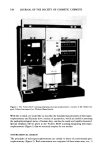
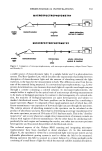
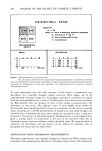
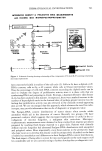
526 JOURNAL OF THE SOCIETY OF COSMETIC CHEMISTS farmers, sailors, skiers, bathers, fishermen, workers, vacationers, retirees, playboys, etc. This is especially true for light-skinned persons who sunburn easily and tan poorly, notable examples of whom are persons of Celtic ancestry (Scotish-Irish-Welsh). Laboratory assays are invaluable for appraising the efficacy of sunscreens prior to field trials. Unlike field studies, the conditions of exposure can be rigorously controlled. Sunlight is not only inconsistent from day to day but from hour to hour. In our experience, tests with sunlight give results which are far more variable than the solar simulator. We ourselves look to the laboratory for definitive study and resort to the outdoors for confirmation. Field studies are a final and necessary stage to show efficacy in real settings that impose rigors not present in the laboratory. The methods (2) reported previously from this laboratory for assessing sunscreens are no longer adequate in view of the diversity of formulations and the demand for greater quantitative knowledge of their merits and limitations. This paper updates the meth- odology taking as examples some of the better known proprietory products. Needless to say, the sampling is small and arbitrary, though hopefully representative of the dif- ferent types ranging from physical blockers to chemical absorbers of UV-B and UV-A. MATERIALS AND METHODS SUBJECTS These were healthy Caucasian college students between the ages of 19 and 26 years. The untanned mid-back or flexor aspect of the forearm were used for testing. Informed consent was obtained. Panels often subjects were used for each test. LIGHT SOURCE This was a 150-W xenon solar-simulator. With the Schott WG-320, the emission in the sunburn range resembles the ultraviolet portion of mid-day summer sunlight in North temperate latitudes (3). With the Schott WG-345 filter, sunburning radiation is eliminated and the emission consists primarily of long ultraviolet radiation (UV-A) and some visible light. Intensity measurements at skin level were made with a calibrated Eppley thermopile (Eppley Laboratories, Newport, Rhode Island). The UV-B flux was 14.0 mW/cm 2 and UV-A 22.5 mW/cm 2. THE MINIMAL ERYTHEMA DOSE A series was given in which each exposure was 15 sec greater than the previous one. The minimal erythema dose (MED) was the least exposure which produced a uniform, mild erythema with a sharp border 24 hr later. The test agents were delivered to 2 cm squares of skin outlined by adhesive tape at a dose of 5/xl/cm •, using either micro- pipettes (lotions and liquids) or 1 ml plastic tuberculin syringes (creams and oint- ments). The materials were spread evenly with thin glass rods. THE SUN PROTECTION FACTOR (S.P.F.) IMMEDIATE PROTECTION The S.P.F. is the ratio of the MED's on treated and untreated skin. Exposures were given 5 min after application. The sites were read 24 hr later.
Purchased for the exclusive use of nofirst nolast (unknown)
From: SCC Media Library & Resource Center (library.scconline.org)