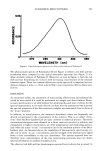
J. Soc. Cosmet. Chem., 29, 565-571 (September 1978) Evaluation of a polymeric film-forming sunscreen preparation in tranquilized hairless mice C. W. STOTT, J. SUSKEVICH and A. H. CAMPBELL Johnson Johnson Research Foundation, New Brunswick, NJ 08903. Received December 15, 1977 Synopsis A method is described for the EVALUATION of SUNSCREEN PREPARATIONS using HAIRLESS MICE. The mice were treated with TRANQUILIZERS to prevent removal of the agents by grooming. Three preparations were evaluated: 5 % p-aminobenzoic acid in absolute ethanol 5 % p-aminobenzoic acid in 55% ethanol with skin moisturizers, and 3.3% octyl dimethyl p-aminobenzoate in a vehicle that forms a polymeric coating on the skin. Each product was evaluated two ways: 1) exposure to fluorescent sun lamps and 2) immersion in water followed by exposure to the sun lamps. All three products provided comparable protection, provided the animals were not immersed in water. Only the product which formed a POLYMERIC FILM provided suitable protection following immersion in water. INTRODUCTION Although the ultimate subject for sunscreen preparations is man, preliminary screen- ing of such preparations in laboratory animals is desirable. Wolska et al. (1) have raised the question of the advisability of producing large areas of hyperpigmentation in human subjects in preliminary screening. Also the variation in the amount of pig- mentation from subject to subject, and perhaps even between sites on the same sub- ject, may tend to increase the difficulty of evaluation of the amount of protection af- forded by different agents. Physical methods (2, 3) in which the absorption characteristics of potential sunscreen agents are measured may be important in preliminary screening, such as the selection of compounds which absorb ultraviolet (UV) irradiation in the desired range and de- termination of the concentration of the agent in the product. The real test of efficacy, however, is the amount of protection afforded in vivo against biological damage during exposure to UV irradiation. A number of laboratory animal species have been used in testing the effects of UV irradiation on normal and treated skin. Most of these, however, require the use of a depilatory or afford a very small area of relatively hair-free skin on which to conduct testing. We have found that the clipped abdominal skin of albino rabbits is markedly sensitive to many of these materials adding an additional impediment to evaluation of 565

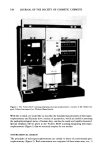
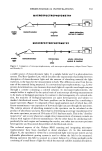
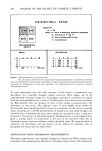
566 JOURNAL OF THE SOCIETY OF COSMETIC CHEMISTS protection. There are two hairless animal species available, the hairless mouse and the Mexican hairless dog. The former are relatively inexpensive and obtainable in large numbers. Also there is a total absence of pigment cells in the skin of these animals, which eliminates that variable. Since erythema of mild degree is difficult to visualize in this species, it was felt that, instead of evaluating a preparation by determining the minimal erythema dose (MED) of skin treated with a product, a more realistic approach would be to compare the effects following exposures which produce severe damage in unprotected skin. Many sunscreen products are ineffective because they are eliminated by perspiration or removed while swimming (4). Therefore, immersion in water following application of the test products is necessary in a realistic test of efficacy and substantivity. We have also found that when hairless mice are painted with sunscreen preparations their natural grooming instinct results in the removal of some or all of the preparation. As an example, mice painted with 5% p-aminobenzoic acid, a proven effective sunscreen in man, 1 hr before exposure to the sunlamp had the same degree of injury as animals not treated with a sunscreen. We have arrived at dosages of tranquilizers which block the grooming response of these animals until after termination of the ex- posure to the suniamp. In this paper we present a method utilizing hairless mice which we feel is an effective and practical model for the evaluation of the efficacy of sunscreen preparations without, or following, immersion in water. MATERIALS AND METHODS Male hairless mice (JAX hr/hr, Jackson Laboratories, Bar Harbor, Maine), seven to ten weeks of age, were used in these experiments. They were housed in plastic cages, five per cage, on wood shavings and maintained on Purina © Laboratory Chow. The ul- traviolet exposure was based on the method of Owens et al. (5). The mice were placed in groups of five in clean cages 7 in. wide x 12 in. long with 0.5-in. wire screen lidso No shavings were used in the cages and a few fbod pellets were placed on the floor to minimize climbing on the screen lids. Four cages were placed under a fluorescent light fixture with two Westinghouse FS40-T12 lamps. The lamps were 30 cm above the floors of the cages. Three formulations containing sunscreens were tested. Product A was composed of 5% p-aminobenzoic acid in 95% ethanol. Product B contained 5% p-aminobenzioc acid, 55%, alcohol and an undisclosed content listed as skin moisturizers. Product C contained 3.3% octyl dimethyl p-aminobenzoate and 8.6% ethanol in a vehicle which formed a polymeric film on the skin and is easily removed with soap and water. Products A and B contained 0.365 M p-aminobenzoic acid and Product C contained 0.140 M octyl dimethyl p-aminobenzoate. Two test procedures were employed in this study: 1) UV exposure of mice immersed in water following sunscreen applicaiton and 2) UV exposure of mice not immersed in water following sunscreen application. In the nonimmersed study, all animals including controls were administered chlorpromazine hydrochloride, 9 mg/kg intraperitoneally. An additional control group was not treated with chlorpromazine hydrochloride in order to determine any possible phototoxic potential of the medication. A volume of
Purchased for the exclusive use of nofirst nolast (unknown)
From: SCC Media Library & Resource Center (library.scconline.org)