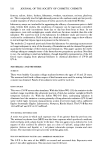
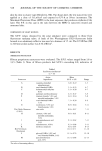
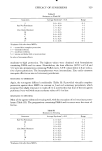
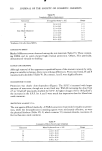
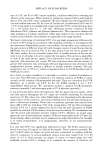
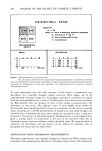
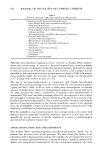
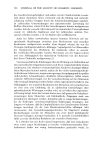
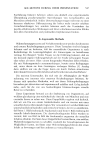
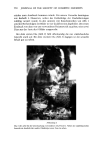
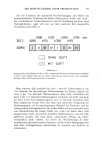
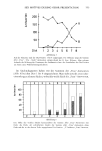
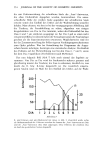
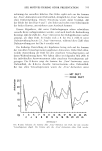
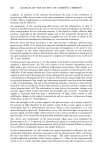
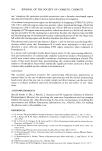
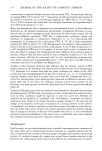
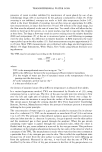
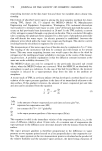
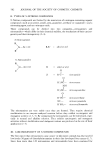
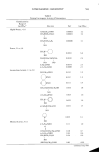
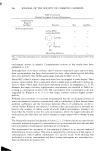
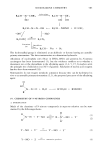
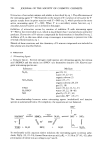
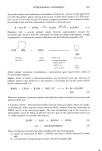
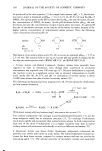
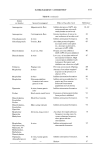
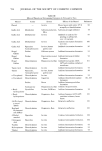
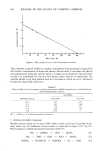
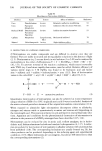
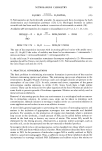
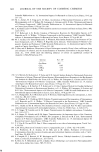
584 JOURNAL OF THE SOCIETY OF COSMETIC CHEMISTS Table I (continued) Varying Carcinogenic Activity of Nitrosamines Classification by Range of log (i/D50) a Structure D.50 a log (1/Ds0) No Detectable Activity (C6H.02NNO (C6H•CH2)•NNO NO (HO.,CCH=)=NNO (12) a D.50 = mean total carcinogenic dose, expressed in mol/kg body wt, for production of tumors in 50% of the animals. carcinogenic activity in animals. Comprehensive reviews of the results have been published (2, 4, 5). Although there is no direct evidence that N-nitroso compounds cause cancer in man, their carcinogenicity has been demonstrated in many other animal species including mice, rats, hamsters, fish, rabbits, guinea pigs, dogs and monkeys (4, 5, 9). About 80% of the N-nitroso compounds tested are carcinogenic to some degree. Their potency varies widely, from compounds where a single dose is sufficient to induce tu- mors to those where large doses given repeatedly produce no malignancy (2, 5). To illustrate the range of activity representative nitrosamines are classified in Table I ac- cording to carcinogenic potency (10). The carcinogenic dose is expressed in the way suggested by Wishnok et al. (11) so that larger numbers indicate higher carcino- genicity. Wishnok and coworkers (11) recently demonstrated that the carcinogenic potency of many nitrosamines correlates quantitatively with a combination of their hexane-water partition coefficients and the electronic inductive effects of substituents on the q- carbon. Earlier Wishnok and Archer (13) showed that carcinogenicity is inversely re- lated to the number of carbon atoms of acyclic dialkyl nitrosamines. Lijinsky (14) found that the reverse is true for cyclic nitrosamines, where the larger molecules are more potent, and that there are major changes in target organs with a change in ring size. The frequently proposed mechanism of action (2, 3, 15) shown below accounts for the enzymatic activation required by nitrosamines, but not nitrosamides, and indicates that only nitrosamines containing an q-hydrogen are carcinogenic. The requirement for activation of nitrosamines is defined as an enzyme-catalysed hydroxylation of an q-carbon. This step is supported by correlations of the degree of carcinogenicity with q-carbon substituents (11) and by recent work showing that preformed q-acetoxy nitrosamines are direct acting carcinogens not requiring enzy- matic modification for activity (16).

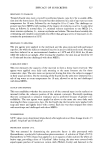
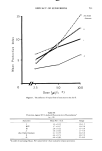
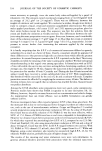
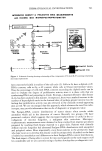
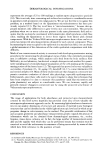
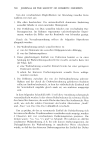
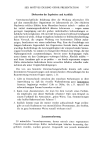
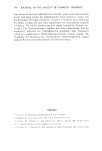
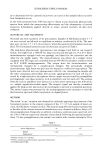
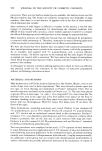
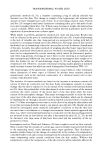
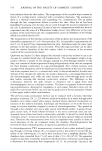
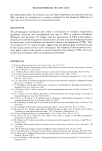
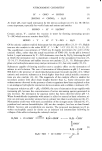
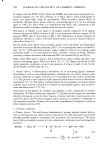
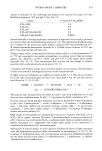
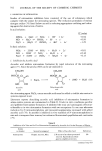
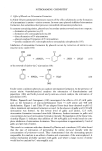
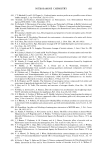
NITROSAMINE CHEMISTRY 585 R•CH-- N--CHR',, NO hydroxylasc • . R•CH--N=N--OH ( -H + R2CHN• + ' R2CN2 R•CH--N--CR'• ON OH R.,CH- NHNO + O:CR'2 diazonium diazoalkane ion N'---•3 R2CH-- Nuc + N2 The hydroxyalkyl group is eliminated as an aidehyde or ketone leaving an unstable primary nitrosamine. The latter tautomerizes to a diazonium hydroxide. Alkylation of nucleophilic sites (Nuc) in DNA, RNA and proteins by N-nitroso carcinogens has been demonstrated (5), but the evidence conflicts as to whether a diazonium ion or the diazoalkane is the alkylating agent (2, 4, 5, 17). In nucleic acids the principle site of alkylation is at N(7) ofguanine. Alkylation of nucleic acid oxygens has also been demonstrated (18). Nitrosamides do not require metabolic activation because they can be hydrolysed in vivo to an unstable primary nitrosamine (2, 3), the proposed precursor of the alkylating agent. O II R'C N--N:O + H20 ) R'COzH + RNHNO IV. CHEMISTRY OF N-NITROSO COMPOUNDS A. INTRODUCTION Much of the chemistry of N-nitroso compounds in aqueous solution can be sum- marized by the following scheme. H R N (l) N[+_NO + Y- /N--H + Y--NO ( ' R-- (1) R' (2) I (2) R' (3) Y--NO + Y'- • Y'--NO + Y- (3) Y--NO + Z (4)) unreactiveproducts (4)
Purchased for the exclusive use of nofirst nolast (unknown)
From: SCC Media Library & Resource Center (library.scconline.org)