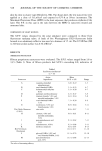
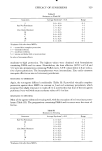
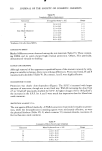
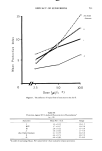
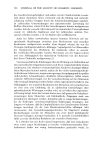
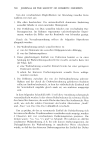
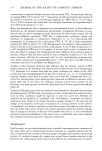
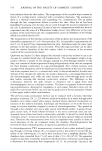
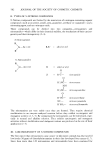
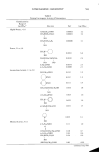
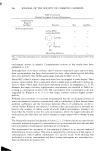
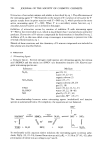
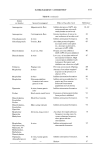
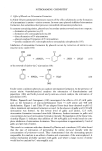
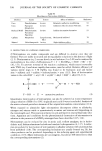
598 JOURNAL OF THE SOCIETY OF COSMETIC CHEMISTS Table VI Miscellaneous Nitrosamine Inhibitors Inhibitor Amine System Effect of Inhibitor Reference Urea Dimethylamine Urea Piperazine Morpholine Reduced NAD Dimethylamine Pyrrolidine Piperidine Caffeine Morpholine Ethanol In vitro In vitro In vitro Chlordiazepoxide In vitro Relatively ineffective in inhibiting. 93 Inhibitory effect decreases with time. 95 Inhibits nitrosamine formation. 93 Lungadenoma, Moderately inhibited. 78 Mice Slight inhibitory effect. 99 D. DESTRUCTION OF N-NITROSO COMPOUNDS N-Nitrosamines are stable compounds and are difficult to destroy once they are formed. They are stable in neutral and strong alkaline solutions in the absence of light (2, 5). Denitrosation (eq 2) occurs slowly in acid solution (1 to 5 M) and is catalysed by nucleophiles in the order of effectiveness Y = I- SC(NH2)2 SCN- Br- C1- (36, 111). To prevent reversal of the reaction a substance, which reacts irreversibly with YNO (eq 4) and more rapidly than amine, must be added. Relative efficiency of various nitrite traps in 5 M H2SO4 was found to be hydrazoic acid and hydra- zine sulfamic acid aniline hydroxylamine urea (112). Ease of denitrosation varies in the order R,R' = aryl R = aryl,R' = alkyl R,R' = alkyl (53,113). H R--N[ +--NO + I R' R Y- • N--H + Y--NO (2) / R' Y--NO + Z -- unreactiveproducts (4) Quantitative denitrosation of nitrosamines can also be achieved at room temperature using a solution of HBr (5 to 10%) in glacial acetic acid if water is excluded. Analysis of the nitrite released provides a measure of the original nitrosamine concentration (114). When exposed to ultraviolet light nitrosamines decompose either to aldehydes, nitrogen and nitrous oxide or quantitatively to amine and nitrous acid depending on the wavelength used. The reaction is fastest in acid and faster in neutral than basic solu- tions. Apparatus and conditions for the photochemical destruction of nitrosamines in solution in the presence ofa HNO• scavenger have been described (115, 116). Nitrosamines can be reduced by zinc in acetic acid, sodium amalgam, tin in hydro- chloric acid, lithium aluminum hydride and catalytic hydrogenation (4, 117). A reduc- tion procedure for destruction of nitrosamines in alkaline solution with aluminum has been published (118). The corresponding hydrazines are usually formed (eq 26), but other products can be produced depending on the reducing agent and experimental conditions (119). Many hydrazines are carcinogenic, but about 100 times less so than the corresponding nitrosamines (2).

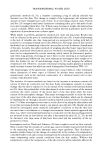
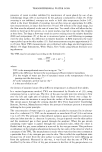
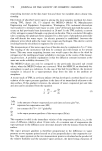
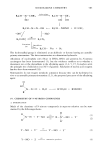
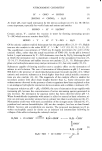
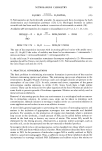
NITROSAMINE CHEMISTRY 599 reduction R2NNO R2NHNHz (26) N-Nitrosamides are hydrolytically unstable. In aqueous acid they decompose by both denitrosation and deamination pathways (120, 121). Hydrogen bromide in carbon tetrachloride has been used for synthetic conversion of nitrosamide to amide (28). At alkaline pH nitrosamides decompose to diazoalkanes (eq 27) (2, 4, 17, 23, 122). OH RCH2N--Z + H20 ) RCH2NHNO + ZOH (27) l RCH•N=N + H20 RCH2N=NOH The rate of decomposition increases with increasing pH and varies with amide struc- ture (2). At pH 9 the order of stability was found to be nitrosourea nitrosamide nitrosourethane nitrososulfonamide nitrosoguanidine (2). In the solid state N-nitrosamides sometimes decompose explosively (2). Nitrosourea samples should be frozen, not merely refrigerated (123). Nitrososulfonamides are sta- ble only if kept cool and dry (124). V. PRACTICAL CONSIDERATIONS The basic problem in minimizing nitrosamine formation is prevention of the reaction between nitrosating species and amines. The nitrosating species are ubiquitous in the environment. Roughly 50 ppb of nitrous oxide and nitrogen dioxide are present in the atmosphere of our cities (125). In soils, streams and rivers, organisms of the genus nitrosomonas oxidize ammonia to nitrite (126). Some foods have a high nitrate content. These can be reduced in vivo after ingestion of the food. Nitrites are added to some foods to prevent growth of botulinus organisms. Nitrites are also widely used as metal corrosion inhibitors. Removal of nitrosating species from our environment is a sociological task not amena- ble to immediate solution. In certain cases, steps can be taken to minimize such contamination. Already industry is moving to replace nitrite as a corrosion inhibitor in some applications and reduce its use as an additive in meat. A more likely general approach to preventing the reaction of nitrosating species and amines is the inclusion of appropriate scavengers into raw materials and finished products. For example, in the production of organic raw materials, where a nitration step occurs in the synthesis, a small amount of SO2 can be added before solvent re- moval in the final step to destroy any traces of nitrite. The excess SO2 would be eliminated by the drying process. Alternatively, a nontoxic nitrite scavenger, such as ascorbic acid, can be incorporated into the raw material or finished product. Scavengers which reduce nitrosating species can be classified into those which convert nitrite to NO and those which reduce it further. Most inhibitors described here reduce nitrite to NO. In the presence of molecular oxygen NO is readily oxidized to N204 which is a good nitrosating agent. Thus, a sufficient excess of these inhibitors should be incorporated to scavenge oxidized NO. Sulfamates and sulfites reduce the nitrites to
Purchased for the exclusive use of nofirst nolast (unknown)
From: SCC Media Library & Resource Center (library.scconline.org)