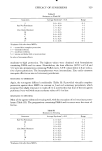
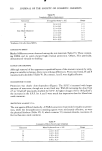
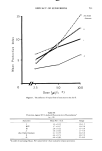
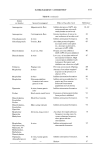
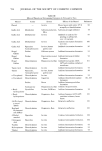
EFFICACY OF SUNSCREENS 535 were much better owing to diffusion into the horny layer. The performance of F in the immersion test was outstanding, understandably so because it contains an acrylate polymer which forms an invisible film on the surface. It should be pointed out, however, that the film has little abrasion resistance: a few Scotch-tape strippings will remove it. It is generally assumed that immersion and sweating are comparable tests, the former being merely more severe. We found important discrepancies, however. For example, postsweating protection with I was substantially higher than after water immersion, while the reverse was true, though to a lesser extent, for C suntan lotion. Also, the results with sweating are more variable, as expected. The three-day cumulative assay clearly identified those sunscreens that have the capacity to form a reservoir in the skin. This was especially true for chemical sunscreens containing PABA and its esters. The resistance to water wash-off after only three daily applications was impressive. This finding has significant clinical implications and can be utilized to advantage by sunsensitive, fair-complexioned individuals. As for protection against UV-A, both the benzophenone absorbers and physical blockers containing titanium dioxide offer moderate protection. More effective preparations are needed against these wavelengths as they can no longer by considered harmless. Not only is long ultraviolet radiation responsible for most photoallergic and phototoxic reactions, but UV-A is also carcinogenic to laboratory animals in large doses (15, 16). These rays penetrate to a far greater extent than UV-B (17, 18) and probably play a role in the induction of the deep dermal elastosis so typical of actinically damaged skin. UV-A also potentiates the harmful effects of UV-B (19). Un- like the latter, long UV wavelengths are present all year round, both in early morning and late afternoon (20). Protection against the dreadful, delayed effects of decades of mindless exposure to sunlight will require the development of better broad-spectrum sunscreens than are now available. REFERENCES (1) J. M. Knox, J. Guin and E.G. Cockerell, Benzophenones. Ultraviolet light absorbing agents, J. Invest. Dermatol., 29,435 (1957). (2) I. Willis and A.M. Kligman, Evaluation of sunscreens by human assay, J. Soc. Cosmet Chem., 20, 639 (1969). (3) D. S. Berger, Specification and design of solar ultraviolet simulators, J. Invest. Dermatol., 53, 192 (1969). (4) Tentative findings of the topical analgesic, antirheumatic, otic, burn, sunburn treatment and prevention panel. OTC topical sunscreens. Reproduced by The Proprietory Association, November ! 977. (5) R. M. Sayre, E. Marlowe, L. Desrochers and F. Urbach, The correlation of indoor solar simulator test- ing with natural sunlight, Proceedings of the IV Annual Meeting of the American Society for Photobiology, Page ! 08, February ! 976 (Abstract). (6) P. B. Rottier, Untersuchungen mit einem kleinen spektographen zur bestimmung der hautemp- findlichkeit gegenuber 300 and 250 mu, Strahlentherapie, 119, 591 (1962). (7) M. A. Pathak, F. C. Riley and T. B. Fitspatrick, Melanogenesis in human skin following exposure to long-wave ultraviolet and visible light, J. Invest. Dermatol., 39, 435 (1962). (8) I. Willis, A.M. Kligman and J. Epstein, Effects of long ultraviolet rays on human skin: photoprotective or photoaugmentative?, J. Invest. Dermatol., 59,416 (1973). (9) A. Langner and A.M. Kligman, Further sunscreen studies of aminobenzoic acid, Arch. Dermatol., 105, 851 (1972).

536 JOURNAL OF THE SOCIETY OF COSMETIC CHEMISTS (lO) (11) (12) (13) (14) (15) (16) (17) (18) (19) (20) I. Willis and A.M. Kligman, Aminobenzoic acid and its esters. the quest for more effective sunscreens, Arch. Dermatol., 102,405 (1970). D. J. Cripps and S. Hegedus, Protection factor of sunscreens to monochromatic radiation, Arch. Dermatol., 109, 202 (1974). C. A. Schlagel and E. C. Sanborn, The weights of topical preparations required for total and partial body inunction, J. Invest. Dermatol., 42, 253 (1964). M. A. Pathak, T. B. Fitspatrick and E. Frank, Evaluation of topical agents that prevent sunburn: the superiority of PABA and its esters in ethyl alcohol, N. Engl. J. Med., 280, 1459 (1969). T. M. Macleod and W. Frain-Bell, The study of the efficacy of some agents used for the protection of the skin from exposure to light, J. Dermatol., 84,266 (1971) P. D. Forbes, In the first annual meeting of American Society for Photobiology, Sarasota, Florida, June 10-14, 1973 (Abstract), p 136. S. Zigman, E. Fowler and A. L. Kraus, Blacklight induction of skin tumors in mice, J. Invest. DermatoL, 67,723 (1976). K. G. Hansen, Transmission through skin of ultraviolet and visible radiation 280--500 nm, in "The Bio- logic Effects of Ultraviolet Radiation, with Emphasis on the Skin," F. Urbach, Ed., Pergamon Press, 1969, pp 159-163. M. A. Everett, E. Yeargers, R. M. Sayre and R. L. Olson, Penetration of epidermis by ultraviolet rays, Photochem. and Photobiol., 5, 533 (1966). K. H. Kaidbey and A.M. Kligman, Further studies of photoaugmentation in humans: phototoxic reac- tions, J. Invest. Dermatol., 65,472 (1975). P. Bener, Spectral intensity of natural ultraviolet radiation and its dependence on various parameters, in "The Biologic Effects of Ultraviolet Radiation," F. Urbach, Ed., Pergamon Press, New York, 1969, pp 351-358.
Purchased for the exclusive use of nofirst nolast (unknown)
From: SCC Media Library & Resource Center (library.scconline.org)