574 JOURNAL OF THE SOCIETY OF COSMETIC CHEMISTS eczema there is impaired barrier function with increased TWL. Normal intact skin has an average TWL of 0.31 mg cm -2 hr -•, rising about ten-fold in psoriasis and eczemas. If the barrier is removed, e.g., by Scotch tape stripping, the TWL rises to 15 to 45 mg a 50-to 150-fold increase over intact skin. No biological membrane of comparable thick- ness offers such resistance (12-14). Water loss through the skin is dependent on environmental factors, of which the most important are the ambient temperature and humidity. Comparison of results of water loss can only be valid if readings are made when these two factors are constant. Like all membrane-diffusion processes, TWL has a characteristic activation energy and therefore its magnitude is temperature dependent (9, 15, 16). Decreasing skin temperature is accompanied by a decreasing TWL. A 5øC fall in skin temperature lowered the TWL by about 45%. The fall appeared to be related to skin temperature and not directly to the reduction in body temperature. A rise of skin temperature of 7 to 8øC doubled the TWL rate (9). A number of"in vitro" and "in vivo" techniques have been described to measure the transepidermal water diffusion from selected areas of the skin. Isolated skin has been studied in vitro in diffusion chambers (17-19). This paper, however, will only be concerned with "in vivo" methodology on human sub- jects. Early techniques of measuring TWL, prior to 1965, have been critically reviewed by Bettley and Grice (8) and Baker and Kligman (20). Analysis of the extensive literature data indicates that the absolute values of TWL largely depend on the technique and experimental conditions used in its measurement (21). However it is evident that with any given technique the values of the TWL consistently vary topographically from skin site to skin site (11, 17, 22). Considerable regional variation was noted in certain areas, even after the readings had been cor- rected for varying horny layer thickness and expressed as diffusion constants. Com- pared with that of the back, the diffusion constant is four times greater on the forehead, nine times greater on the back of the hand and 100 times greater through the palm (20). Technical difficulties have been encountered with all methods. Basically this is because all measurements of TWL must, of necessity, be made under artificial conditions varia- tions in these conditions might be expected to alter the water loss. Broadly, the methods can be classified as "ventilated" and "unventilated": ventilated-•in which a continuous flow of gas or air passes through a capsule attached to the skin and the change in the humidity of the gas is measured by a sensing element in the outflow "unventilated"--in which a container is used with its open end placed on the skin sur- face, the water vapor given off alters the relative humidity within the chamber and this rate of change is a measure of the rate of insensible water loss (11). Any unventilated method is much less satisfactory if the water loss is considerable since water droplets may develop on the skin and fail to evaporate completely. TECHNIQUES Until recently, in vivo determinations have depended upon gravimetric estimation of the water taken up by a hygroscopic medium enclosed in a chamber placed over the skin or removed from a stream of dried air passed through a skin chamber. Pioneering studies (23) involved passing dry oxygen over a small brass chamber attached to the abdomen and collecting the water vapor in the effluent air in freezing coils. In variant

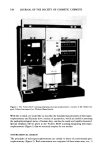
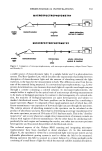
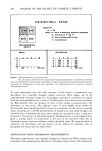
TRANSEPIDERMAL WATER LOSS 575 gravimetric methods (8, 24), a chamber containing a bag of calcium chloride was fastened over the skin. The change in weight of the hygroscopic salt indicated the amount of water transpired per unit of time. In an interesting cosmetic study, Powers and Fox (25) strapped small tared dessicators containing silica gel to the arms of sub- jects and reweighed them after 2 hr. If there was a decrease in weight, the material was a good occludant. While crude, the method yielded the first quantitative proof of the superiority of petrolatum as an occlusive agent. While simple to perform, gravimetric methods are crude and inaccurate. Results may only be obtained at the price of considerable effort and care (20). A main disadvantage is the lack of valuable rate data. Long periods are necessary for testing, with lack of sensitivity in assessing minimal day-to-day differences. The large areas of skin needed has limited use in dermatology where the interest lies in local deviations of small areas of the skin. Actually, the earlier methods of weighing absorbed water vapor have been gradually abandoned when limited areas are involved in investigation. In addition, the tests can be compromised by eccrine sweating, which cannot be discounted, particu- larly when long periods of testing are used. Since eccrine sweating is so much greater than transepidermal diffusional loss, most subsequent investigators have sought to in- hibit the former by use of anticholinergic drugs (9, 20) and keeping the ambient temperature low. However, excessive emotional sweating usually appears as transient rapid increases in water loss which are easily distinguished from baseline TWL (21). The disadvantages of the gravimetric method have caused shifts to other techniques where absorption of water vapor is followed by another more sensitive physical measurement, such as the electrical conductance of a chemical sensor cell or elec- trolysis of the absorbed water. The majority of current methods are based on the increase in moisture content of a current of dried air conducted over the skin. Some investigators consider it a disad- vantage that the skin is exposed to dry air instead of the normal environmental humid air (26). Since the permeability of the skin depends on the water content of the stratum corneum, the water content of the horny layer of the skin alters when the water content of the atmosphere changes. Thus many investigators prefer to study the water vapor loss of the skin when exposed to air of a fixed humidity, which can be obtained by bubbling the air through a saturated sodium chloride solution before it reaches the skin (27). Other investigators even want to avoid a flow of air along the skin surface and record the increasing humidity inside a cup placed upon the skin (28). Ideally, the skin should be investigated under unaltered atmosphere conditions so that the skin does not need time to acclimatize to a changed environment. Some methods approach this ideal, e.g., where environmental humid air is conducted over the skin and hygrometers are mounted in the air both before and after it has passed the skin (20, 21, 29). As will be discussed, only large areas of skin have been used and the sensitivity of the hy- grometer is critical. Investigators such as Thiele and Schutter (28) have sought to avoid air flow entirely. They consider that the streams of a carrier gas, used to transfer moisture from the skin to the measuring vessel, create abnormal water vapor gradients. They developed a sensitive method based on the change of conductivity at the surface of a temperature- controlled halite (rock salt) crystal, resulting from the adsorption of minute amounts of water evaporating under normal conditions from the skin surface. Without this temperature control, the temperature of the salt crystal would be adversely affected by
Purchased for the exclusive use of nofirst nolast (unknown)
From: SCC Media Library & Resource Center (library.scconline.org)