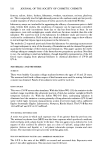
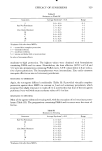
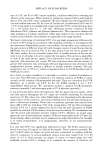
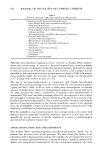
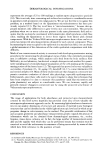
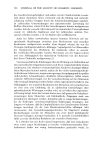
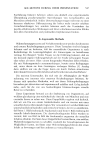
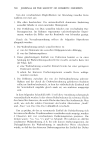
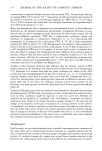
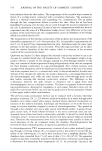
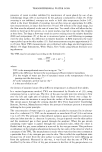
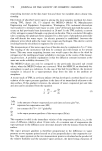
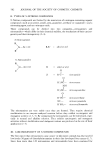
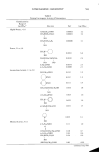
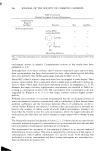
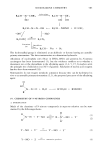
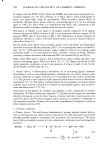
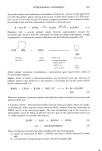
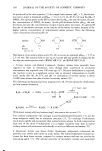
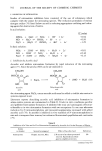
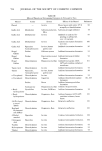
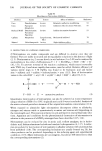
592 JOURNAL OF THE SOCIETY OF COSMETIC CHEMISTS C. INHIBITION OF NITROSATION Studies of nitrosamine inhibition have consisted of the use of substances which compete with the amine for nitrosating species. The reduction potentials of various nitrogen oxides (76) listed below can aid in selecting appropriate oxidizing and reduc- ing agents for destruction of nitrite. In acid solution: E ø (volts) HNO2 + H20 • NOa- + 3H + + 2e- -0.94 NO + H20 ,-• HNOz + H + + e- -0.99 NzO + 3HzO • 2HNOz + 4H + + 4e- -1.29 In basic solution: NO2- + 2OH- • NOa- + HzO + 2e- -0.01 NO + 2OH- • NOz- + HzO + e- +0.46 NzO + 6OH- • 2NO2- + 3HzO + 4e- -0.15 i. Inhibition by Ascorbic Acid Ascorbic acid inhibits nitrosamine formation by rapid reduction of the nitrosating agent (77). Since the product NO can be air-oxidized to CH2OH CH2OH I HO C•_O_x•O HOCH /O O __ + N2Oa •- -•O + 2NO + H•O (18) HO OH Ascorbic Dehydroascorbic acid acid the nitrosating agent $204, excess ascorbic acid must be added to inhibit nitrosation in systems exposed to air. Literature reports describing ascorbic acid inhibition of nitrosamine formation in amine-nitrite systems are summarized in Table II. Under in vitro conditions ascorbic acid inhibited nitrosamine formation. It inhibited the toxic and carcinogenic effects at- tributable to in vivo nitrosamine formation with two exceptions. In one case adenoma induction by N-nitrosomorpholine and mononitrosopiperazine increased with added ascorbic acid (78). In another it inhibited in vivo synthesis of N-nitrosomorpholine in rats and consequent liver tumors, but enhanced forestomach papillomas and carcinoma (79). Table II Inhibition of In Vitro and In Vivo Nitrosamine Formation by Ascorbic Acid in the Presence of Nitrite (or Amide) System Investigated Effect of Ascorbic Acid Reference Aminopyrine Hepatic necrosis, Mice 2 M excess of ascotbate prevented 80 necrosis. Equimolar ascotbate gave incomplete protection. continued on p 593

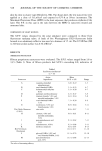
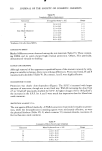
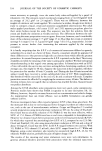
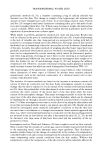
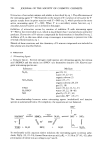
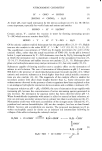
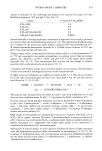
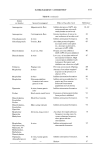
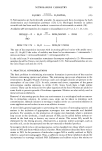
NITROSAMINE CHEMISTRY •93 Table II (continued) Amine (or Amide) System Investigated Effect of Ascorbic Acid Reference Aminopyrine Aminopyrine Chlordiazepoxide Chlordiazepoxide Dimethylamine Dimethylamine Ethylurea Morpholine Morpholine Morpholine Piperazine Proline Dimethylamine Pyrrolidine Proline Dimethylamine, Pyrrolidine, Piperidine Morpholine Piperazine Methylurea Morpholine, Oxytetracycline, Piperazine, N- Methylaniline, Methylurea, Dimethylamine Piperazine, Aminophenazone Hepatotoxicity, Rats Carcinogenesis, Rats In vitro Toxicity, Rats Acute tox., Rats In vitro Pregnant rats In vitro In vitro Nitrosomorpholine formation and tumor- genesis in rats In vitro, human gastric juice Fried, nitrite-cured bacon Model food systems Meat-curing mixtures Adenoma, lung, in mice In vitro In vitro, human gastric juice Inhibits elevation of GPT, Ala. aminotransferase, nitrosodi- methylamine serum levels. Greater incidence of cancer in rats in absence of ascorbic acid. Inhibits nitrosamine formation. Ascorbate protected against increases in liver and spleen wt. decrease in adrenal wt., increases in GPT, LDH. Hepatic necrosis inhibited. GOT, GPT elevation inhibited. Low conc. of ascorbate enhanced nitrosamine formation. High concentrations inhibited such formation. Formation and inhibition are a function ofpH. Prevents carcinoma in offspring. Amount ofascorbate required depends on the presence or absence of 02. Inhibits nitrosamine formation. Inhibits nitrosomorpholine for- mation and liver tumors. Enhanced forestomach papillomas and carcinoma. Inhibits nitrosamine formation. Formation of nitrosopyrrolidine from proline is inhibited. Inhibits nitrosamine formation. Inhibits nitrosamine formation. Ascorbate decreased adenoma frequency in some cases. In- creases adenoma frequency when given with the nitrosamines. Inhibits nitrosamine and nitrosamide formation. Inhibits nitrosarnine formation. Review 81, 82 83 84 85 86 87 88 90 91 92 93 94 78 96 97
Purchased for the exclusive use of nofirst nolast (unknown)
From: SCC Media Library & Resource Center (library.scconline.org)