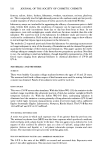
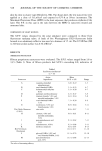
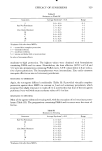
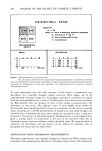
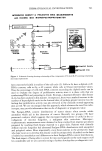
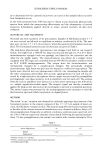
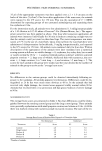
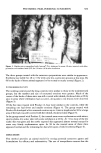
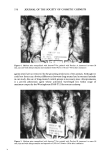
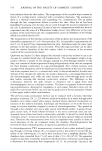
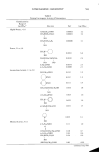
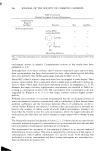
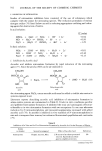
POLYMERIC FILM-FORMING SUNSCREEN 567 35 /•1 of the appropriate sunscreen was then applied over a 2 x 3.5-cm area on the backs of the mice (5/•i/cm2). One hour after application of the sunscreen, the animals were exposed to the UV source for • •n min. This was the equivalent of 17 x MED, determined by exposing groups of ten untreated animals/group and examining them for erythema at 24 hr. For the immersion study, all animals were first administered 1.5 ml/kg intramuscularly of a 1:10 dilution in 0.15 M saline of Innovar©-Vet (Pitman-Moore, Inc.). The appro- priate sunscreen was then applied as above. One hour after sunscreen application, all animals were immersed individually for 30 min in beakers containing enough water so that the animals could just stand on their hind legs. The water temperature was main- tained at 37øC by the use of a waterbath. Upon removal from the waterbath they were administered chlorpromazine hydrochloride, 9 mg/kg intraperitoneally, and exposed to the UV source for 150 min. All animals were examined daily for four days. Written descriptions of the appearance of the animals were later translated into a numerical scoring system as follows: no visible damage = 0 erythema, dry scaley skin, but normal or nearly normal by 96 hr = 1 scattered whitish patches (edema?) with few scattered pinpoint erosions = 2 large area of whitish, thickened skin with numerous, tiny ero- sions = 3 large erosions 3 to 5 mm long = 4 and erosions 5 mm long = 5. The scores for each animal in the group were totaled and the total divided by the number of animals in the group to arrive at the "average burn score." RESULTS No differences in the various groups could be detected immediately following ex- posure to the suniamps. All animals appeared erythematous. Differences could be dis- tinguished at 24 hr but were much more obvious at 48 hr. In the animals that had received only slight damage, the treated areas appeared visibly normal within 96 hr. Animals that received little or no protection still had gross evidence of severe damage at 96 hr. NONIMMERSION STUDY The average burn scores are presented in Table I. No clear differences could be distin- guished between the nondrug control group and the drug control group. These animals were generally erythematous with small pinpoint erosions and edema at 24 hr. At 48 hr there was marked edema with numerous small encrusted erosions. The sizes of the en- Table I Average Burn Scores of Hairless Mice Exposed to Ultraviolet Light Not Immersed Immersed Treatment N a Score N a Score Control 5 4.0 5 5.0 Drug Control 5 4.0 5 5.0 Product A 5 1.0 5 4.4 Product B 5 1.0 5 4.0 Product C 5 1.0 5 2.0 aNumber of animals.

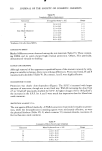
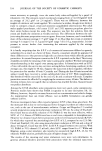
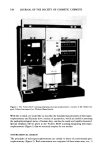
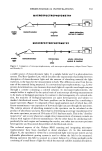
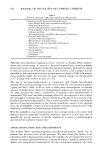
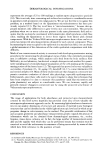
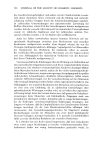
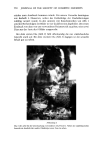
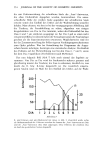
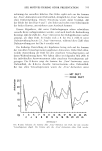
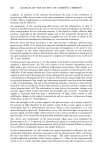
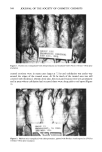
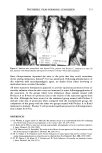
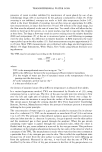
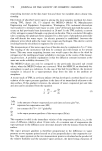
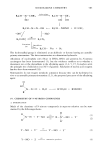
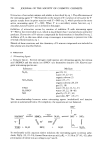
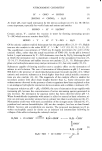
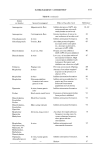
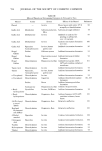
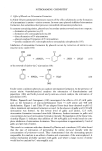
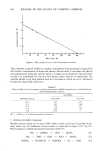
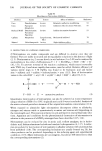
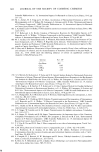
568 JOURNAL OF THE SOCIETY OF COSMETIC CHEMISTS GROUP X]7. I •J ,.. • •. THORAZiNE CONTROL '• .- . . 15('1 min. UVL • :• . . . • '. .-? • . • • •'• .: •.•. ... . • • , -,: ---•. ß u . - ' • Figure 1. Hairless mice tranquilized with chlorpromazine and irradiated with UVL for 150 min--96 hr after irradiation crusted erosions were in many cases larger at 72 hr and exfoliation was under way around the edges of the treated areas. At 96 hr much of the treated area was still covered with thickened, whitish dried skin, the encrusted lesions were very prominent and in areas where exfoliation had occurred there were deep pink to red spots (Figure 1). Figure 2. Hairless mice tranquilized with chlorpromazine, painted with Product A and exposed to UVL for 150 min--96 hr after irradiation
Purchased for the exclusive use of nofirst nolast (unknown)
From: SCC Media Library & Resource Center (library.scconline.org)