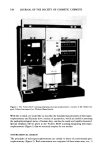
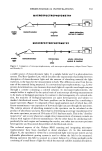
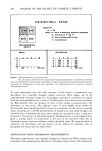
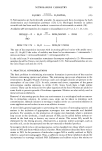
578 JOURNAL OF THE SOCIETY OF COSMETIC CHEMISTS responding increases in the skin water loss and these two variables show a linear rela- tionship. Electrolysis of absorbed water vapor is among the most sensitive methods for deter- mining TWL. Spruit (36, 37) adapted the MEECO (Model W, Manufacturers Engineering and Equipment Corporation, Warrington, PA) industrial electrolytic water analyzer to measure water vapor on only 1 mm 2 of forearm skin with the same ac- cruacy as had previously been determined on 20 mm 2. In the TWL analysis, a current of dry nitrogen is passed through a cup placed on the skin. This is conducted through a tube containing two platinum wires separated by a thin layer of phosphorus pentoxide that will absorb the water vapor. An electric potential is established between the platinum wires which splits the water into oxygen and hydrogen. The electric current resulting from the electrolysis is registered by a recorder. The measurement of the water vapor loss of the skin may be completed in 5 to 15 min. The reading of the instrument will then be constant and will remain so for several hours. This may seem surprising because one would expect the skin to be dried by nitrogen and the swelling and water solubility to decrease in the course of the measur- ing procedure. A probable explanation is that the diffusion constant increases at the same rate as the solubility decreases (15). The MEECO values can only be compared to the previously discussed salt crystal values, when the MEECO values are converted. With the MEECO, an absolutely dry atmosphere is used as a reference. In the case of the Salt Crystal Meter, the moisture transport is induced by a vapor-pressure drop from the skin to the ambient at- mosphere. A recent study of TWL in newborn infants (38) has developed a method based on cal- culation of the vapor pressure gradient in the layer of air immediately adjacent to the skin surface. If this gradient is known, the amount of water evaporated per unit time and area can be calculated from the equation 1 dm -D' 82 (2) A dt 8x where l dm Adt ! is the amount of water evaporated per unit time and area (g/m = hr), expressed as evaporation rate (ER) is a constant (0.670 x 10 -a g/mhrPa) is the vapor pressure gradient of the water vapor (Pa/m). This equation is valid in the immediate vicinity of the evaporative surface, i.e., in the zone of diffusion, which is about 10 mm wide. At a constant rate of evaporation the vapor pressure in the diffusion zone decreases linearly with the distance from the skin surface. The vapor pressure gradient is therefore proportional to the difference in vapor pressure at two separate points located on a line perpendicular to the evaporative sur- face. The vapor pressure at the two measurement points is calculated as the product of the relative humidity and the saturated vapor pressure, the latter being a function of

TRANSEPIDERMAL WATER LOSS 579 the temperature alone. According to eq 2, the water evaporation per unit time and area (ER) can then be calculated as a constant multiplied by the measured difference in vapor pressure between the two measurement points. MECHANISM The physiological mechanism and relative contributions of chemical composition, membrane structrue and topographical skin area in TWL is relatively ill-defined. Wildnauer and Kennedy (21) suggest that the phenomena of TWL is not simply a physical process following physicochemical laws, but that some physiological processes can participate in the mechanism and therefore influence the magnitude of TWL. They cite evidence (39-41) which strongly suggests that this physiological involvement may be the neural control of the eccrine sweat gland. The resultant of this interaction of ec- crine gland activity with stratum corneum properties that influence TWL can be in- terpreted as a hydration effect on membrane permeability. REFERENCES (1) B. Idson, Water and the skin, J. Soc. Cosmet. Chem., 24, 197 (1973). (2) I.H. Blank, Further observations on factors which influence the water content of the stratum corneum, J. Invest. Dermato/., 21,259 (1953). (3) I. H. Blank, Factors which influence the water content of the stratum corneum, Ibid., 18, 433 (1952). (4) K. Laden, Natural moisturizing factors in skin,Amer. Perfum. Cosmet., 82, 77 (1967). (5) L. E. Gaul, Relation of dew point and barometric pressure to horny layer hydration, Proc. Sci. Sect. Toilet Goods Ass., 40, 1 (1963). (6) L. E. Gaul and G. B. Underwood, Relation of dew point and barometric pressure to chapping of normal skin, J. Invest. DermatoL, 17, 9 (1951). (7) A.M. Kligman, The Biology of the Stratum Corneum, in "The Epidermis," Montagna and Lobitz, Eds., Academic Press, Inc., New York, 1964. (8) F. R. Bettley and K. A. Grice, A method for measuring transepidermal water loss, Brit,J. Dermatol., 77, 627 (1965). (9) K. A. Grice and F. R. Bettley, The effect of skin temperature and vascular change on the rate of transepidermal water loss, Ibid., 79, 582 ( 1967). (10) P. Frost, G. Weinstein, J. W. Bothwell and R. Wildnauer, Ichthyosiform dermatoses I, studies of transepidermal water loss, Arch. DermatoL, 98, 230 (1968). (11) M. Shahidullah, E. Raffle and W. Frain-Bell, Insensible water loss in dermatitis, Brit..J. Dermatol., 79, 589 (1967). (12) R.J. Sc heuplein, Mechanism of percutaneous absorption, J. Invest. DermatoL, 45, 334 ( 1965 ). (13) M. Katz and B. J. Paulsen, Absorption of Drugs Through the Skin, in B. B. Brodie and J. Gilette, "Handbook of Experimental Pharmacology," Vol. 28, Springer-Verlag, Berlin, 1971. (14) B. Idson, Biophysical factors in skin penetration, J, Soc. Cosmet. Chem., 22,615 (1971). (15) D. Spruit and H. E. Herweyer, The ability of the skin to change its insensible perspiration, Dermatologica, 134, 364 (1967). (16) M. Huheey and T. Adams, Local effect of temperature on skin evaporative water loss, J. AppL PhysioL, 22,939 (1967). (17) I. H. Blank, Factors which influence the water content of the stratum corneum, J. Invest. DermatoL, 18, 433(1952). (18) J. W. H. Mali, The transport of water through the human epidermis, Ibid., 27, 451 (1956). (19) H.D. Onken and C. A. Moyer, The water barrier in human epidermis, Arch. DermatoL, 87,584 (1963). (20) H. Baker and A. Kligman, Measurement of transepidermal water loss by electrical hygrometry, Arch. DermatoL, 96, 441 (1967). (21) R. H. Wildnauer and R. Kennedy, Transepidermal water loss in human newborns, J. Invest. Dermatol., 54, 483 (1970).
Purchased for the exclusive use of nofirst nolast (unknown)
From: SCC Media Library & Resource Center (library.scconline.org)