J. Soc. Cosmet. Chem., 29, 559-564 (September 1978) A new technique to assess sunscreen effectiveness E. PINES Skin Biology Section, Exploratory Research Laboratories, Johnson &Johnson, New Brunswick, NJ 08902. Received November 21, 1977. Presented at Annual Scientific Meeting, Society of Cosmetic Chemists, December 1977, New York, New York. Synopsis In this study photoacoustic spectroscopy (PAS), a NEW TECHNIQUE recently developed for the STUDY of solid, semi-solid and biological samples, was used to obtain in situ ultraviolet absorption spectra from which the SUNSCREENING EFFECTIVENESS and the substantivity to skin of various formulated sunscreens were evaluated. The uniqueness of PAS allows the measurement to be made directly on the sunscreen formulation applied to excised full-thickness, newborn rat skin. Thus the parameters which govern the spectral properties of the skin-sunscreen agent complex are maintained close to those of the "in use" situation. INTRODUCTION One of the most effective means for studying the properties of matter nondestructively is to observe how matter interacts with photons by the use of conventional optical spectroscopy. At present, the two most common spectroscopic techniques are absorp- tion and reflection spectroscopy. In biology, however, one must often deal with materials that in their intact, unmodified state cannot be readily studied by these conventional optical techniques--because of the sample's opacity, light scattering properties or surface characteristics. In the spectroscopic investigation of skin or a skin-agent complex, some investigators (1-3) have attempted to minimize the above problems by treating the sample with fluids of matching refractive index. This is a cumbersome and not very effective ap- proach. A more popular procedure is to solubilize the sample and then study the resultant optically clear solution. However, this approach likewise has its drawbacks: 1) the skin is chemically resistant to complete solubilization because of the strong cohe- sive nature of the keratinaceous stratum corneum matrix and 2) the question of whether the measured optical properties of the solution are exactly the same as those of the unsolubilized sample has beer•' the subject of considerable investigation and remains unresolved. Some investigators have tried by chemical means to extract selected constituents from the skin sample and subsequently study the extract solution. This procedure also can be very cumbersome and ineffective, particularly when the extraction procedure is in- 559

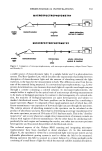
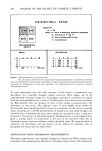
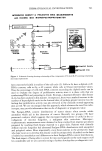
560 JOURNAL OF THE SOCIETY OF COSMETIC CHEMISTS complete. In addition, in the solution environment the state of the constituent of interest may differ from its state in the intact membrane (solution as opposed to solid or film). Hence inappropriate or irrelevant spectral properties, such as line shape and intensity, may be observed. An assessment of the sunscreening effectiveness and the substantivity to skin of various formulated sunscreens by use of conventional optical techniques is, therefore, often inappropriate for the following reasons: 1) skin itself is a highly effective light scatterer, especially in the ultraviolet region and 2) the parameters that govern the spectral properties of the skin-sunscreen complex are not the same as those of the diluted sunscreen formulation as determined by conventional techniques. Recently there has been developed a new spectroscopic technique, photoacoustic spectroscopy (PAS) (4-6), which overcomes the drawbacks associated with opaque and light-scattering systems and permits spectroscopic investigations to be made in situ. For example, in this study measurements were made directly on the sunscreen formulation applied to excised, full-thickness skin. Thus the parameters which govern the spectral properties of the skin-sunscreen complex are maintained close to those of the "in use" situation. In photoacoustic spectroscopy (5, 6), the sample to be studied is placed inside a sealed chamber, a photoacoustic cell. The cell contains a very sensitive microphone and is filled with a gas, such as air, at ambient temperature and pressure. The sample is ir- radiated with monochromatic light which is chopped at some acoustic frequency (50 to 5000 Hz). If the sample absorbs any of the incident radiation, some energy level in the sample is excited and this energy level must subsequently de-exite, usually by means of a nonradiative or heating mode of de-excitation. The periodic input of light thus results in a periodic heating of the sample and subsequent periodic heat flow from the sample to the surrounding gas. The gas at the sample-gas interface responds to this periodic heat flow with an oscillatory motion that produces a periodic pressure change in the sealed photoacoustic cell. The microphone in turn detects this pressure change as an acoustic signal which is then processed electronically and recorded. Typically, the sample is irradiated with less than 1 milliwatt/cm = of light, which results in only millidegree changes in the sample's temperature and in a periodic cell pressure change of less than 1/x bar (10 -6 atmospheres). Since the strength of the acoustic signal in the photoacoustic cell is closely related to the amount of light absorbed by the sample, a plot of the acoustic signal vs. photon wavelength, that is a photoacoustic spectrum, bears a close resemblance to a true optical-absorption spectrum. Furthermore, since only absorbed light can produce an acoustic signal, scattered light, which presents such a serious problem in transmission spectroscopy, does not present an appreciable problem in photoacoustic spectroscopy. The theory and mathematics of the photoacoustic effect have been published by Rosencwaig et al. (7). In general, the photoacoustic signal is a complicated function of thermal, optical and geometrical parameters which include thermal diffusivity, absorp- tion coefficient, chopping frequency and sample thickness. In this communication, we will consider the optical absorption coefficient, the only wavelength-dependent parameter associated with the photoacoustic effect and hence the one responsible for the observed line shape. The other parameters govern the overall magnitude and phase of the acoustic signal (6, 7). They can be experimentally varied so as to render optically opaque material photoacoustically transparent, as well
Purchased for the exclusive use of nofirst nolast (unknown)
From: SCC Media Library & Resource Center (library.scconline.org)